
Quick answer
Write the material specification in separate layers: the leather substrate, its surface treatment, the finish system and the component where it will be used. Connect each description to an identified sample and supply lot. A grain pattern, a soft hand or the words “genuine leather” cannot replace that record. Compare quotations only after suppliers identify what they are offering; review a different substrate or finish as an explicit alternative, not an invisible saving.
The polished sample is not the purchasing specification
Two bag samples can look close enough for a first design discussion while leaving important material questions unanswered. One quotation may identify the underlying leather and finish; another may offer only a commercial collection name. The immediate problem is not deciding which seller uses the more impressive adjective. It is establishing whether both prices cover the same material commitment.
For a first collection, resolve that ambiguity before paying for several colour developments. A material approved for the main body does not automatically become the approved handle, gusset or internal reinforcement. Keep the component map visible so a cheaper input cannot enter the order through an unspecified part.
This is a buyer-side specification framework, not a ranking of leather grades, a laboratory assessment or a claim that ZWC has tested the materials in your proposed bag. Product-specific suitability and acceptance need evidence for the actual material and construction.
Separate the structure from the appearance
Leather Naturally distinguishes the upper grain-bearing layer from the underlying split. Its terminology guide also treats embossing as a surface-pattern process and bonded leather as a reconstituted material, rather than an intact hide structure. These are different descriptive dimensions, not interchangeable quality scores.
Ask the supplier to identify those dimensions independently. An embossed pattern does not tell you which substrate lies underneath. Equally, a photograph of a cut edge cannot reliably establish the complete finish system or material identity. Use the supplier declaration and traceable material evidence; seek appropriate independent identification when the distinction matters to approval.
Be particularly careful with “top grain.” Leather Industries of America uses it as equivalent to full grain on its public terminology page. Do not impose an internet ranking in which the phrase must always mean a corrected surface. Ask what the supplier means, whether the original grain has been altered, and which reference supports the description.
LWG's definitions distinguish grain structure from finishing categories such as aniline, semi-aniline and pigmented leather. Ask for the offered finish designation alongside the substrate—not instead of it. A transparent-looking surface or a pronounced grain pattern is an observation, not a substitute for identified material evidence.
A material identity sheet for the RFQ
| Separate field | Ask the supplier to identify | Keep out of the assumption column |
|---|---|---|
| Component | Drawing reference and material code for body, handle, gusset or trim | One material name covers the whole bag |
| Substrate | Declared species where relevant, grain-bearing or split layer, and any reconstituted material | Surface pattern proves underlying structure |
| Surface treatment | Whether the grain is retained, corrected, buffed or embossed; identify the actual offered article | A marketing grade fixes the treatment |
| Finish | Supplier finish designation, coating or film disclosure and finish revision | Similar gloss means the same finish system |
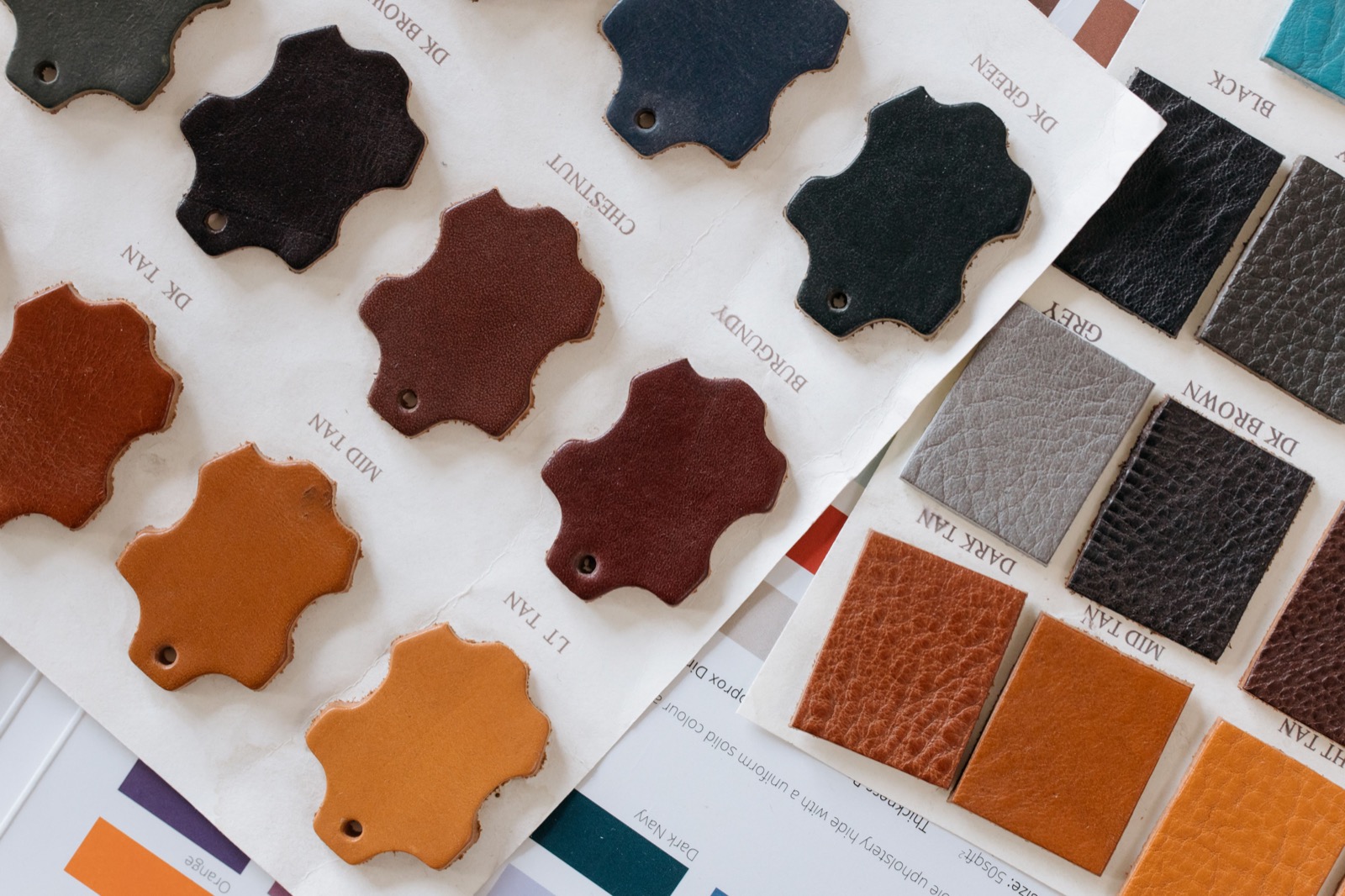
| Physical reference | Identified swatch, colour reference, approved face and reverse, dated custody record | A screen image is the colour master |
| Thickness | Agreed measurement basis, locations, units and tolerance for the component | One nominal number describes every panel |
| Supply identity | Material producer or nominated source, article code, colour, revision and lot traceability | The sample showroom name identifies bulk supply |
The sheet deliberately has no universal “best leather” column. It creates a comparable offer and a place to record unresolved information. If a supplier cannot disclose a proprietary finish formulation, record what it can identify and substantiate. Do not silently replace an unknown with a guessed chemical composition.
Translate the bag's design into evidence requests
Make the intended use concrete: where the material folds, what touches clothing, which surfaces are exposed, and how the owner is expected to care for the bag. The relevant question is whether the identified material meets the approved requirements at those interfaces.
For a folded edge, request evidence representative of the actual fold and construction. For a pale lining beside a dark exterior, include the relevant contact and colour-transfer question. For a handle, separate the leather identification from reinforcement and attachment performance. None of those requests is satisfied merely by a tannery's general brochure.
Agree the test method, sample identity, conditioning, evaluation and acceptance criteria with the appropriate product specialist or laboratory. This article does not prescribe numerical limits or turn a simple hand flex into a durability test. A report needs to match the material, finish revision and relevant use; a passing result on another article remains evidence about that other article.
The release and substitution register
| Decision point | Evidence to connect | Hold or reopen when |
|---|---|---|
| Compare offers | Same component map, material description, sample revision and commercial scope | One offer changes substrate or finish without declaring it |
| Approve appearance | Protected reference, viewing basis, permitted natural variation and panel-matching rules | Only uncontrolled photographs or verbal acceptance exist |
| Approve the material | Identified supply article and agreed suitability evidence | The report cannot be traced to the offered material |
| Approve bulk input | Lot record, incoming comparison and named release owner | A lot cannot be connected to the approved article |
| Consider a substitute | Changed fields, affected components, new evidence and written decision | The proposal is described only as “same quality” |
| Resume affected work | Clear stock boundary, released revision and component reconciliation | Old and new materials may be mixed without identification |
The register separates approval stages because a beautiful development sample is not evidence that an unidentified bulk lot is acceptable. It also prevents a purchasing decision from becoming an assumed production release.
Reduce cost through a visible alternative
Once the reference offer is clear, ask where a controlled alternative could reduce commitment: a stock material rather than a special finish, fewer material colours, or an agreed change to a less visible component. These are development questions, not guaranteed savings. Ask for the actual price, minimum purchase, development charge, lead-time basis and exclusions for each proposal.
Keep the alternative beside the reference, with the changed field highlighted. Review the design and evidence consequences before accepting the commercial difference. A lower material quotation does not establish a lower cost for acceptable finished bags, and no percentage saving can be calculated without real offers and output records.
Our leather cutting-yield guide addresses consumption after material and acceptance rules are fixed. This page addresses material identity before that calculation. Use the bag supplier requirements guide for the separate assembled-product questions around load, zippers and hardware.
What to send with a sourcing enquiry
Send the bag drawing, component map, intended market and use, identified reference swatches, proposed material descriptions and the fields still unknown. Distinguish a request to locate candidate materials from a request to quote an already approved specification.
Use the ZWC project assessment to discuss the sourcing and follow-up scope. Material availability, suitability evidence, testing arrangements, commercial terms and release responsibilities must be confirmed for the actual project. This guide does not promise tannery access, certification, a particular grade or a finished-bag performance outcome.
Primary reading and evidence boundary
- Leather Naturally: leather terminology: structural and finishing vocabulary; publication date not verified; read 26 October 2026.
- Leather Industries of America: full grain and top grain: a documented terminology difference; undated; read 26 October 2026.
- Leather Working Group: definitions, version 1.1, January 2024: cross-check of separate structure and finish terminology, not a certificate or a complete applicable product standard.
The two decision tables are original procurement tools. No physical material inspection, supplier trial, customer project or test result is claimed.
AI assisted drafting and research organisation, not photography. Hero: cottonbro studio / Pexels. Supporting: Anna Tarazevich / Pexels. Both Pexels License, resized/compressed. Illustrative swatch and component contexts, not ZWC materials, staff, projects, certification, material-grade identification or test evidence. No endorsement implied.