
A China footwear sourcing agent who works from the factory floor.
ZWC Sourcing brings 3 years of sourcing experience, serves customers in 60 countries across its business, and reports annual footwear exports of 3 million pairs; sole hardness, abrasion, flexing, adhesion, available capacity, MOQ, lead time, test reports, packaging and port are confirmed for the nominated supplier and shoe specification.
What does a China footwear sourcing agent do?
A China footwear sourcing agent represents the buyer across factory selection, specification, sampling, negotiation, production follow-up and inspection. The useful output is not a factory list—it is a documented decision process that shows why a supplier, sample and shipment are acceptable for the buyer’s product.
Footwear is unusually sensitive to tooling, lasts, size runs, color quantities, material availability and workmanship. A low unit quote can become expensive when these constraints appear after sampling. ZWC starts by making the commercial and technical assumptions visible.
From fashion flats to technical sneakers.
Our footwear sourcing covers women’s fashion, casual, athletic and seasonal categories—from heels, sandals, pumps, ballet flats and loafers to mules, sneakers, espadrilles, boots, school shoes, vulcanized canvas, children’s footwear and private-label capsules. The commercial images below were developed from real ZWC samples and references. Factory matching is based on construction, upper material, outsole process, MOQ, target market, quality level and compliance requirements.
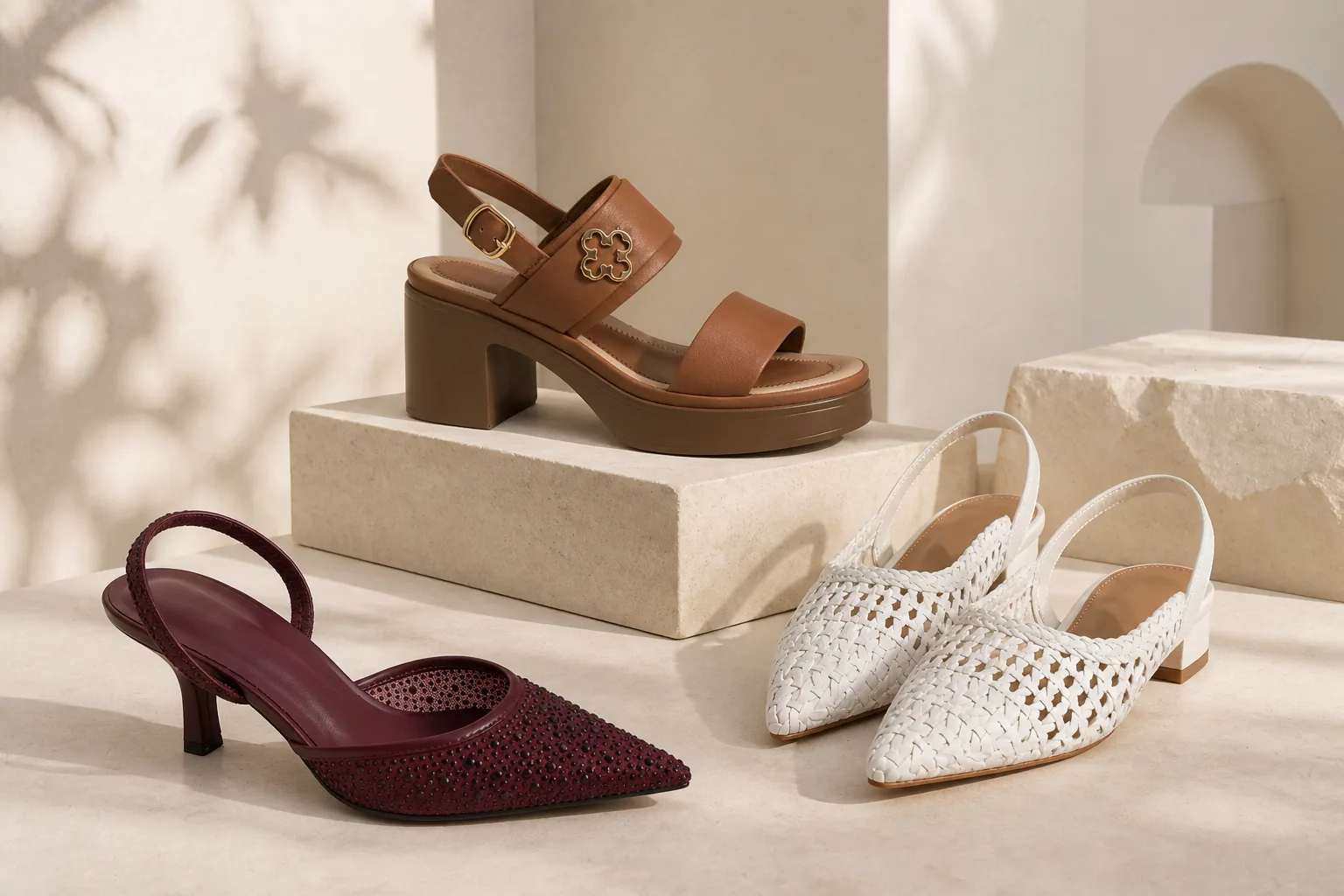
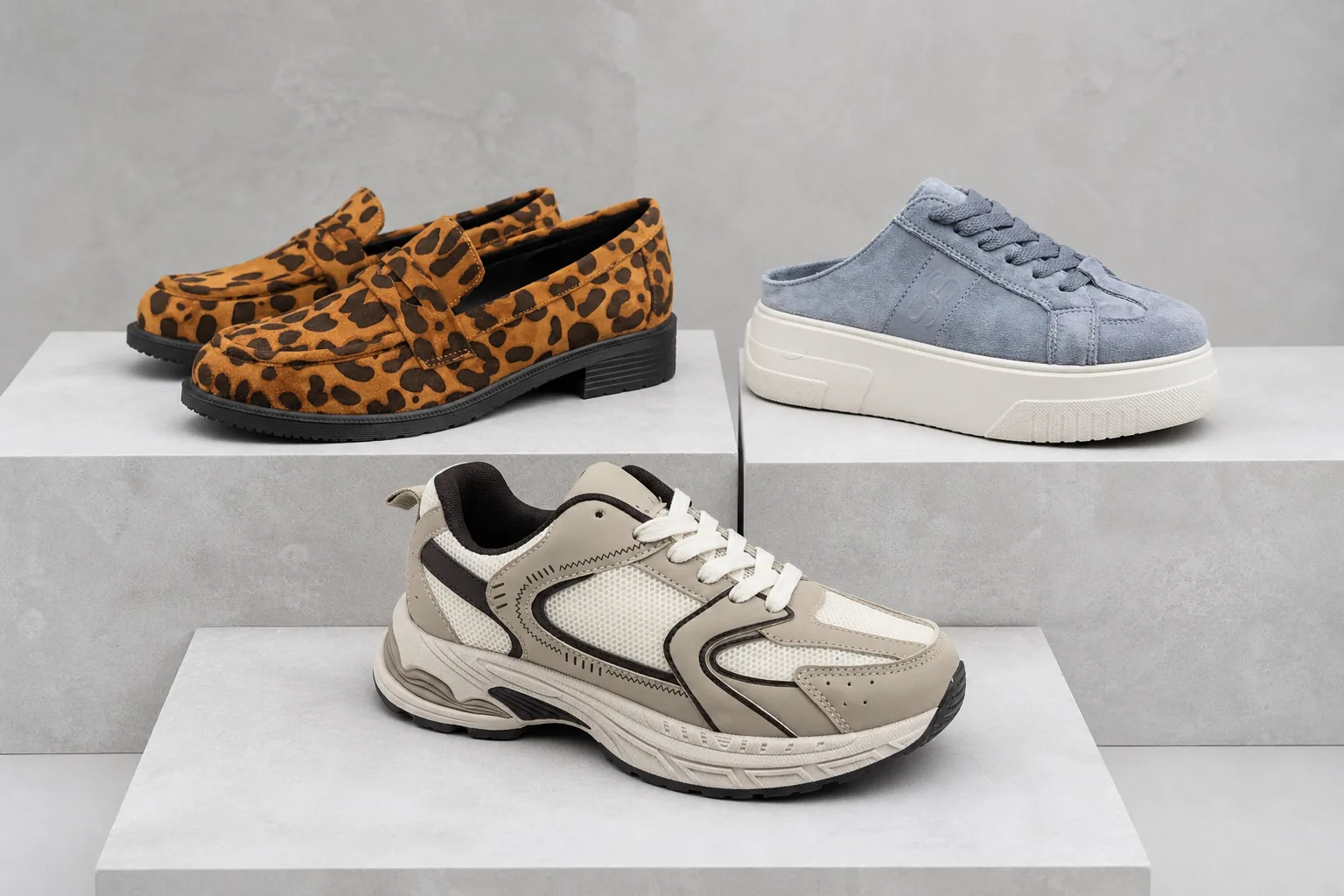
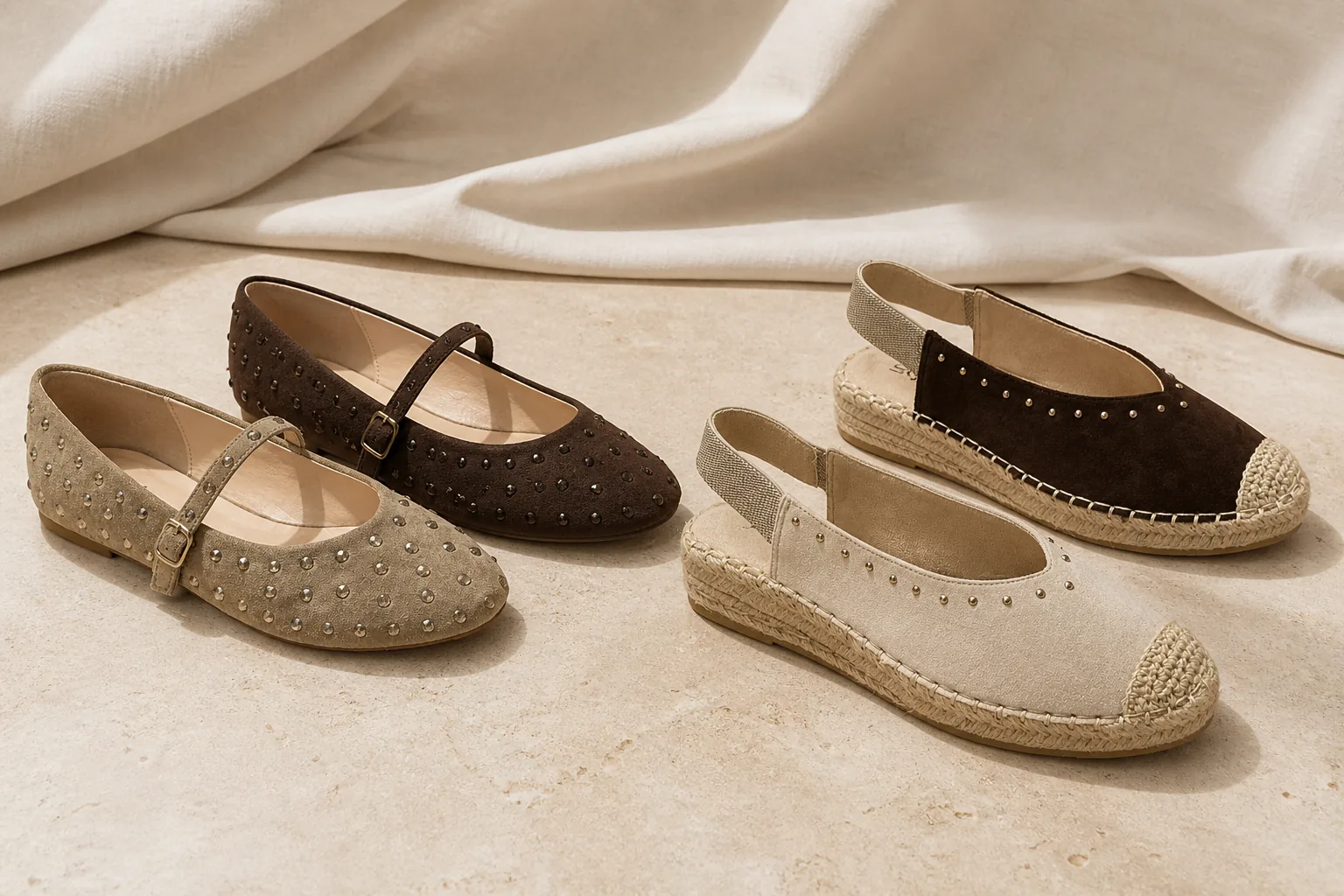
Six evidence gates from brief to shipment
Normalize the brief
Product type, construction, materials, size range, quantity by color, target market, testing, packaging, target cost and ship date.
Screen factories
Match actual production capability, tooling, MOQ, compliance readiness, capacity and communication—not only catalogue similarity.
Control development
Record sample version, last and tooling status, materials, measurements, color approvals, defects and required corrections.
Expose the trade-offs
Compare quotation assumptions, MOQ drivers, mold ownership, payment terms, packing, lead time and what is excluded.
Verify production
Use milestones for material arrival, cutting, upper making, lasting, sole attachment, packing and corrective action.
Inspect before balance
Connect shipment approval to the agreed specification, quantity, workmanship, tests, labels, cartons and evidence pack.
We shortlist for your product—not for the largest catalogue.
- Relevant construction experience: cemented, vulcanized, injection, stitched or other required method.
- Ability to manage lasts, molds, grading and ownership of buyer-funded tooling.
- Material sourcing fit for your volume, colors and target-market requirements.
- Capacity and production-line reality checked against the promised lead time.
- Clear sample-to-bulk controls and willingness to document corrective action.
- Commercial terms compared on a like-for-like basis, including packing and exclusions.
Where footwear projects usually gain—or lose—control
| Decision | Hidden dependency | Buyer-side control |
|---|---|---|
| MOQ per style | Material minimums, color batches, size run and line efficiency | Separate true factory constraints from a negotiable commercial preference. |
| Sample approval | Unrecorded changes between sample versions | Freeze construction, materials, measurements, color and packaging in an approval record. |
| Tooling | Last/mold ownership, grading cost and future access | Document who pays, who owns, storage duration and transfer conditions. |
| Unit price | Different quality, packing, Incoterms or testing assumptions | Normalize quotations before selecting the apparent lowest offer. |
| Shipment release | Pressure to pay before defects or documents are closed | Link balance approval to inspection evidence and defined corrective action. |
Footwear sourcing FAQ
Can ZWC guarantee the lowest footwear price?
No responsible sourcing partner can guarantee the lowest price without fixing the specification, quality level, quantity and terms. ZWC compares like-for-like assumptions and helps buyers understand where a lower quote creates risk or where cost can be reduced without silently changing the product.
Can you help find a low-MOQ shoe manufacturer in China?
We can examine the real MOQ drivers and explore fewer colors, shared materials, existing lasts or molds, adjusted packaging or phased orders. A workable low-MOQ option depends on construction, materials, size run and supplier economics; it is not guaranteed. See the footwear MOQ guide.
Do you support private label and OEM shoe manufacturing?
Yes. ZWC can coordinate private label routes based on existing supplier designs and OEM routes based on a buyer's specification. Branding rights, design files, tooling ownership, sample revisions and permitted use should be documented before bulk production.
Do you work only with shoes?
No. ZWC also supports handbags, apparel, footwear components and selected industrial products. Footwear is a core specialization because of the team’s family manufacturing background.
How are sourcing fees calculated?
Fees depend on scope, product complexity, order size, supplier count and the amount of on-the-ground coordination required. Request a scoped proposal that states deliverables, exclusions and payment stages. See our China sourcing agent fees guide.
What happens before shipment?
The buyer and ZWC agree the inspection scope, product references and release conditions. Read the pre-shipment inspection checklist for the evidence to request.
Send the brief. We’ll identify the first sourcing decisions.
Include your product, quantity, market, target cost and timing. ZWC will respond with the missing inputs, likely constraints and a scoped next step.
15 procurement questions: ZWC answers · Footwear Supplier Requirements: Hardness, Flexing and Adhesion
Decision parameters
Use these fields in your sourcing brief. Company figures were supplied by ZWC on 24 September 2026. Technical and commercial fields must be fixed for your order; company totals are not product test results or supplier commitments.
- Sourcing experience
- 3 years
- Customer countries
- 60 across ZWC’s business; not a per-category count
- Annual export volume
- 3 million pairs of shoes per year; company-reported, not available production capacity
- Product specification
- Construction, upper, lining, sole compound, last and size run
- Parameter range
- Hardness scale/range; abrasion loss; flex cycles; adhesion force; size tolerances; numeric limits agreed in the buyer-approved specification.
- Certification / report number
- No universal number published. Verify the actual issuer, holder, number, scope and date per nominated product.
- Available capacity
- Confirmed per supplier, style and production window; record units/month and current committed load.
- MOQ
- Confirm by style, color, material batch and assortment; no universal minimum.
- Lead time
- Sample and bulk days quoted separately, starting from agreed approvals, material readiness and payment milestones.
- Packaging
- Confirm unit pack, labels, carton dimensions, quantity/carton, gross weight and any pallet requirements.
- Port / delivery term
- Named loading port or handover place and trade term to be agreed in the quotation; destination confirmed by buyer.
Plan the footwear order, one decision at a time
Start with the construction and order constraints, then connect component selection, sample approval and quality evidence to your supplier brief.
- MOQ: style, color and size-run trade-offs
- Sole materials and supplier selection · CKD kits for local assembly
- Mold ownership and tooling control
- Approve and protect the golden sample
- Classify footwear defects before inspection
- Compare quotations and download buyer checklists
See ZWC's sourcing engagements · Check company identity and evidence