
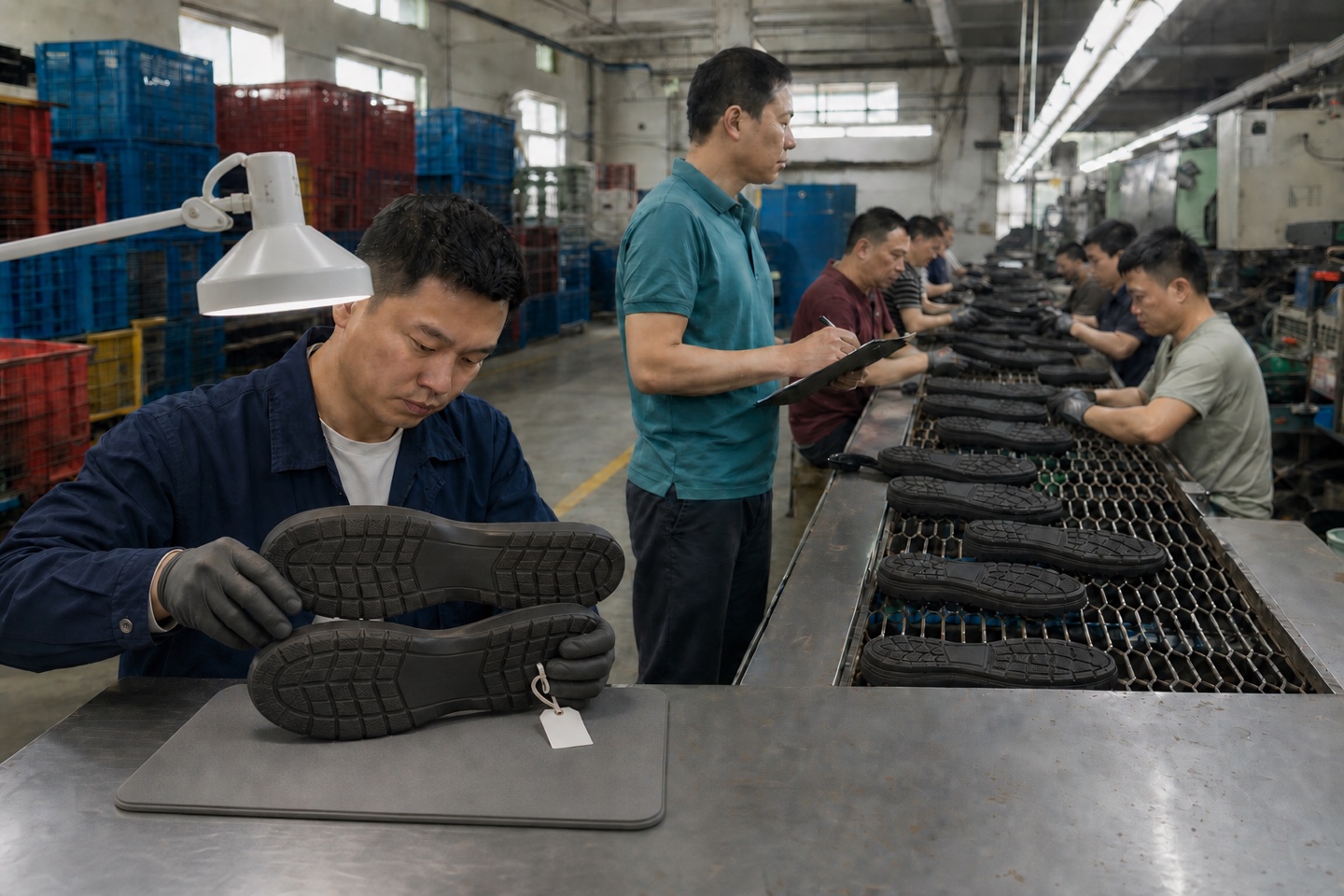
Quick answer
A factory audit examines whether a supplier's site, people, processes, records, and controls appear capable of supporting the intended order. A product inspection examines whether a defined sample of goods matches written requirements at a particular production stage. They answer different questions. An audit cannot prove that a shipment is conforming, and an inspection cannot prove that the factory's wider systems are reliable. For a new or high-risk supplier, buyers often need both at different points: audit the capability before committing significant volume, then inspect the actual order before it becomes difficult or expensive to correct.
The decision buyers are really making
The useful question is not “Which service is better?” It is “What uncertainty must be reduced before the next commercial commitment?”
- If the uncertainty concerns who will make the goods, whether the site has relevant equipment, or whether controls exist, investigate the factory.
- If the uncertainty concerns dimensions, appearance, workmanship, packaging, quantity, or agreed product checks for a specific order, inspect the goods.
- If both uncertainties matter, sequence both activities instead of asking one report to do two jobs.
This distinction matters in footwear, shoe components, bags, and other private-label programs. A credible-looking facility can still produce a nonconforming lot. Conversely, a passing sample inspection does not establish that the supplier can repeat the result across future orders.
Factory audit and product inspection compared
| Decision point | Factory audit | Product inspection |
|---|---|---|
| Primary question | Does this facility appear capable of managing the intended scope? | Does the sampled order match the approved requirements at this stage? |
| Typical timing | Before supplier approval or before a major increase in scope | During production, before shipment, or at another agreed milestone |
| Main evidence | Site observations, equipment, staffing, process flow, records, traceability and control practices | Randomly selected units, measurements, visual checks, functional checks, packaging and quantity evidence |
| Output | Findings about capability, system gaps and follow-up actions | Findings about the inspected sample and lot decision under the agreed plan |
| Cannot establish | That every future shipment will conform | That the supplier's wider management system or long-term capacity is reliable |
| Buyer must define | Audit scope, product/process relevance, risk priorities and evidence required | Specification, approved sample, defect definitions, test methods, sampling plan and acceptance rules |
What a factory audit can—and cannot—tell you
A buyer-focused factory audit should be designed around the intended product and order, not treated as a generic building tour. For a footwear or bag program, relevant questions may include:
- Is the named facility actually performing the processes the supplier claims?
- Are the required machines, tooling controls, material-storage conditions and inspection points present?
- Can the factory connect incoming materials, work in progress and finished goods to purchase and production records?
- Are responsibilities for quality decisions clear?
- How are nonconforming materials or products identified, segregated and resolved?
- Do records show that the stated controls are used, rather than merely documented?
An audit is evidence collected within a defined scope and time window. It may reveal inconsistencies, missing controls or an unsuitable process. It does not guarantee performance after the audit, prove the legality of every business record, or certify a management system unless the work is performed under the relevant accredited certification arrangement.
ISO 19011:2026 provides guidance on auditing management systems, including audit principles, program management and conducting audits. Those principles can inform a structured supplier audit, but referencing them does not turn a buyer's supplier audit into ISO certification.
What a product inspection can—and cannot—tell you
A product inspection starts with an inspection specification. “Check the quality” is not an actionable brief. The inspector needs controlled reference materials such as the purchase order, specification sheet, approved sample, color reference, measurement tolerances, packaging instructions, defined defect categories and agreed test methods.
Depending on the product and production stage, checks may cover:
- model, color, size assortment and quantity available;
- dimensions, weight or component fit against stated tolerances;
- appearance and workmanship against defined defect examples;
- simple on-site function checks that can be conducted safely with suitable equipment;
- labels, cartons, barcodes and packing configuration against approved artwork or instructions;
- photos and traceable records of findings.
Most commercial inspections are sample-based. ISO 2859-1:2026 defines acceptance-sampling schemes indexed by acceptance quality limit for lot-by-lot inspection. However, the buyer still needs a suitable sampling plan and acceptance rules for the product and risk. An AQL value is not a promise that a shipment contains no defects, and a sample result does not describe every unit in the lot.
Inspection also does not replace laboratory testing, engineering validation, chemical compliance work, or legal review required for the destination market. Those activities need separate scopes and qualified parties.
A practical risk-based sequence
1. Before supplier nomination
Use an audit when a wrong supplier decision would be costly to reverse. Define the intended products, critical processes, expected volume range, subcontracting concerns and evidence required. Resolve contradictions before deposits, tooling commitments or sensitive design transfers.
2. Before production
Freeze the inspection inputs. Confirm the product specification, bill of materials where applicable, approved sample status, tolerances, defect definitions, packaging, labeling and any required laboratory-testing plan. Name who can approve deviations. If this information is unsettled, an inspector can document differences but cannot decide what the buyer intended.
3. During production
Consider an in-process inspection when critical steps will be hidden later, when correction becomes harder after assembly, or when the supplier is new to the construction. The purpose is early visibility, not a substitute for the factory's own quality control.
4. Before shipment
Inspect only when enough goods are complete and available for a meaningful check under the agreed plan. Review findings against pre-agreed acceptance rules. A “pass” should not override a critical safety, regulatory or specification issue, and a “fail” should trigger a documented disposition rather than an improvised argument.
Buyer checklist before ordering either service
| Question | Why it matters |
|---|---|
| What exact decision will this report support? | Prevents a broad checklist from replacing a clear business decision. |
| Which facility, order, SKU and production stage are in scope? | Keeps evidence tied to the correct source and goods. |
| What documents are controlled references? | Gives the auditor or inspector an objective basis for findings. |
| Which risks are critical, major or minor for this product? | Aligns attention and escalation with commercial impact. |
| What evidence must appear in the report? | Makes photos, records and measurements useful for review. |
| Who decides corrective action, acceptance or reinspection? | Avoids leaving the final commercial decision to the service provider. |
| What is outside scope? | Prevents a report from being mistaken for testing, certification or legal assurance. |
The boundary that protects the buyer
Neither activity transfers responsibility for specifications, compliance, supplier approval or shipment release away from the buyer. Treat each report as decision evidence, then compare it with contracts, testing, production history and the consequences of failure.
If you are unsure where to begin, write down the next irreversible commitment—supplier nomination, tooling, deposit, mass production or shipment—and the fact you need to know before making it. That usually identifies whether an audit, an inspection, a test, or a combination is appropriate.
Discuss the right scope before requesting a report
ZWC Sourcing can review your product, supplier stage and current risk questions to help frame a practical sourcing and quality-control scope. Send the product category, target market, order stage, specification status and the decision you need to make.
Primary sources
- ISO 19011:2026 — Guidelines for auditing management systems
- ISO 2859-1:2026 — Sampling procedures for inspection by attributes
AI assisted with research organization, drafting and creation of the illustrative hero image. Buyer-specific technical, legal and commercial decisions still require verification for the actual product and order. The image is illustrative and does not depict a named ZWC client, supplier or verified project.