
Quick answer
Before comparing flooring prices, define what the quotation must deliver: packaged material, a compatible installation package, or an installed floor. Identify the existing substrate, the intended use and the party responsible for assessing site readiness. Ask every bidder to separate preparation, accessories, labor, testing and handover from the flooring price. A missing item is an unresolved cost—not a free inclusion. Product-specific technical criteria must come from the selected system's current instructions and the responsible local professionals.
A cheaper floor can have a larger unpriced boundary
An attractive price per square meter can describe only the covering. Another offer may include underlay, adhesive, profiles or site work. Putting those prices in the same column does not make the scope comparable.
The useful question is not simply “What is your best flooring price?” It is “What needs to happen between the existing building surface and the floor we can put into service, and who has priced each step?” That question exposes the commercial boundary before a shipment or a contractor mobilization turns an omission into a change request.
This guide is for overseas buyers preparing an RFQ for China-sourced flooring materials. It is a procurement framework, not a site survey, installation tutorial or technical approval. A photograph of a clean floor cannot establish substrate readiness.
Start with a room schedule, not a swatch
Give bidders an identifiable area schedule. Record the building location, room use, drawings or measured areas, known substrate, existing covering, access constraints and intended installation method. Separate confirmed information from assumptions and from matters still awaiting a site assessment.
Do not write “commercial flooring” as if it were one specification. A retail room, a gym and a workshop can create different questions about loading, maintenance and service conditions. Ask the project designer to define the actual requirements rather than inferring them from a category name.
Keep material families distinct:
- Wood and engineered wood: identify the actual construction and the proposed fixing method. Do not substitute a vinyl installation document for the selected wood product's instructions.
- SPC and LVT: identify the exact product and whether the proposed system is click, loose-lay or bonded. A shared decorative appearance does not establish the same installation scope.
- PVC sheet or tile: request the proposed fixing, seam and edge arrangements for that product and location.
- Rubber and sports systems: identify whether the offer covers a material layer or a specified system, including any relevant underlying layers and handover requirements.
These are questions to resolve, not claims that every product in a family needs the same preparation or accessories.
Turn the RFQ into a responsibility matrix
Use one matrix for all bidders. Require a named responsible party, an inclusion or exclusion and an evidence reference for every line. “By others” should identify who those others are and when their work must be accepted.
| Scope line | Require in the offer | Leave unresolved only with a stated condition |
|---|---|---|
| Flooring supply | Exact product, construction, finish, quantity basis and batch arrangement | Final layout or quantity approval still pending |
| Existing surface assessment | Assessor, areas covered and report required before release | Site information is preliminary; assessment separately commissioned |
| Substrate preparation | Named work scope, pricing basis and approval responsibility | Remedial work priced after identified findings, not silently omitted |
| Installation accessories | Proposed adhesive, underlay, profiles or other system components as applicable | Compatibility confirmation pending for the exact product |
| Installation labor | Contractor, geographic coverage, access assumptions and exclusions | Material supplier does not perform local installation |
| Storage and delivery | Delivery point, unloading, protection and storage responsibility | Site storage not yet available |
| Inspection and handover | Agreed evidence, reviewer and correction process | Technical criteria still awaiting the responsible project team |
Ask bidders to return this matrix with their quotation rather than agreeing orally that everything is included. A manufacturer that quotes material only can still be a suitable supplier; the problem is treating its price as the price of an installed floor.
The matrix also protects an honest bidder. If one supplier has included preparation and another has not, explain the difference before requesting a further discount.
Make substrate readiness a release decision
Separate three questions: what is known about the existing surface, what the selected flooring system requires, and who decides that the site meets those requirements. A product data sheet does not answer all three.
Forbo's UK technical FAQ says installation over an existing subfloor depends on its type and condition. Its moisture guidance is specific to the manufacturer's context; it is not a universal acceptance rule for every flooring product or destination. Forbo technical FAQ.
Tarkett's published installation guide separately addresses substrate condition, preparation and installation materials. It directs readers to applicable country requirements and individual product instructions. Treat it as evidence that these interfaces need attention, not as approval of a different supplier's product or today's project. Tarkett installation guide.
In the RFQ, request the applicable current product instructions, the proposed assessment method and the person authorized to review the result. Record the document revision and product reference. Do not copy a moisture, flatness or temperature number from another product into the contract because it looks precise.
If the site is not ready, ask what can proceed safely in the procurement sequence. Supplier selection may continue while final quantities, accessory release or installation scheduling remain conditional. The responsible project team must decide those conditions; purchasing should make them visible.
Compare exclusions before calculating a total
Create separate comparison lines for material, accessories, preparation, installation, logistics and agreed verification. Keep the currency, quotation date, tax treatment and delivery terms consistent or clearly identified. Do not add an assumed zero where a bidder has supplied no price.
| Quotation situation | Procurement response |
|---|---|
| Material price is firm; site preparation is unknown | Compare material on that boundary; keep installed-cost comparison provisional |
| Accessory is described only as “suitable glue” | Request the exact proposal and product/substrate compatibility evidence before approval |
| Existing floor will be retained without an assessment | Hold that assumption for review by the responsible local professionals |
| Area and layout are preliminary | Separate the measured supply basis, layout allowance and reserve-stock decision; do not invent a standard waste percentage |
| Two bidders assign the same interface to someone else | Name the interface owner or revise the scope before placing the related order |
The output should be a comparable offer with a visible unresolved-cost list. It does not need to pretend that uncertainty has disappeared. If a bidder will not state exclusions, its apparent completeness is not evidence of a complete package.
Tie delivery and handover to different evidence
Receiving the correct cartons is not the same milestone as accepting the installed floor. Define the records needed at both points and the party who reviews them.
For supply, agree how product identity, delivered quantity, batch references and visible transport damage will be recorded. For installation, have the responsible team define site-release records, the installation scope, completion inspection and the handling of open items. Keep dated photographs connected to the area and stage they show; photographs alone do not replace required tests or professional assessment.
Request the actual warranty documents before relying on a warranty in a comparison. Clarify which party provides which undertaking, its scope and exclusions, and the records required for a claim. Do not infer that a material warranty includes workmanship or substrate remediation. Legal terms and technical acceptance belong with the responsible advisers and contracting parties.
Send a flooring brief that exposes the missing scope
Send ZWC the destination, room uses, area schedule, preferred material and installation method, known substrate information and the current buying decision. State whether you need material sourcing or want help comparing a wider package, and identify who handles local site assessment and installation.
ZWC's flooring category scope and sourcing services describe the starting point for a discussion about supplier search and quotation alignment. Supplier availability and the work included require a written project scope. This article does not promise local construction, engineering design, system certification or an installed-floor guarantee.
Use the project contact page to share the brief. A practical next step is a quotation matrix with named owners and visible exclusions—not a promise that the lowest material price will become the lowest completed-project cost.
Primary sources
- Forbo Flooring Systems UK: technical FAQ, undated live page, rechecked 15 October 2026. Manufacturer-specific context, not a universal acceptance rule.
- Tarkett: Installation Instructions, 18-page manufacturer-hosted document carrying a 2015 collection reference; rechecked 15 October 2026. Background on scope separation only. Obtain current instructions for the actual product and destination.
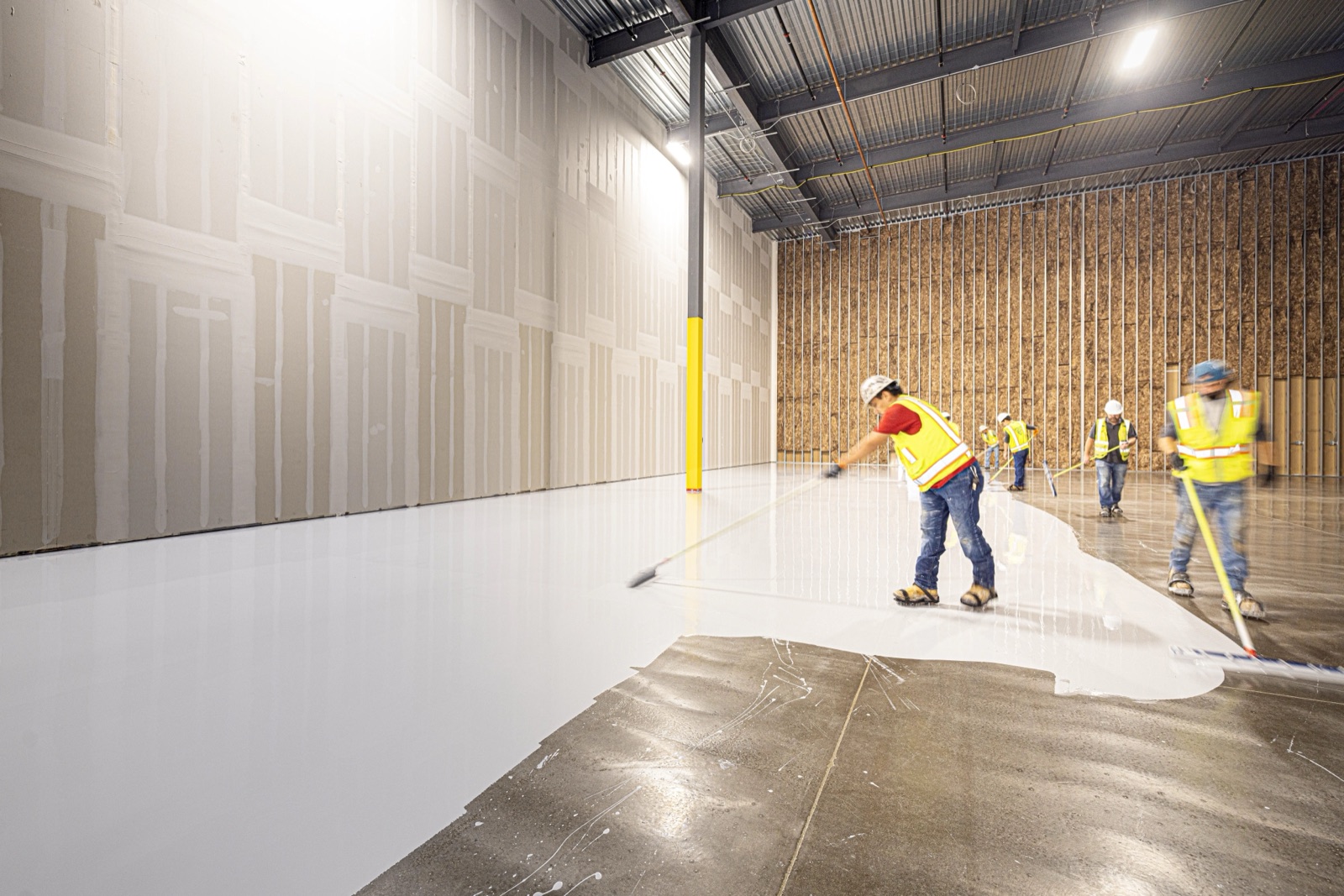
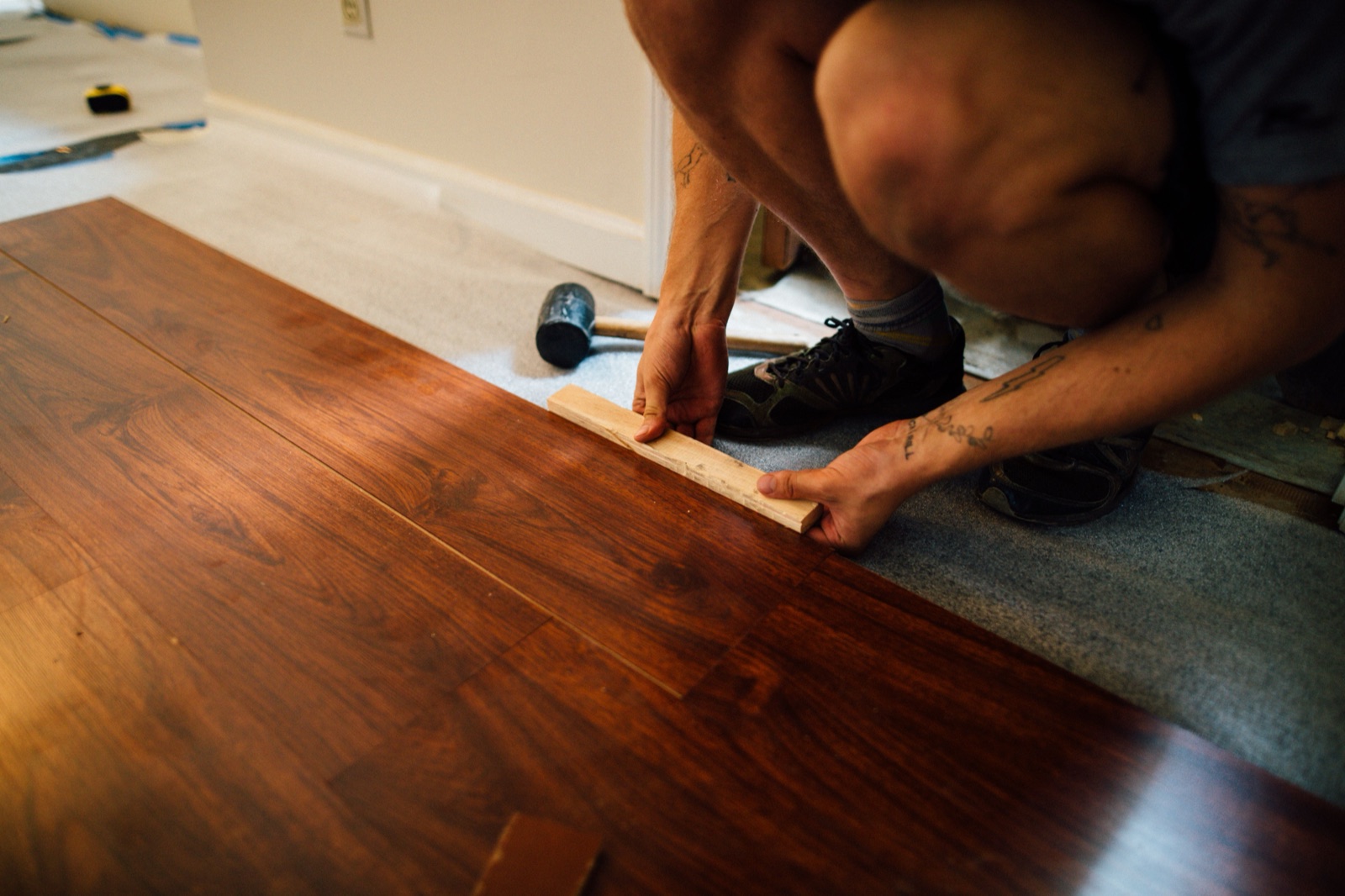
AI assisted with organizing text, not photography. Licensed illustrative photographs by Craftsman Concrete Floors and K / Pexels under the Pexels License. They are not ZWC sites, suppliers, team members, customer projects, technical approvals or recommended installation methods. The white liquid in the hero has not been independently identified. No endorsement is implied.