
Quick answer
Define footwear defects before production, not after inspection. For each visible or functional issue, state where it is measured, the approved reference, how evidence is recorded, and whether it is critical, major, minor or acceptable variation. Do not copy a generic defect list into every order: a safety shoe, leather dress shoe, molded sandal and fashion sneaker require different controls.
Who should use this guide
This guide is for private-label buyers, importers and product teams preparing a footwear specification, golden-sample approval or inspection brief. It covers finished footwear and common assembly risks, but it is not a laboratory test standard or a substitute for product-specific compliance advice.
The practical problem is not that buyers forget the word “quality.” It is that terms such as poor stitching, color difference or open glue do not tell the supplier what is unacceptable. A useful defect standard connects the issue to a location, reference, measurement or viewing method, severity decision and evidence requirement.
Start with four severity decisions
Severity should reflect the product’s intended use and the buyer’s written requirements. The descriptions below are a decision framework, not universal acceptance rules.
| Severity | Buyer-side meaning | Typical decision question |
|---|---|---|
| Critical | Potential safety, legal, labeling or unusable-product concern | Must the unit or lot be stopped pending qualified review? |
| Major | Likely to cause rejection, functional failure, serious appearance concern or incorrect saleable product | Would the intended customer reasonably reject or return it? |
| Minor | Workmanship deviation that does not materially prevent intended use but falls outside the approved appearance | Is rework practical, or is a defined allowance acceptable? |
| Acceptable variation | Difference already permitted by the specification, approved sample or material character | Is it within the documented range and consistent across the pair? |
Do not let an inspector invent severity during the visit. The buyer should approve the defect library and any sampling or acceptance rule before inspection begins. Where safety or regulatory questions arise, stop and obtain qualified technical or legal advice.
Build a style-specific defect library
Use real photographs from development and pilot production when available. Crop each image close enough to show the issue, but retain one wider view that identifies the shoe area. Give every defect a stable code so the specification, inspection report, corrective action and reinspection can refer to the same item.
| Control area | What to define before production | Evidence to request |
|---|---|---|
| Pair identity | Style, color, size, left/right pairing and approved version | Pair photo plus labels and packing reference |
| Upper material | Approved grain, nap direction, print placement, shade range and permitted natural variation | Neutral-light comparison with controlled reference |
| Stitching | Seam location, stitch path, skipped or broken stitches, loose ends and visible repair limits | Close-up and wider location photo |
| Cementing and bonding | Areas where adhesive exposure, edge opening or separation is unacceptable | Sidewall close-up; flex or bond evidence only if an approved method exists |
| Sole and heel | Alignment, rocking, deformation, surface finish, component match and attachment | Bottom, side and rear views on a level surface |
| Shape and symmetry | Toe shape, topline, quarter height, lasting wrinkles and left/right consistency | Paired front, rear and top views |
| Components | Eyelets, hooks, zippers, buckles, ornaments, laces, insoles and removable parts | Function evidence and component-count photo |
| Inside workmanship | Lining, seams, rough edges, exposed fasteners, foreign matter and insole placement | Interior photo with safe illumination |
| Marking and packaging | Size, country/market labels, barcode, carton assortment, inserts and protection | Readable label evidence and packed-unit views |
This table does not decide which defect is allowed. It tells the buyer which decisions must be written.
Six footwear defect groups buyers should define
1. Bonding and open edges
Separate cosmetic adhesive residue from an actual opening between components. Define the inspection location, whether the gap is continuous or isolated, and how it is observed without damaging the shoe. If flexing, peel testing or destructive testing is required, the method, equipment, conditioning and sample disposition must be approved separately. A photograph alone cannot prove bond strength.
2. Color and material matching
Color should be assessed against the approved material or sealed sample under a specified viewing condition. The buyer should state whether comparison is pair-to-pair, panel-to-panel, size-to-size or batch-to-batch. Natural leather, suede, washed materials and printed textiles may have intentional variation; the permitted range needs visual references rather than a vague instruction to “match perfectly.”
Record light source or viewing setup, reference ID, production batch and camera limitations. Phone photographs can document a decision but may not reproduce color accurately enough to make the decision remotely.
3. Stitching and seam workmanship
Mark the seams that are appearance-critical or function-critical. Define how to treat skipped stitches, broken threads, seam deviation, puckering, loose ends and visible repair. A loose thread that can be trimmed is not the same condition as a broken structural seam. The defect code should preserve that distinction.
4. Shape, lasting and pair symmetry
Judge shape with the pair placed consistently, laces or closures set the same way, and removable packing treated according to the inspection brief. Compare toe spring, topline, heel position, quarter height and visible wrinkles using the approved sample and pattern intent. Avoid declaring a defect from a single angled photograph.
5. Sole, heel and component assembly
Confirm that outsole, midsole, heel, welt or foxing matches the approved construction and is aligned with the upper. Define unacceptable rocking, deformation, component mismatch, visible gaps and finish damage. For molded components, keep cavity or batch identification where it supports traceability, without exposing confidential tooling information in public records.
6. Labels, accessories and packaging
A well-made shoe can still be unsaleable if the size, color, pair, barcode, required label, accessory or carton assortment is wrong. The inspection brief should connect the physical shoe, inner label, box label and carton record. Visual barcode appearance is not scan verification; use an approved scanning method when barcode performance is a requirement.
A practical approval workflow
- Freeze the current style files, bill of materials and approved sample reference.
- List the defects that affected development samples or could materially affect this construction.
- Add annotated photographs and stable defect codes.
- Assign proposed severity with the product team; escalate safety, legal and test questions.
- Define viewing, measurement or functional-check methods and their limitations.
- Agree what can be reworked, who approves rework and what must be reinspected.
- Pilot the defect library on pre-production or early production units.
- Resolve ambiguous wording before final inspection.
- Keep report evidence by defect code, size, color and inspected unit.
- Use recurring defects to update the next specification and supplier corrective-action plan.
Red flags that justify a pause
- the supplier and inspector use different approved samples or file revisions;
- a defect is classified only from a distant or color-shifted photograph;
- “handmade variation” is used without an approved visual range;
- reworked units are mixed back into finished stock without identification or recheck;
- one defect name combines cosmetic residue, component opening and bond failure;
- the pair, size, color or production batch cannot be traced in the report;
- functional checks are performed without an agreed method; or
- a safety or labeling concern is downgraded as ordinary workmanship without qualified review.
What a defect library cannot prove
A defect library improves communication and reporting; it does not prove material composition, chemical compliance, long-term durability, bond strength, slip performance, fit across a population or conformity with destination-market requirements. Those questions may require approved specifications, supplier documentation, laboratory testing, wear trials or specialist review.
It also cannot rescue an unstable process by itself. If the same defect repeats, investigate material, machine, method, tooling, environment, training and production controls rather than negotiating a new name for the problem.
Prepare a footwear inspection brief
ZWC Sourcing can help buyers organize the style reference, known defect risks, inspection evidence and supplier follow-up before shipment. Send the product type, current specification, approved sample status, order quantity, factory location and expected ship date.
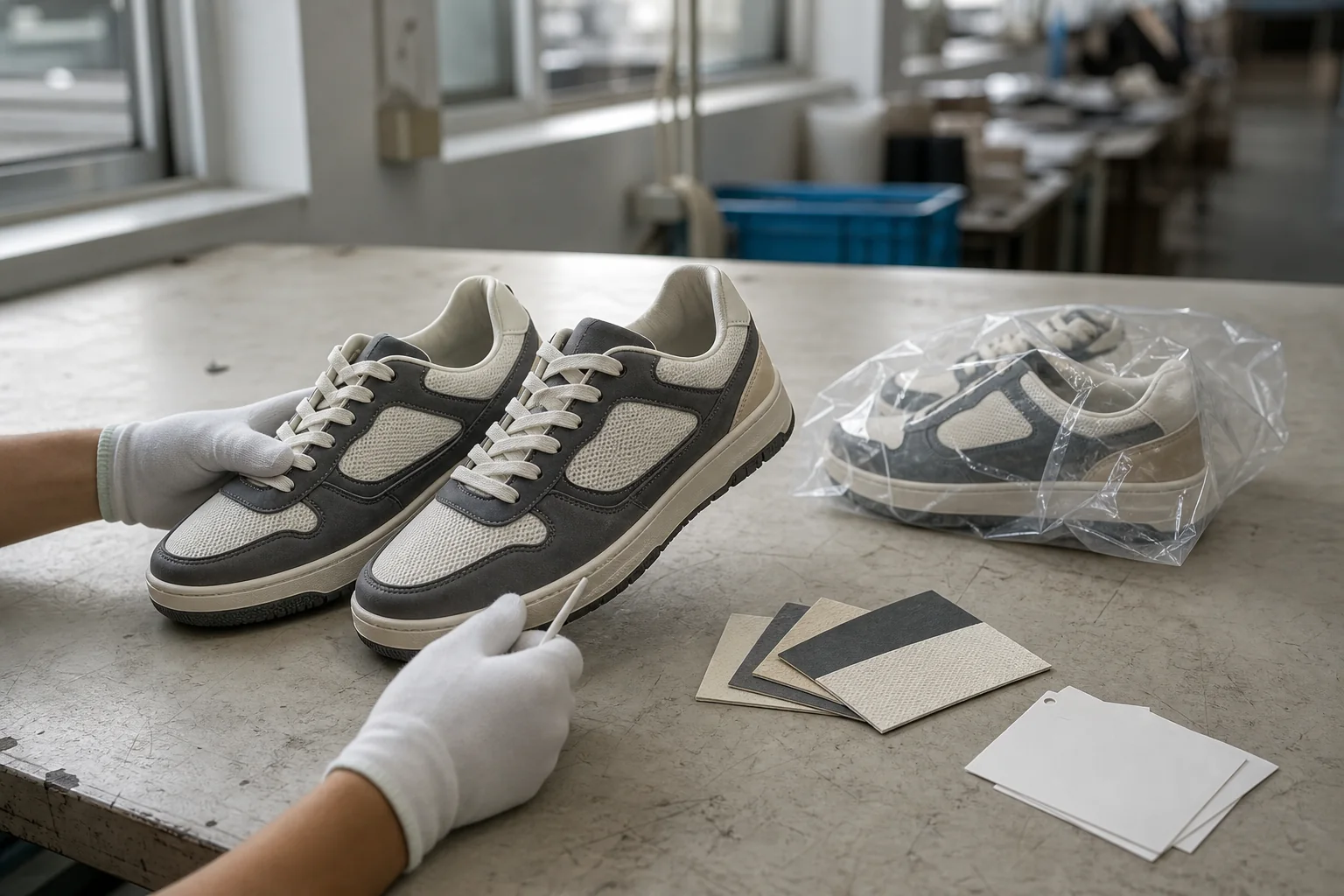
AI assisted with research organization, drafting and creation of the illustrative hero image. Buyer-specific technical, legal and commercial decisions still require verification for the actual product and order. The image is illustrative and does not depict a named ZWC client, supplier or verified project.