
Quick answer
Do not treat a paid mold as a line item that disappears after the first invoice. Before authorizing tooling in China, identify the tool, approved drawing, payer, contractual owner, factory location, custody duties, maintenance rules, production-use limits, modification approval, access to records, transfer procedure and end-of-life decision. Release each payment against evidence—not only a supplier message saying the mold is finished.
Who should use this checklist
This guide is for overseas buyers developing private-label footwear, shoe soles, molded rubber or plastic parts, metal components, packaging dies, jigs, fixtures or other custom production tools with a Chinese supplier.
Commercial ambiguity starts when different assets are all called “the mold.” A supplier may mean an insert, mold base, last, cutting die, fixture or complete tool set, while the buyer expects design, trials, revisions, maintenance and transfer. Define the scope in writing.
Build a tooling register before payment
Create one row per controlled asset. Use a stable tool ID across quotations, drawings, approvals, photographs, maintenance logs and transfer documents.
| Control field | What the buyer should record | Evidence to retain |
|---|---|---|
| Tool identity | Tool ID, product/style, component, size or cavity, tool type | Marked-tool photographs and register entry |
| Technical basis | Current 2D/3D drawing, revision, material and key construction details | Approved file set and change history |
| Commercial scope | Design, manufacture, trial, sample quantity, correction rounds and exclusions | Itemized quotation and purchase order |
| Payment | Deposit, trial milestone, approval milestone and retention if agreed | Invoice, payment record and milestone evidence |
| Ownership position | Contractual owner, permitted user and any supplier contribution | Signed agreement reviewed for the transaction |
| Physical custody | Factory name, exact site, responsible person and storage condition | Dated location photographs and custody record |
| Use restriction | Approved products, orders, customers and subcontractors | Written authorization and production records |
| Maintenance | Routine care, repair threshold, cost responsibility and reporting | Maintenance log, repair approval and photographs |
| Modification | Who may request, approve and pay for a change | Revised drawing, quotation and written approval |
| Output history | Trial and production quantities or cycles where useful | Supplier log tied to tool ID and order |
| Transfer | Release conditions, packing, transport, receiving inspection and file handover | Transfer checklist and signed receipt |
| End of life | Storage, return, destruction or replacement decision | Authorized disposition record and evidence |
This register does not prove legal ownership. It connects the commercial agreement to the physical asset and evidence chain.
Separate five decisions that buyers often combine
1. Who paid?
Record every contribution, including development charges hidden inside the unit price. Payment can support the buyer’s commercial position, but payment alone should not be treated as a complete answer to ownership or release rights.
2. Who owns the tool under the agreement?
Use explicit language identifying the tool and the parties. Do not rely on “customer mold” in a chat message. The agreement should address ownership, permitted use, custody, access, transfer and remedies in terms appropriate to the governing law and transaction.
3. Who physically holds it?
A buyer-owned tool may remain at the supplier because moving it is costly or impractical. Custody should identify the legal factory entity and the actual site. If a subcontractor holds the tool, that fact and the supplier’s responsibility should be disclosed.
4. Who may use it?
Ownership and use are different controls. State whether the tool is exclusive to the buyer’s products and orders, whether trial parts may be retained, and whether any use for another party requires written approval.
5. Who can move or modify it?
Define the approval route before a dispute or supplier change occurs. A transfer can require safe shutdown, condition inspection, packing, lifting, transport, customs or tax review, receiving inspection and updated files. Modification should not rely on an obsolete drawing or informal voice message.
A practical tooling-release sequence
Step 1: approve the technical package
Confirm the product revision, tool concept, cavities or sizes, material, key interfaces and expected trial output. Record unresolved technical points rather than allowing the toolmaker to guess.
Step 2: normalize the quotation
Separate tool design, manufacturing, trial material, sample quantities, correction rounds, shipping, taxes and recurring maintenance. State what happens if the first trial does not meet the approved package. A low tool price may simply exclude correction work.
Step 3: create the tool ID and evidence plan
Decide how the tool will be marked and photographed. Specify the views needed: overall tool, identification mark, cavity or working surface, inserts, replaceable parts and storage condition. Avoid publishing sensitive geometry outside the controlled project record.
Step 4: link payments to observable milestones
Milestones may include approved design release, manufacturing evidence, first trial, correction closure and final acceptance. The exact payment structure depends on the project. The buyer’s principle is that each payment should correspond to a defined deliverable and evidence package.
Step 5: approve trial output, not appearance alone
Compare trial parts with the current specification and approved measurement method. Record open deviations, process conditions relevant to reproducibility, and whether the trial material matches intended production material. A visually acceptable sample does not automatically prove stable production capability.
Step 6: issue the production-use and custody record
After approval, confirm tool location, authorized products, current drawing revision, maintenance owner and change authority. Where practical, keep synchronized buyer and supplier copies of the register and approval evidence.
Evidence to request during the tool’s life
- dated photographs showing the tool ID and condition;
- current drawing and revision history;
- trial reports and approved sample references;
- maintenance or repair log tied to the tool ID;
- written record of insert, cavity or geometry changes;
- production or cycle information when it matters to maintenance planning;
- location confirmation after a factory move or subcontracting change; and
- condition and completeness check before any transfer.
Set the evidence cadence according to tool value, wear risk and business importance. A cutting die does not need the same plan as a multi-size outsole mold set.
Transfer checklist before changing suppliers
- Confirm the contractual release basis and any unpaid, disputed or supplier-funded amount.
- Inventory every tool, insert, spare, fixture, gauge and associated file by ID.
- Photograph condition before packing and record known damage or maintenance needs.
- Define shutdown, removal and packing responsibility.
- Confirm transport method, insurance responsibility and receiving location.
- Review whether taxes, customs, controlled technology or other regulatory issues apply.
- Inspect the shipment on receipt before accepting the transfer as complete.
- Update custody, access, drawings and obsolete-location records.
- Run a receiving trial before relying on the tool for a commercial order.
Red flags that justify a pause
- the quotation says only “mold charge” with no tool list or technical scope;
- the supplier refuses to mark or photograph the tool;
- the invoicing entity and tool-holding factory are different but unexplained;
- a subcontractor controls the tool and the buyer has no documented release route;
- the supplier claims exclusivity but will not state permitted use in writing;
- changes appear in trial parts without a revised drawing or approval;
- maintenance charges arrive with no condition evidence; or
- the buyer is asked to pay the final tooling balance before trial deviations are closed.
What tooling records cannot prove
A tooling register cannot prove title, enforce a contract, guarantee tool life, establish regulatory compliance or show that the supplier can reproduce acceptable parts at scale. It does not replace qualified legal advice, engineering validation, appropriate testing, supplier verification, production follow-up or product inspection.
Its practical value is control. The buyer can identify the asset, connect it to the approved product, see where it is held, authorize changes and prepare a transfer before commercial pressure removes those choices.
Prepare the tooling-control package
ZWC Sourcing can help buyers organize product files, supplier quotations, trial status and evidence gaps before tooling authorization or production follow-up. Send the product category, current drawing or reference, tool quotation, supplier status, target quantity and timing.
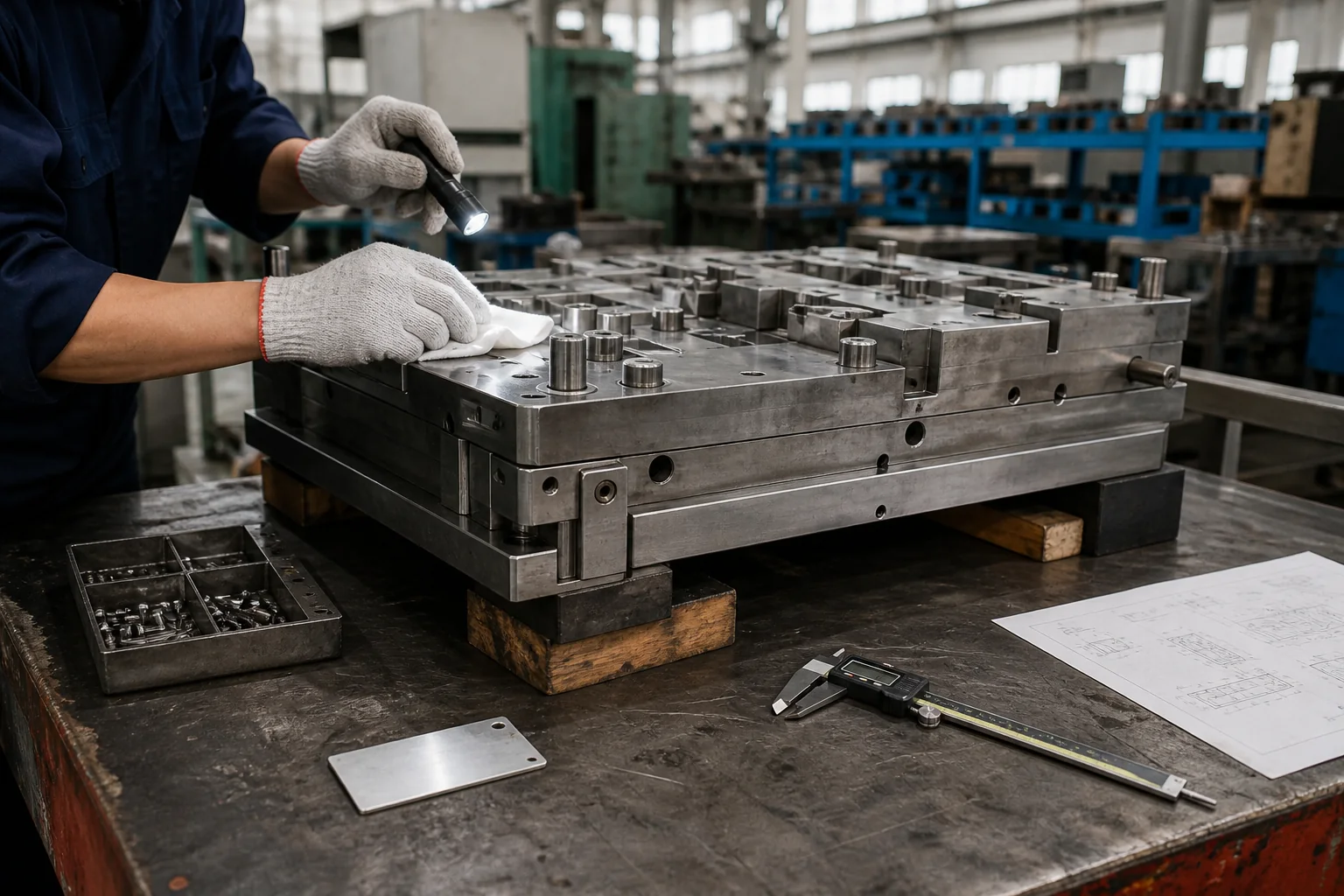
AI assisted with research organization, drafting and creation of the illustrative hero image. Buyer-specific technical, legal and commercial decisions still require verification for the actual product and order. The image is illustrative and does not depict a named ZWC client, supplier or verified project.