
Quick answer
A police-footwear enquiry should identify the buying authority, intended duty group, permitted product scope and issue or replenishment arrangement before suppliers nominate models. Keep uniform appearance, product evidence, wearer assessment and purchasing authority as separate decisions. A black boot described as tactical does not establish eligibility for a police contract. This guide helps organise procurement questions; it does not recommend a model, prescribe protection or approve footwear for duty.
The quotation may be answering the wrong brief
Imagine a buyer requesting one price for patrol boots while leaving the intended users and replacement arrangement unspecified. One supplier proposes a stock catalogue model. Another assumes a development project with an identified size range and controlled revisions. This is a hypothetical comparison, not a ZWC order. Comparing the two unit prices would not reveal whether either supplier has answered the purchasing question.
Start by asking who is buying, who can define the requirement and what the next decision will authorise. A request for market research is not permission to commission an approved uniform item. A development sample is not an issued product, and a similar replacement is not automatically the authorised revision.
No police organisation, workplace or wearer has been assessed for this article. There is no physical boot examination, field trial or qualified technical approval behind it. Product-specific selection, protective features, applicable requirements and acceptance belong to the responsible organisation and appropriately qualified advisers.
Use procurement categories as a scope check
BlueLight Commercial's public footwear page separates police general safety boots, specialised duty boots and public order boots into different lots, alongside a separate fire-and-rescue category. Its 25 June 2025 announcement also describes a product-specific lot structure. These are examples from one named procurement arrangement, not universal police-footwear classes.
The useful lesson is to identify the actual purchasing category before approaching suppliers. The public summary does not provide the complete product specification, prove that a particular boot is suitable or make ZWC an eligible framework supplier. We have not obtained the restricted framework documents. No tender participation, buying route or relationship with BlueLight or any police organisation is offered here.
Ask the buyer which current documents govern its enquiry. Keep the document title, issuer, revision and intended product scope together. Do not fill a missing specification with another organisation's catalogue language or an older tender's requirements.
Build a duty and issue brief without inventing the answers
The organisation's task and risk information should shape the enquiry. A photograph of a uniformed person cannot supply that record. Nor should the sourcing team decide that all wearers share one working route, climate, size requirement or replacement need.
Use this original worksheet to collect authorised inputs. It is a question register, not a recommended boot specification or a workplace assessment.
| Brief field | Obtain from the authorised buyer | Keep separate | Pause when |
|---|---|---|---|
| Buying scope | Organisation, market, actual duty group and controlling documents | General patrol enquiry versus a specialist procurement | A category name is the whole brief |
| Task and environment | Declared activities, routes, surfaces, weather and relevant conditions | Observed context versus the employer's assessed requirements | A stock photograph substitutes for task information |
| Uniform and interfaces | Permitted appearance reference and questions about clothing or equipment | Appearance approval versus suitability and compatibility | A visually similar boot is assumed to satisfy every requirement |
| Wearer and issue range | Authorised size allocation and assessment process | Purchasing quantities versus individual fit decisions | One sample or size label is treated as a complete range |
| Replenishment | Expected order pattern, model revision and replacement-change owner | Forecast demand versus confirmed orders | An unspecified successor model may enter later deliveries |
Record unknowns explicitly. A supplier can then distinguish a request to locate possible products from a request to price an identified specification. Ask what information it needs for the next bounded response, rather than encouraging an unrestricted assurance that its boot is suitable for police work.
Keep a product claim attached to its conditions
HSE's footwear guidance explains why surfaces and contaminants matter when assessing slip-related claims. Sole pattern and compound interact with the contact conditions; appearance alone cannot establish performance. A result involving one wet surface is not evidence for every other contaminant. HSE also distinguishes resistance to oil damage from slip performance.
For the buying file, connect the proposed model and revision to the evidence actually supplied. Record the method, specimen state and conditions rather than copying an isolated result. Appropriate reviewers must decide whether that evidence addresses the organisation's requirement.
The HSE page still refers to older standards and markings. Its purchasing principles are useful here, but those passages are not presented as a current standards checklist or police approval. No friction threshold, outsole formulation, tread dimension or protective configuration is prescribed. Current applicable requirements need separate verification for the actual procurement.
Separate the next commitment from permission to issue
An enquiry can proceed while some technical questions remain open, provided the next step is defined and does not masquerade as acceptance. Buying an identified sample for review is different from authorising a product for duty. Keep those decisions visible when suppliers discuss development charges, stock reservations or recurring deliveries.
This second original register gives the commercial discussion an evidence boundary. It does not create legal contract terms or technical passing criteria.
| Next purchasing step | Connect before commissioning it | Decision owner to name | It does not establish |
|---|---|---|---|
| Candidate search | Authorised duty brief and permitted product category | Buyer responsible for the enquiry | Supplier or model qualification |
| Documentary comparison | Actual model, revision, complete evidence and unresolved fields | Appropriate product or technical reviewer | Acceptance from a catalogue pass statement |
| Representative submission | Identified sizes, supplied state and specific review questions | Organisation's authorised review team | Universal fit, comfort or protective performance |
| Order proposal | Approved scope, quantities, exclusions and remaining hold points | Authorised commercial and technical parties | Permission to ignore unresolved suitability questions |
| Repeat delivery | Approved revision, change notification and stock reconciliation | Named buyer and change authority | Automatic equivalence of a replacement component or model |
Any wearer evaluation must be authorised and safely controlled by the organisation. Do not stage wet-floor, oil, heat, chemical or other hazardous demonstrations to compare products. Wearer preferences and observations need their own records; they are not certifications or evidence of injury prevention.
Make the repeat-order question part of the first enquiry
Ask how a proposed supplier identifies the product through later orders. Which model and component references remain controlled? Who receives notice if an input is discontinued? What happens to already purchased stock and open orders if a replacement is proposed?
These are continuity questions, not permission to make a substitution. Keep the old and proposed revisions distinct until the responsible parties decide what evidence and approval are needed. A similar colour, profile or catalogue family cannot answer that decision.
Separate the quoted quantity, size allocation, available stock and future supply assumptions. Record actual quotations and their dates rather than inventing a service-life replacement interval, guaranteed availability or savings from one consolidated model.
Our general footwear supplier requirements guide covers wider development records. The hiking-footwear evidence guide addresses a separate recreational product claim; neither is a police specification or a substitute for the buyer's authorised scope.
Send a permitted brief, not sensitive operational records
For an initial sourcing discussion, share the destination, publicly shareable product brief, buying stage, quantity basis and unresolved supplier-information question. Do not send deployment plans, security-sensitive operational details, personal medical information or restricted procurement documents through the enquiry form.
ZWC can discuss whether a project-specific supplier-search or coordination scope is available. Specialist capability, eligibility, product assessment and acceptance require separate confirmation. This article does not establish ZWC as a qualified police or PPE supplier, laboratory, safety adviser or certifying authority.
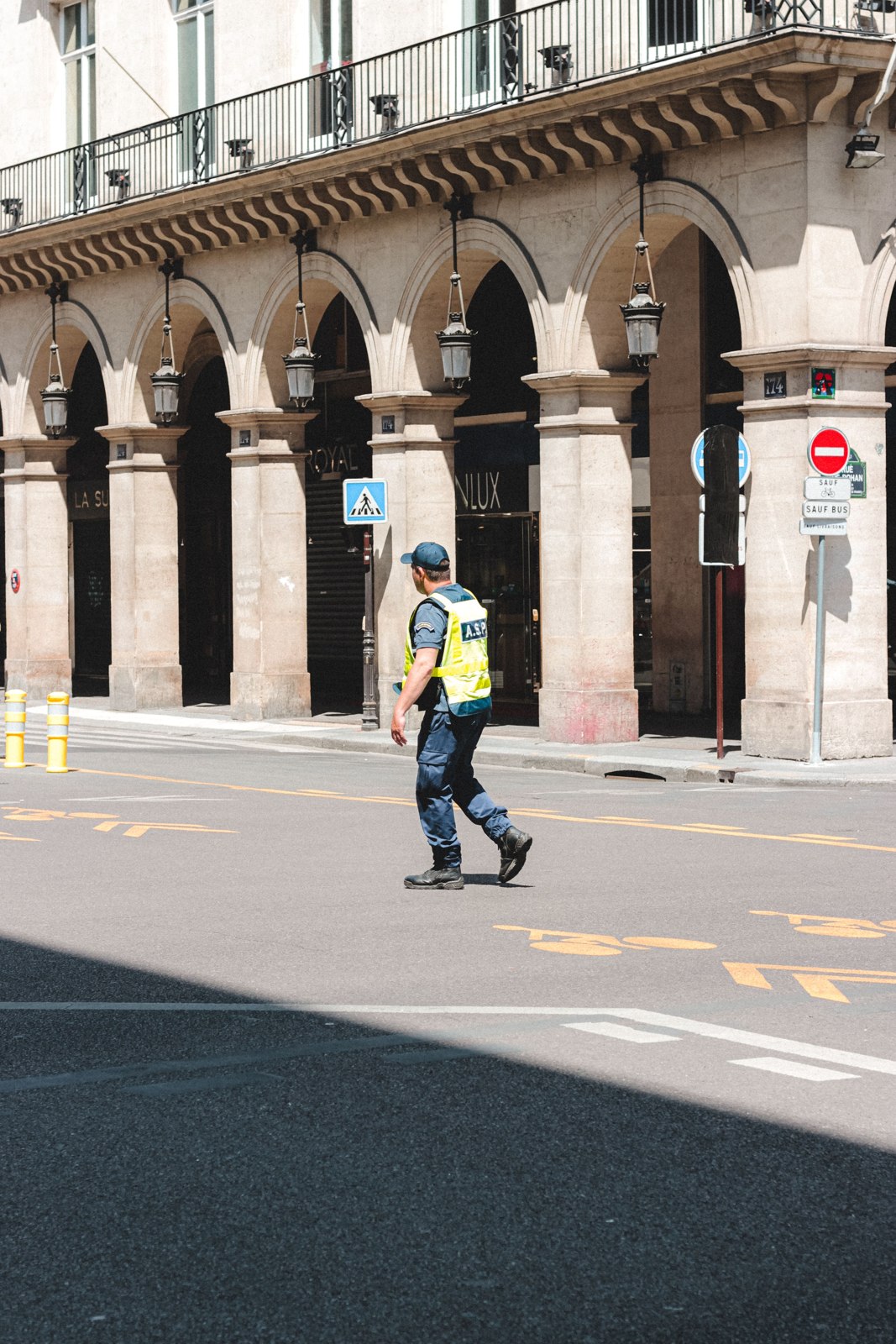
AI assisted research organisation and drafting, not photography. Hero: Mathias Reding / Pexels. Other historical stock photographs credited beside each image. All Pexels License, full-frame resized/compressed only. Images illustrate routes and visible interfaces, not ZWC staff, projects, suppliers, approved footwear, agency relationships or real wearer assessments. No person, agency, brand or photographer endorses ZWC. Image locations, duty status and footwear materials/performance are not verified. The two matrices are original procurement questions; no expert approval is claimed.