
← Back to the 7-step process

Map the ecosystem before choosing the factory.

An interactive guide to ZWC's supplier-mapping approach across footwear, apparel, bags and industrial electrical products in China, with selected cross-border sourcing coordination.

A shortlist should explain why each supplier belongs.

We begin with the product's manufacturing logic, then identify the cluster, process capability and commercial conditions that matter. The result is not a directory. It is a comparable, evidence-led set of options for the buyer to review.

The right supplier is usually found in the right production ecosystem.

Explore how we frame supplier searches across four core industries in China, then see how the same buyer-side method can coordinate a second sourcing country when the product case supports it.

Supplier mapping network across China and PakistanA schematic map showing footwear, apparel, bags and industrial electrical sourcing nodes in China and a leather footwear coordination route to Lahore, Pakistan.
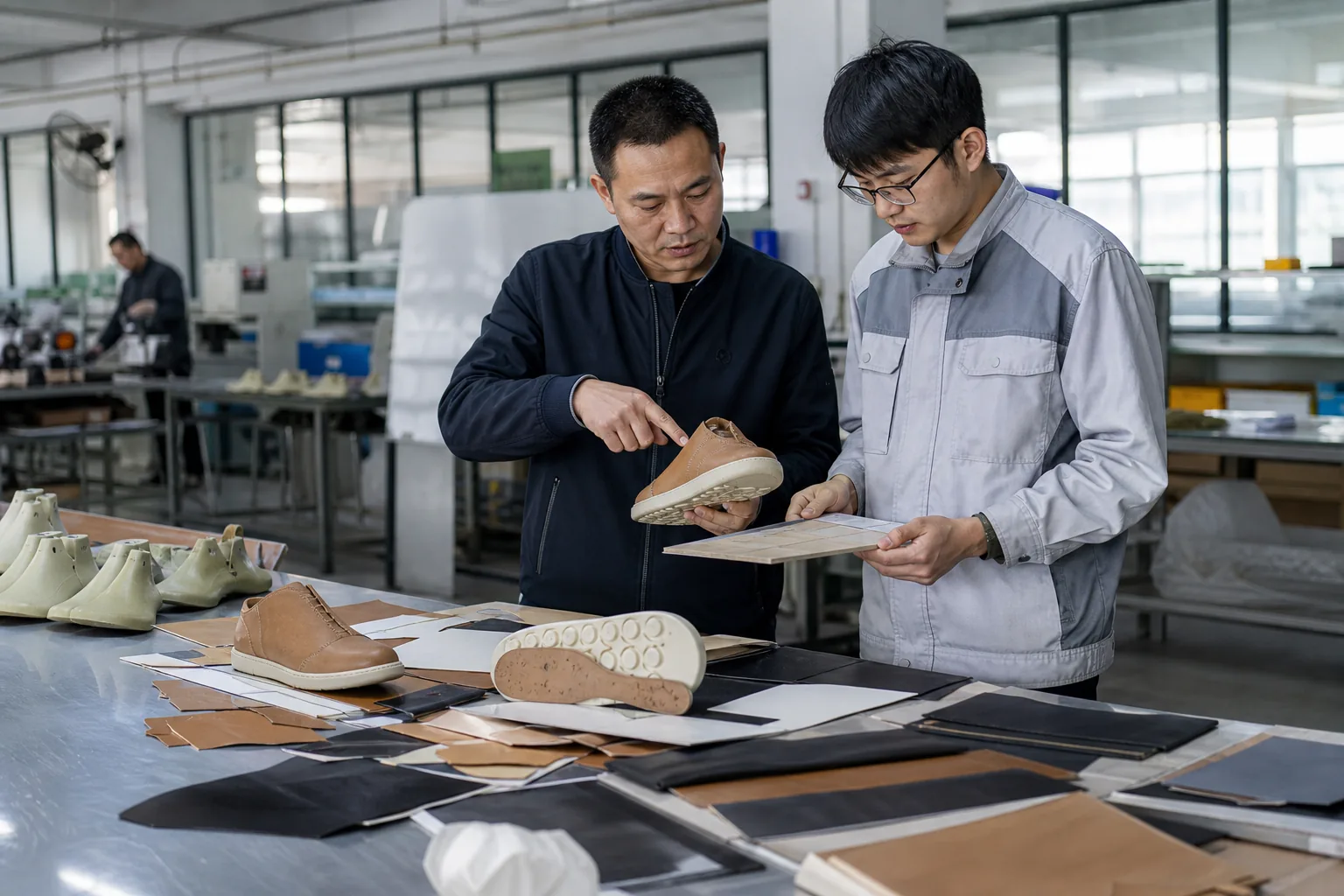
Footwear technicians reviewing an unbranded leather shoe sample, outsole and material options in a sample workshop
Representative production scene · not an audit record
Houjie, Dongguan · China

Map footwear around the construction.

A footwear factory is only a fit when its lasts, patterns, upper-making, outsole access and sample room match the product. We map those dependencies before comparing the quote.

Best for
Private-label casual, dress and fashion footwear; development that needs coordinated uppers, lasts and outsoles.
Map first
Last and pattern capability · outsole and mould access · sample-room speed · material consistency

What ZWC compares before a supplier reaches the shortlist.

Product evidence
Comparable samples, process fit, material access and the people who will actually develop the product.
Quality control
Approval records, inspection points, testing expectations, defect handling and change control.
Commercial reality
MOQ, tooling, sample cost, price structure, payment terms, lead time and capacity assumptions.
Cooperation risk
Factory identity, communication discipline, subcontracting exposure, document consistency and escalation path.

Cluster context is cross-checked against public industry information from Dongguan Houjie, Keqiao, Guangzhou Shiling, Yueqing and Pakistan's Trade Development Authority. Cluster strength does not replace supplier-level due diligence.

Build a supplier map around a live buying brief.

Share the product, target market, volume, quality level and current sourcing problem. We will use those constraints to define the right search, comparison and verification path.