

Quick answer
Treat an existing apparel fit block as a candidate for a new customer brief, not an approval inherited from a country code. Before asking for a graded range, compare the intended wearer, fit preference, product use and material direction with the evidence behind that block. Decide whether to investigate reuse, commission an adaptation or develop a different reference. A matching size label does not settle that choice.
The shortcut that can hide a second development project
A supplier offers an existing block and says it is suitable for your destination market. You already sell a garment carrying the same size labels. Reusing the block sounds straightforward, but the two descriptions may refer to different customers, silhouettes or wearing situations. The unresolved work is not necessarily a larger sample order. First establish what the proposed starting point was developed to do.
This guide addresses that early comparison. It does not tell a pattern cutter how to alter a block or authorize bulk cutting. Once a reference and development route have been agreed, use a separate size-set approval process to review the actual range and revisions.
Write the customer brief without a regional stereotype
Start with the garment category and the customers you intend to serve. Record the fit proposition in ordinary language: close to the body, room for specified layers, a particular silhouette or another defined expectation. Describe the actual wearing context and the customer evidence available. Do not replace missing information with assumptions about an entire nationality, gender or age group.
Hohenstein's public sizing guidance describes size charts tailored to customer groups and products, with body shape as part of the sizing problem. They do not provide a universal national block or validate a supplier's proposal. Use that distinction to ask which population and product assumptions are represented, not to invent country-to-country measurements.
A brand's own guide can illustrate the same boundary. Patagonia's US men's guide identifies its charts as body measurements and describes fit in relation to product use. That is a statement about its own guidance, not a measurement specification to copy into another brand's technical pack. No Patagonia block, dimensions or design is supplied here.
Compare the evidence behind the two briefs
Use the following worksheet before turning a supplier's existing reference into a sampling instruction. Record a source or an explicit unknown for each side. Agreement in one row does not resolve the others.
| Comparison area | Your proposed product brief | Evidence to request for the candidate block | Unresolved decision |
|---|---|---|---|
| Intended wearer | Defined customer group and available body-reference basis | Population, reference source, scope and date used in development | Is that reference relevant to this brief? |
| Fit proposition | Intended silhouette, room and wearing context | Documented fit intent and the product context previously reviewed | Are the two propositions actually comparable? |
| Product identity | Garment category and design features that matter to fit | Identifiable block, base reference and known derivative style | Are we discussing the same controlled starting point? |
| Material direction | Proposed fabric, construction and finishing state | Material and state associated with the available sample or review | What needs a fresh technical assessment? |
| Supporting evidence | Lawfully usable chart, sample or customer feedback | Review record, sample identity and limits of previous acceptance | What does the evidence establish, and what remains unknown? |
| Authority and access | Named decision owner and agreed development scope | Permission to use the files and the supplier's available deliverables | Can this route be investigated without assuming ownership or approval? |
This is an original buyer worksheet, not a completed fit evaluation. It deliberately contains no target dimensions, ease allowances, grade increments or tolerances. The responsible technical developer must determine those for the actual garment and agreed customer reference.
Keep label mapping separate from block selection
If the buyer and supplier use different size codes, make a cross-reference after identifying what each code describes. Preserve the original names and chart revisions. Mark whether an entry refers to the intended body, a finished garment or another reference. A renaming exercise should not silently change the product specification.
Avoid a table headed simply “US versus European fit” unless you have appropriately scoped evidence for the exact comparison. A retail size-conversion chart does not, by itself, establish that two development blocks have the same shape or intent. Nor does one garment bought in a market represent everyone who shops there.
Ask a narrower question: can the supplier demonstrate how this identifiable candidate relates to our stated product brief? If the answer is only a destination name, the development basis remains open. Keep it open in the record rather than labelling it technically accepted.
Choose a development route, not a premature fit verdict
| What is currently established | Route worth discussing | Next deliverable to agree | What must not be inferred |
|---|---|---|---|
| Candidate identity and supporting assumptions are documented; comparison shows no unresolved brief conflict | Investigate reuse of the controlled starting point | Technical review scope and identified sample proposal | Investigation is not fit approval or cutting permission. |
| The starting point is documented, but a defined customer or product requirement differs | Investigate a bounded adaptation | List of proposed changes, affected files and evidence to review | A small change is not automatically simple or cheaper. |
| The candidate's basis is unclear, inaccessible or unsuitable for the agreed brief | Discuss another reference or new development scope | Required inputs, responsible developer and defined output | A new block is not automatically necessary, superior or affordable. |
| The buyer cannot yet describe the target fit or supply a usable reference | Resolve the brief before choosing among blocks | A documented fit proposition and technical decision owner | The supplier cannot fill the gap merely by selecting a country label. |
These routes are procurement discussion states. They are not pattern-making diagnoses. Ask for a comparable quotation covering the agreed work, assumptions, exclusions and deliverables. Keep actual fees, sample quantities and timing in the supplier's project-specific proposal; this article supplies no universal budget or promised saving.
Make the first submission answer the comparison question
Before commissioning work, specify what the next submission is meant to establish. An investigation of reference suitability needs a clear comparison against the brief. It should not arrive as an unexplained garment accompanied by “standard fit.” Conversely, a supplier should not be asked to prove a whole size range when the starting customer proposition is still disputed.
Connect the submission to the candidate identity, proposed material direction, documented changes and questions assigned to the technical reviewer. Record what can proceed next and what still needs evidence. A sketch, a photograph and a numerical chart serve different purposes; none should quietly become a substitute for a review it cannot provide.
If two proposed references remain plausible, ask the developer what evidence would distinguish them. Do not invent a fit trial, collect personal body data through an ordinary sourcing enquiry or ask unqualified staff to pronounce a reference suitable for a population. Any actual wearer assessment needs an agreed professional scope and appropriate handling of participant information.
Stop when the starting point cannot be traced
Pause the block decision if the supplier cannot identify the reference, if the only support is an unrelated sample, or if the proposed file access is unclear. Also pause when buyer comments combine conflicting fit preferences without an authorized owner to resolve them. More confident language will not repair those gaps.
Record the status as proposed, under comparison, selected for development or not selected. Keep technical fit approval and later production release as separate decisions. That separation allows commercial discussions to continue without pretending that a development assumption has already been validated.
For an apparel sourcing discussion, share the garment category, intended customer and market, fit direction, material idea, current reference and unresolved development question. ZWC can discuss a sourcing and follow-up scope. Pattern development, body-reference selection and fit acceptance require the actual responsible technical specialists; this guide is not a claim of in-house fit engineering or testing.
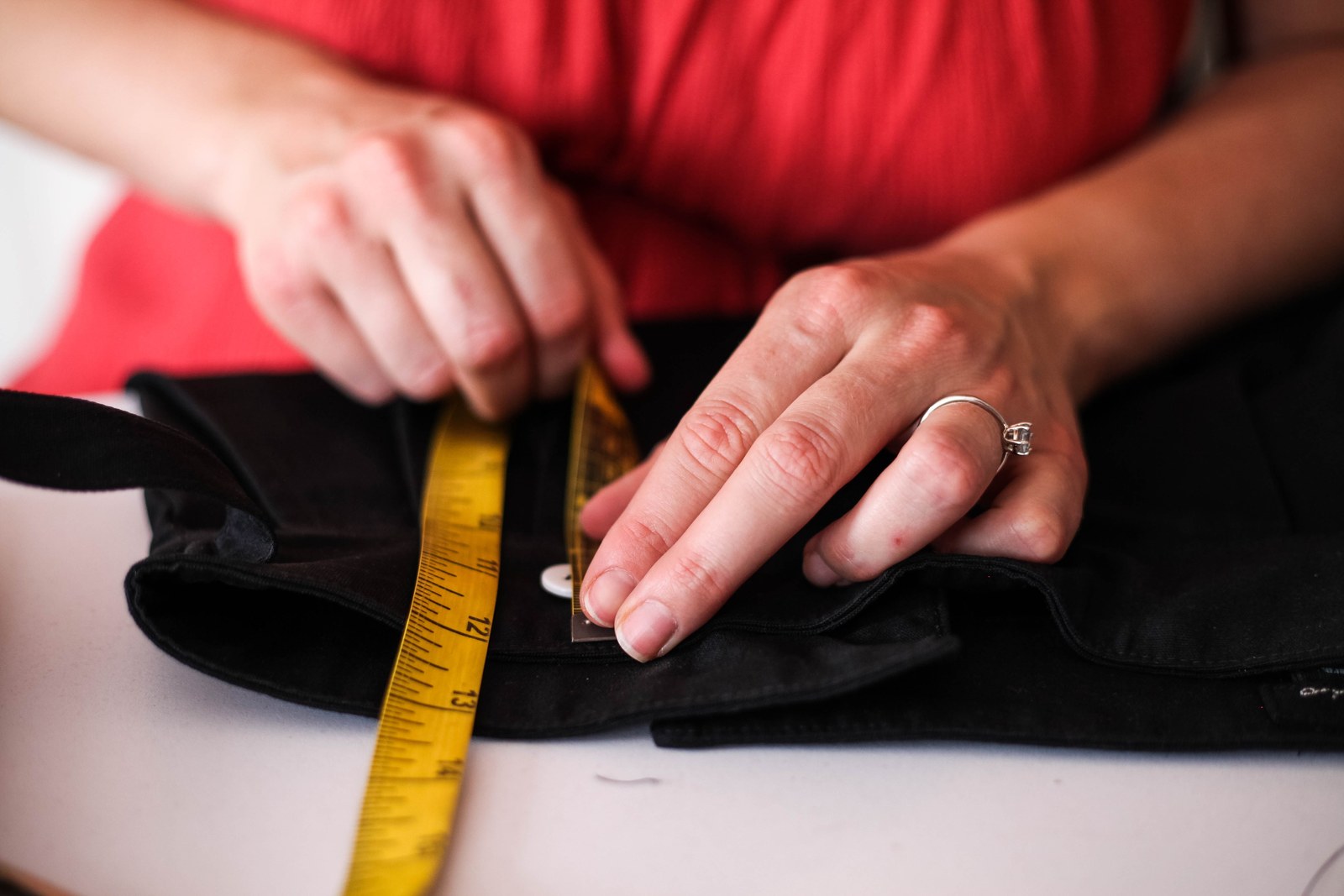
Hero: Wallace Chuck / Pexels; support: Los Muertos Crew / Pexels, credited above. Both Pexels License, full-frame resized/compressed. Historical reference illustrations, not the same garment, customer body data, approved fit or ZWC equipment/sample. No endorsement implied. AI assisted text organisation, not photography.