

Quick answer
A cheaper country label is not a comparable footwear quotation. Evaluate named suppliers in China and Pakistan against the same shoe construction, material specification, size coverage, approval evidence and delivery scope. Use country and cluster information to find candidates, not to approve them. Before moving an order, establish which dependencies change, who controls those changes and whether the complete cost and verification plan still meet your buying brief.
What decision this comparison should answer
This guide is for footwear brands and importers considering a second sourcing country, particularly for leather footwear. The decision is not whether one country is universally better. It is whether a particular supplier and production route can meet a particular order without moving unresolved problems into development, packing or delivery.
Keep the decision narrow. A proposed leather dress shoe should be compared with the actual alternative the buyer would order, not with an unrelated athletic style. If you are changing both construction and sourcing country, separate those decisions. Otherwise, a difference caused by the design may be mistaken for a national cost advantage.
Use industry context as a search lead
Houjie's government describes a footwear ecosystem that includes production, development, procurement and materials markets. That is useful context when organizing a China supplier search. It does not establish the capability, ownership or available capacity of a named factory. Houjie official footwear overview, dated 21 May 2026.
Apply the same distinction to Pakistan. A directory, exhibition list or country profile can identify candidates to investigate; it cannot establish that their sample room, leather source and production controls match your order. This article makes no national price, quality or lead-time ranking and supplies no country-level demand estimate. Regional reputation is not a substitute for product evidence.
Freeze one buying brief before comparing suppliers
Send both suppliers the same controlled package: construction reference, last and fit requirements, upper and lining materials, sole arrangement, finish, size assortment, packing requirements and destination. Mark what is fixed and where an alternative is allowed. Identify the version and the person authorized to approve a change.
A supplier proposal may legitimately differ from the reference. Require a separate deviation list rather than hiding changes inside the price. For leather, descriptions such as genuine or premium do not replace the agreed specification, finish reference and verification requirements. If the proposed leather source changes, establish which approvals need to be repeated rather than assuming the first sample remains representative.
Build a supplier-by-supplier evidence matrix
Use one column for each named supplier, not a column containing every factory in a country. The following matrix is a procurement framework, not a report of completed inspections or a technical test standard.
| Comparison item | Evidence to request | Decision when evidence is missing |
|---|---|---|
| Supplier identity | Contracting entity, production site and disclosed subcontracted stages | Do not treat a catalogue address as the production location |
| Shoe construction | Relevant production-intent sample and process description | Keep the candidate at development stage |
| Materials | Specified source, finish reference and change-control agreement | Do not approve substitution through a generic leather label |
| Fit and sizes | Agreed last, grading references and representative size approvals | Keep unsupported combinations outside release scope |
| Components | Sole, lining, hardware and tooling responsibilities | Identify dependencies before accepting the finished-shoe quote |
| Production control | Pilot route, inspection points and traceable output | Do not infer repeatability from a handmade sample |
| Commercial scope | Itemized quotation, exclusions, currency and delivery basis | Reconcile differences before ranking prices |
| Shipment | Packing, release evidence and responsible parties | Do not confuse factory completion with delivery readiness |
Keep unresolved items visible. Assign an owner and a decision deadline to each material gap. A score with hidden assumptions is less useful than a short list of reasons the buyer cannot yet approve the supplier.
Check the dependencies that travel with the order
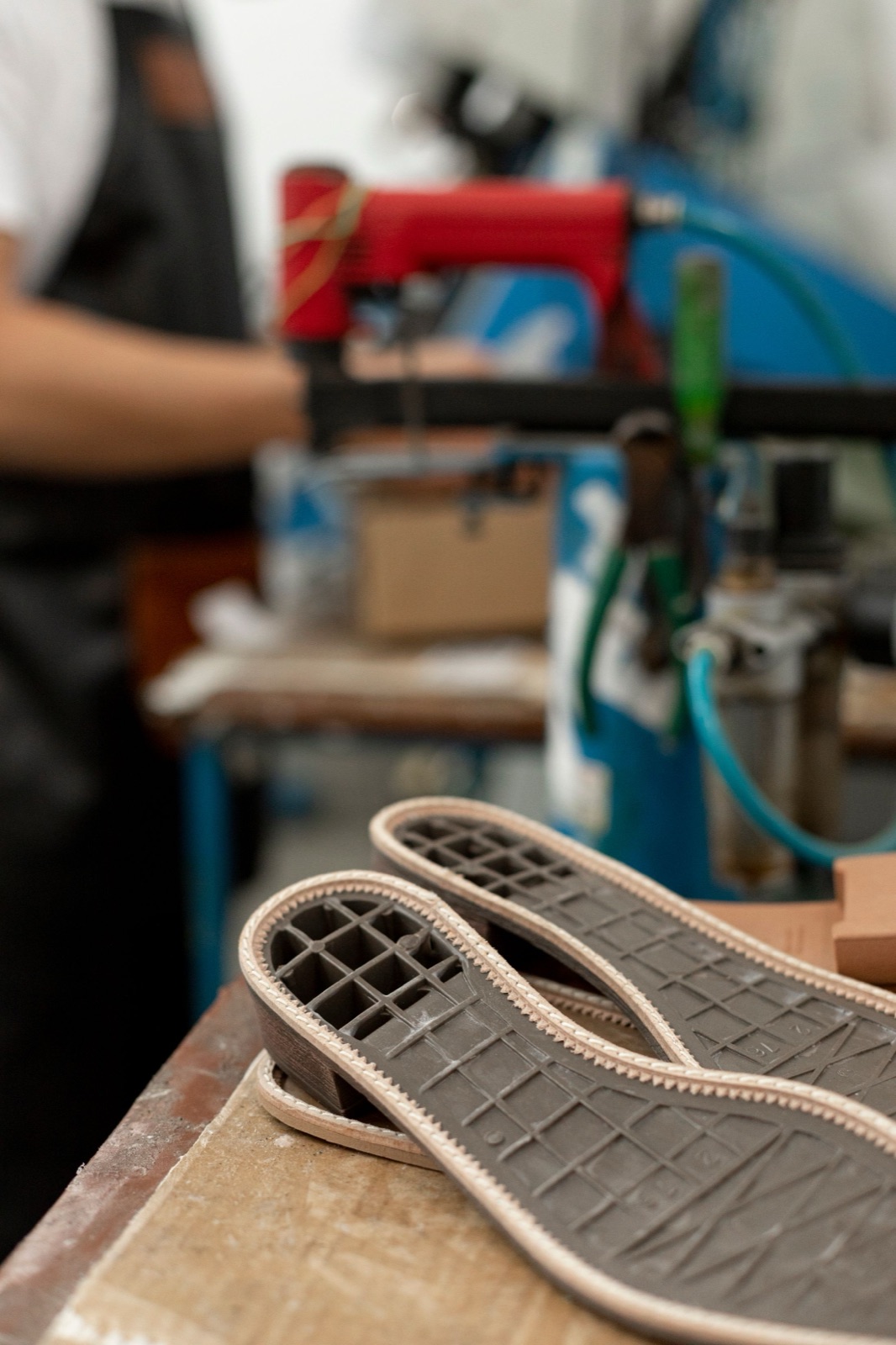
Moving final assembly does not automatically move tooling, approved components or development knowledge. Ask where the last, patterns and sole tooling are held; whether the proposed supplier can use them; and what documented permission or replacement work is required. Do not assume assets can be transferred merely because the buyer paid a development charge.
Map the supply route of each important component. If a component must be sourced separately or shipped across a border, include the purchasing, verification, transport and receiving responsibilities. A second final-assembly location may still share the original material dependency. That can be acceptable, but it is not the same as an independent supply route.
Avoid changing several suppliers at once without a controlled comparison. When the last, leather, outsole and assembly route all change, a failed sample is harder to diagnose. Record each change and use a development plan that can distinguish construction problems from material or execution problems.
Compare the complete commercial scope
Separate one-time development and tooling from recurring unit costs. Request the quotation currency, validity date, quantity by variant, payment milestones and exclusions. Include the sample iterations, inspection arrangements, packing, transport assumptions and any component sourcing outside the factory's scope.
Do not enter unknown costs as zero. Use a worksheet with confirmed, estimated and unresolved entries, and retain the assumption behind each estimate. Compare alternative totals only when their scope is aligned. If an important cost remains unresolved, state how that uncertainty could change the purchasing decision instead of announcing a saving.
Country of dispatch alone does not settle classification, origin, duty or destination requirements. Have the actual product and route checked by the responsible importer and appropriate customs or compliance professionals. This guide provides no tariff rate, preference entitlement or legal determination. Those questions require the current rules and the transaction documents.
Run a bounded pilot before transferring volume
Choose a pilot that tests the proposed production route, not only the supplier's ability to make a presentation sample. Define the styles, representative sizes, approved material versions, inspection scope and evidence required before increasing exposure. The quantity should serve those learning objectives; there is no universal pilot size in this guide.
Agree the exit conditions before production. Proceed only for the documented scope, repeat to answer a named unresolved question, or stop when the construction, commercial scope or verification route is unsuitable. Retain approved references and pilot records. An attractive sample does not approve later substitutions or every size in a range.
If the new supplier is intended as a backup, define the activation conditions and realistic preparation steps. Keep the current order route separate from an unqualified alternative until the buyer has evidence to change it. Diversification is a controlled readiness decision, not simply the addition of another country to a presentation.
Prepare a comparison enquiry
Send ZWC Sourcing the shoe reference, construction, leather and finish requirements, size range, quantity, destination and current development stage. Add the reason for considering another route: product capability, dependency risk, development access or a commercial comparison. State which supplier evidence is already available and which decisions remain open.
That brief can support a discussion of supplier mapping and the scope of comparison. It does not guarantee a saving, supplier approval or a turnkey transfer. Product acceptance, compliance, contracts and commercial release remain decisions for the actual project and responsible parties.
- Supplier mapping across China and selected overseas markets
- Footwear sourcing
- Prepare a sourcing brief
- Backup supplier readiness
Primary sources checked
- Houjie official footwear overview, published 21 May 2026; checked 10 October 2026. Used only for the existence and scope of the described local footwear ecosystem, not its promotional superlatives or supplier-level claims.
Primary sources
- Houjie official footwear overview, published 21 May 2026; checked 10 October 2026. Used only for the existence and scope of the described local footwear ecosystem, not its promotional superlatives or supplier-level claims.
AI assisted with drafting and organization, not photography. Hero: Anna Shvets / Pexels. Both real photographs are illustrative stock used under the Pexels License, not evidence of ZWC factories, China/Pakistan locations, customer projects or test results. Buyer-specific technical, customs and commercial decisions require verification for the actual order.