

Quick answer
Build an opening footwear assortment from the variants you can fund, verify and learn from—not from the number of attractive designs in a catalogue. List each style, color, size and width separately, connect it to the supplier's actual minimums and payment dates, and protect the cash needed beyond the factory invoice. Keep an optional variant out of the launch when its purpose, commitment or replenishment route remains unexplained. A smaller collection is useful only if it still serves the intended customer.
The affordable shoe can become an unaffordable collection
A quoted pair price answers a narrow question. It does not show how much the whole launch commits across colors, sizes, materials and payment dates. Adding another color may look inexpensive on a mood board while creating an additional production or material commitment that the original budget never included.
This guide is for founders and buyers developing ordinary casual or fashion footwear. It is a planning worksheet, not a recommended starting budget, sales forecast or promise that fewer products will succeed. Protective and performance products have separate evidence requirements; reducing the assortment must not weaken those requirements.
Count the sellable variants before counting the shoes
Start with a row for every combination you actually intend to offer. Record the style revision, color reference, size system, size and width. Do not assume that every style has the same range or that a factory's size label translates directly into your destination-market label.
For a deliberately simplified arithmetic example, two styles with two colors and six offered sizes each create 24 variants, assuming one width and every combination is offered. A second width throughout would create 48. These are variant counts—not suggested launch quantities, supplier minimums or evidence of demand.
Keep your internal stock-keeping unit, or SKU, distinct from an external product identifier. GS1's published guidance assigns separate GTINs to size-and-color variations within its identification system. Confirm the requirements of your actual retail partners rather than treating a SKU spreadsheet as barcode implementation. GS1: identifying product variations.
Give every style and color a job
Write what each option contributes: a different intended use, a distinct customer preference you have evidence for, or a comparison you need to learn from. Label an untested idea as an assumption. Another photograph, another finish name or a founder's favorite shade is not automatically a separate buying reason.
Ask what becomes impossible if the option is removed. If the answer is simply “the catalogue will look smaller,” reconsider it. If removal excludes the customer group the collection was designed to serve, reducing the range may undermine the product proposition instead of improving it.
Do not copy another brand's size distribution. Its customer, market, fit, channel and historical availability may differ. Record actual customer requests or channel information when available, along with their limitations. A request is not a paid order, and a paid preorder still has fulfillment and possible refund obligations that need separate review.
Put the minimums on the correct level
Ask the supplier which minimum applies to the finished style, each color, each size, a component or a material purchase. Also ask whether any quantities can legitimately be combined. The answers must describe the nominated product and quotation, not an assumption that all factories pool colors or accept mixed sizes.
| Planning row | Buyer input | Supplier confirmation needed | Exposure to keep visible |
|---|---|---|---|
| Style and revision | Intended wearer, use and approved reference | Exactly what is included in the offered model | Development and sampling not covered by unit price |
| Color | Physical reference and proposed quantity | Finished-goods and material minimums; allowed pooling | Extra material or finished pairs required to meet the offer |
| Size and width | Explicit offered combinations and proposed pairs | Size availability, quantity restrictions and packing ratios | Unwanted sizes or unavailable combinations |
| Materials and components | Identified inputs required for the assortment | Purchase quantity, ownership, storage and possible reuse | Residual stock outside the finished-shoe order |
| Packing and delivery | Required unit pack, labels and delivery basis | Itemized scope, payment terms and exclusions | Packing stock, verification and delivery costs |
Do not turn every row into a separate charge automatically. A component purchase may already be included in the finished-pair quotation. Ask whether an advance payment is credited against the balance and where excess stock is accounted for. Otherwise, the worksheet can double-count the same exposure.
Map commitment dates, not just a grand total
Use dated, scoped quotations in their stated currencies. Separate development expenditure, production payments and other obligations by when they become payable. Keep currency conversion assumptions explicit; this worksheet supplies no exchange-rate forecast.
For each review date, compare payments due by that date with funds actually available by it. Show uncertain customer receipts separately rather than treating projected sales as cash already collected. Include buyer-approved operating reserves and unresolved costs visibly, without inventing a universal contingency percentage.
| Timing checkpoint | Amount and currency to obtain | Question before committing |
|---|---|---|
| Development authorization | Approved work, samples and any tooling payment | What specific decision should this expenditure resolve? |
| Materials or production deposit | Payable amount, crediting arrangement and cancellation exposure | Is the size-color plan stable enough for this commitment? |
| Balance and release | Balance, agreed verification and any separate preparation costs | What evidence must exist before this payment becomes due? |
| Delivery and market entry | Freight, destination costs and channel setup within actual scope | Which amounts have real estimates, and which remain unknown? |
| Early selling and replenishment | Existing obligations and any proposed reorder deposit | Can the business meet these without assuming immediate sell-through? |
Do not confuse this timing view with profit. Unsold stock, returns, tax treatment and channel deductions need their own actual records and appropriate advice. A positive-looking unit margin does not show that the next payment can be made on time.
Compare a narrower launch with its real alternatives
Create a base assortment containing the essential customer proposition. Compare each proposed expansion against that base rather than adding options one at a time without updating the total. Show the change in variants, ordered pairs, residual material, development scope and dated cash commitments.
| Proposal | What to establish | Reason to hold it |
|---|---|---|
| Remove an optional color | Customer coverage retained and actual quotation recalculated | Remaining colors no longer serve the intended audience |
| Add a style later | First launch remains coherent; later development and component access are plausible | The launch depends on that missing style or later availability is merely assumed |
| Keep more sizes with fewer styles | Required customer range and size-set work remain supported | Unverified grading or arbitrary size cuts are being used to fit the budget |
| Use shared inputs | Identified compatibility and appearance/performance requirements are preserved | Similar names or colors are being treated as interchangeability proof |
This is not a rule that every new brand should launch one style or one color. The right boundary depends on its purpose and actual evidence. Recalculate after a supplier changes a minimum or excluded cost; an earlier spreadsheet approval should not silently authorize a different commitment.
Stress the assumptions before releasing the order
Run at least a slower-receipt case and a delayed-ready-for-sale case using your own inputs. Keep uncollected sales out of available cash. Ask which payment would become difficult first and which optional commitment could still be avoided. Do not select the most favorable scenario and rename it the forecast.
Pause the order if size quantities are being invented to meet a minimum, material leftovers have no agreed owner, payment dates exceed available funding, or a proposed saving removes an essential requirement. Revise the assortment or obtain better evidence before making another commitment.
Commercial allocation and technical approval are different decisions. A chosen size range still needs an appropriate size-set review. If the unresolved issue is how much customization to undertake, use the first-brand development-route guide; if it is negotiation of a supplier minimum, use the footwear MOQ guide.
Bring an assortment brief, not only a target pair price
Send ZWC the intended customer and use, destination, style references, proposed color-size-width quantities, development stage, supplier minimums already received and your approved spending constraints. Distinguish confirmed inputs from assumptions. Discuss supplier matching, quotation scope and sampling coordination through our footwear sourcing service.
Any project scope, technical review, supplier availability and commercial terms require confirmation. This article does not promise a launch budget, financing, exclusive design, cost reduction or sales result.
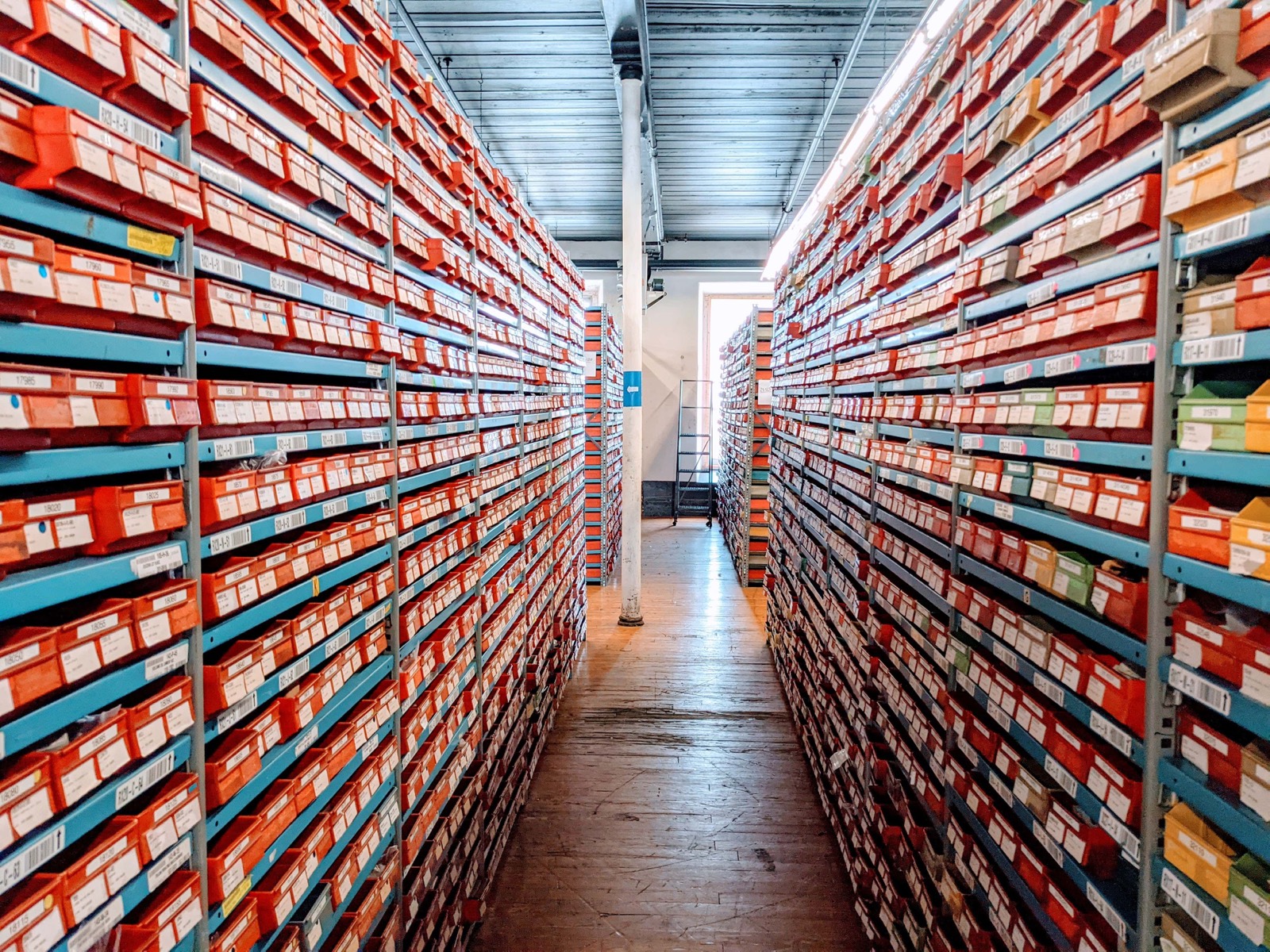
AI assisted research organisation and drafting, not these photographs. Hero: Rachel Claire / Pexels. Inventory: Charlie Merrow / Pexels. Both Pexels License, resized/compressed. Illustrative assortment and storage contexts only, not ZWC collections, inventory, supplier offers, sales results or endorsements by pictured brands. Tables are original planning assets; no actual customer quotation or order result is represented.