
Quick answer
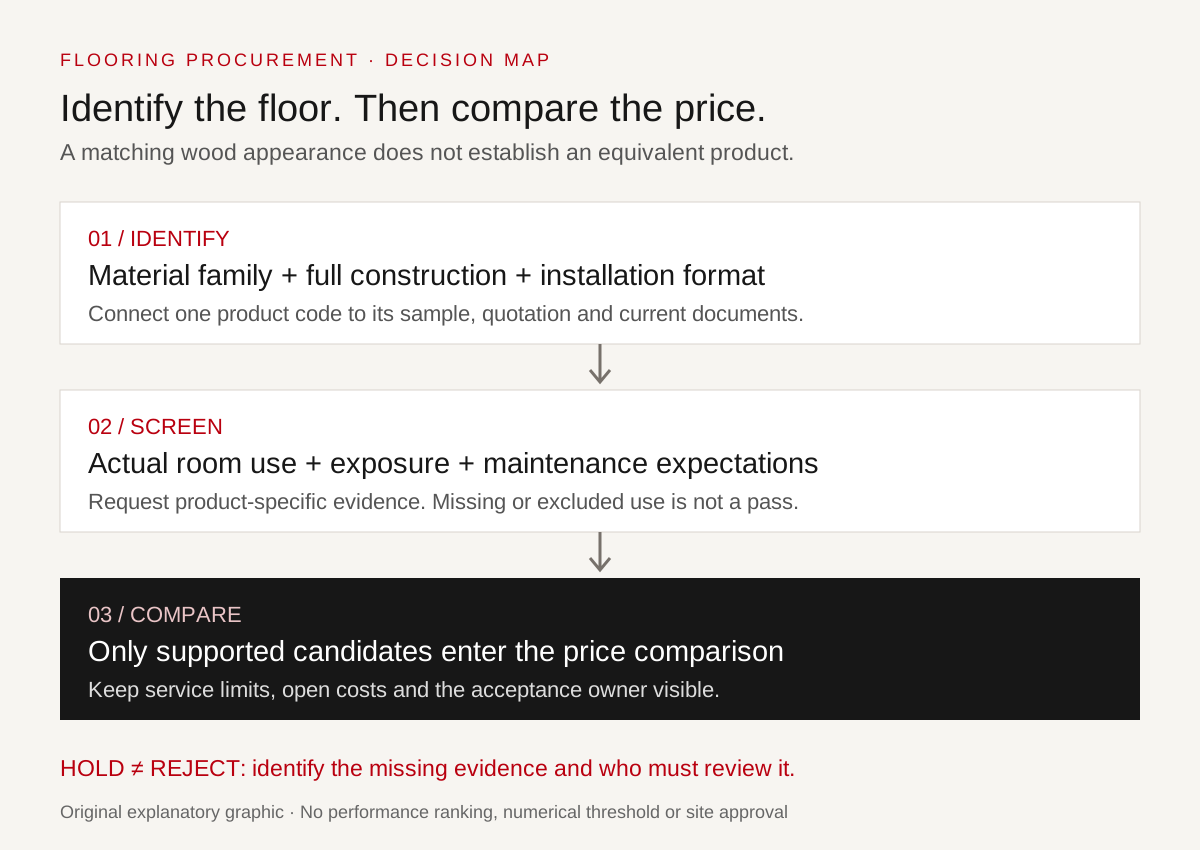
Compare the specified floor, not three category labels. SPC describes a rigid vinyl construction; LVT can cover different vinyl formats, including rigid products. Engineered wood has a real wood surface over a layered structure. First record the room's use, exposure, appearance and maintenance priorities. Then ask suppliers for the exact construction, installation format and supporting documents. Rank prices only among products that meet the same confirmed requirements.
A wood-look sample does not tell you what you are buying
Two samples can share an oak appearance while representing different products, maintenance commitments and replacement options. A third may be real wood but have a surface that cannot be re-sanded. Comparing their prices without identifying those differences can reward the offer that leaves the most questions unanswered.
For an overseas buyer sourcing flooring from China, the first useful shortlist is therefore not “SPC versus LVT versus wood.” It is a list of identifiable products that can be evaluated against the intended room. This guide helps organize that decision; it does not select a floor for an unassessed site or certify any supplier's product.
Separate the material, construction and installation format
The names in a quotation may describe different levels of the product. Tarkett Brazil describes SPC, or stone plastic composite, as a rigid vinyl construction combining calcium carbonate and plastic polymers. That identifies a construction principle, not a universal recipe or performance result. Tarkett's SPC category explanation.
LVT means luxury vinyl tile, but the term does not establish one installation route. Karndean's US range separates rigid core, gluedown and loose lay. Its rigid-core products are also described as luxury vinyl. Consequently, asking whether “SPC is better than LVT” can compare a particular core construction with a broader product description. Ask what the supplier means before accepting the column headings. Karndean's installation formats.
Engineered wood is different from a printed wood effect. Kährs describes a real wood surface with underlying layers, and distinguishes it from laminate's printed design. Even within its wood range, constructions and installation options differ. These manufacturer examples clarify terminology; they do not validate another manufacturer's offered product. Kährs flooring FAQ.
Record three separate fields for every offer: material family, full construction and permitted installation format. Attach the product code and document revision. “Same as sample” is not enough if the sample has no traceable identity.
Use the room to eliminate unsuitable candidates
Write the conditions before reading the supplier's benefits list. A room name alone is incomplete: a home office with an occasional desk chair and a shared workroom with frequent chair movement are different briefs. The project team must define the actual conditions and required evidence.
| Decision input | Give the supplier | Evidence to request before shortlisting |
|---|---|---|
| Movement and contact | Expected foot traffic, furniture, chair or trolley use, and known loads | Exact product's intended-use statement and relevant performance evidence; no inference from “commercial” alone |
| Water and cleaning | Likely spills, cleaning method, wet-area status and unresolved exposure | Written permitted-use and care limits covering the proposed product and assembly |
| Heat and indoor conditions | Heating/cooling system, known sunlight exposure and operating information | Product-specific compatibility and operating restrictions for project-team review |
| Appearance | Approved color direction, texture, gloss, plank format and acceptable variation | Identified samples and an agreed appearance reference, not a single catalogue image |
| Maintenance and repair | Cleaning resources, closure constraints and desired repair approach | Current care instructions, replacement procedure, spare-stock proposal and any refinishing limits |
Do not award a pass because a sales sheet says “waterproof.” Ask exactly what is covered: the material, joints, installation assembly or a stated use condition. A category word cannot answer all four. Kährs' FAQ, for example, tells users to protect its wood floors from water and clear spills promptly; that is not a moisture specification for a different product.
Keep a candidate conditional when essential information is missing. If the proposed use is excluded by its instructions, remove that candidate or change the brief through the responsible project team—not through a purchasing assumption.
Read the layers without turning thickness into a score
A total-thickness number does not identify what each layer does. Ask vinyl bidders to identify the surface treatment, wear layer, decorative layer, core and any backing actually included. For engineered wood, request the species and surface construction, top-layer thickness, underlying structure, finish and joint system. Require the offered configuration, not a diagram of a different premium range.
This matters when a quote changes. A thicker overall product may contain a different backing or core; the number alone does not establish better wear performance. A thicker wood top layer may support a different renovation route, but do not promise a sanding count without the manufacturer's written limits and a competent assessment of the actual floor.
Kährs' construction page illustrates the distinction: it presents re-sandable layered products alongside veneer products that it says cannot be re-sanded. “Real wood” therefore does not guarantee the same renovation option across a range. Kährs wood constructions.
Treat fire, acoustic, slip or emissions claims as separate evidence questions. Ask which product, assembly, method, version and result the document covers, and have the responsible advisers confirm destination applicability. No family name or stock photograph proves those claims.
Compare two complete candidates, not two material stereotypes
Use a comparison record after the use-condition screen. Keep technical acceptance separate from preferences: a preferred color cannot cancel an unresolved suitability question.
| Comparison line | Record for each identifiable candidate | Hold or reject when |
|---|---|---|
| Product identity | Manufacturer, product code, construction, dimensions, finish and backing | Quotation, sample and supporting documents describe different configurations |
| Permitted use | Confirmed room conditions, restrictions and reviewer decision | Essential exposure remains unanswered or falls outside the documented scope |
| Design acceptance | Sample reference, variation agreement and approval owner | A visual match is being treated as material or performance equivalence |
| Service plan | Care method, repair route, replacement availability and written renovation limits | Expected upkeep or future repair cannot be supported by the proposed product |
| Commercial comparison | Dated currency, quantity basis, delivery terms and separately identified unresolved costs | Missing prices are entered as zero or a different configuration is substituted |
For the detailed boundary between material supply, preparation and installation, use our flooring RFQ scope guide. Keep that responsibility exercise separate from this material-choice screen: a complete installation quotation can still propose an unsuitable product.
Spend on the uncertainty before widening the order
Ask what the next sample or document will resolve. A visual sample can support an appearance decision; it cannot prove an untested claim about rolling loads or a different installation assembly. Agree the missing evidence and its acceptance owner before paying for a larger assortment or treating a pilot as authorization for every room.
Cost control can start by reducing unnecessary variants, aligning the selected format with a confirmed local installation route and planning replacement stock against an actual maintenance strategy. These are options to evaluate, not guaranteed savings. Record quantities and real quotations before calculating a total; do not invent a standard waste allowance or a service-life advantage to make one option win.
Send ZWC the destination, room-use schedule, product references, area and quantity basis, maintenance priorities and the specific comparison you need to resolve. Our flooring category and sourcing services are starting points for supplier-search and quotation-alignment discussions. Use the contact page to define that scope. Local assessment, engineering, testing, installation and final acceptance require project-specific agreement; this article does not promise those services or a guaranteed lowest-cost floor.
Primary sources
- Tarkett Brazil: SPC vinyl flooring, undated manufacturer category page, checked 18 October 2026. Construction terminology only; not an approval of another product.
- Karndean US: three installation formats, undated manufacturer page, checked 18 October 2026. Its range terminology, not a universal installation instruction.
- Kährs US: flooring FAQ, undated manufacturer page, checked 18 October 2026. Wood/laminate distinction and bounded care context; no numerical installation criteria adopted.
- Kährs UK: construction of engineered wood floors, undated manufacturer page, checked 18 October 2026. Product-family examples of renovation differences, not a sanding guarantee for all wood floors.
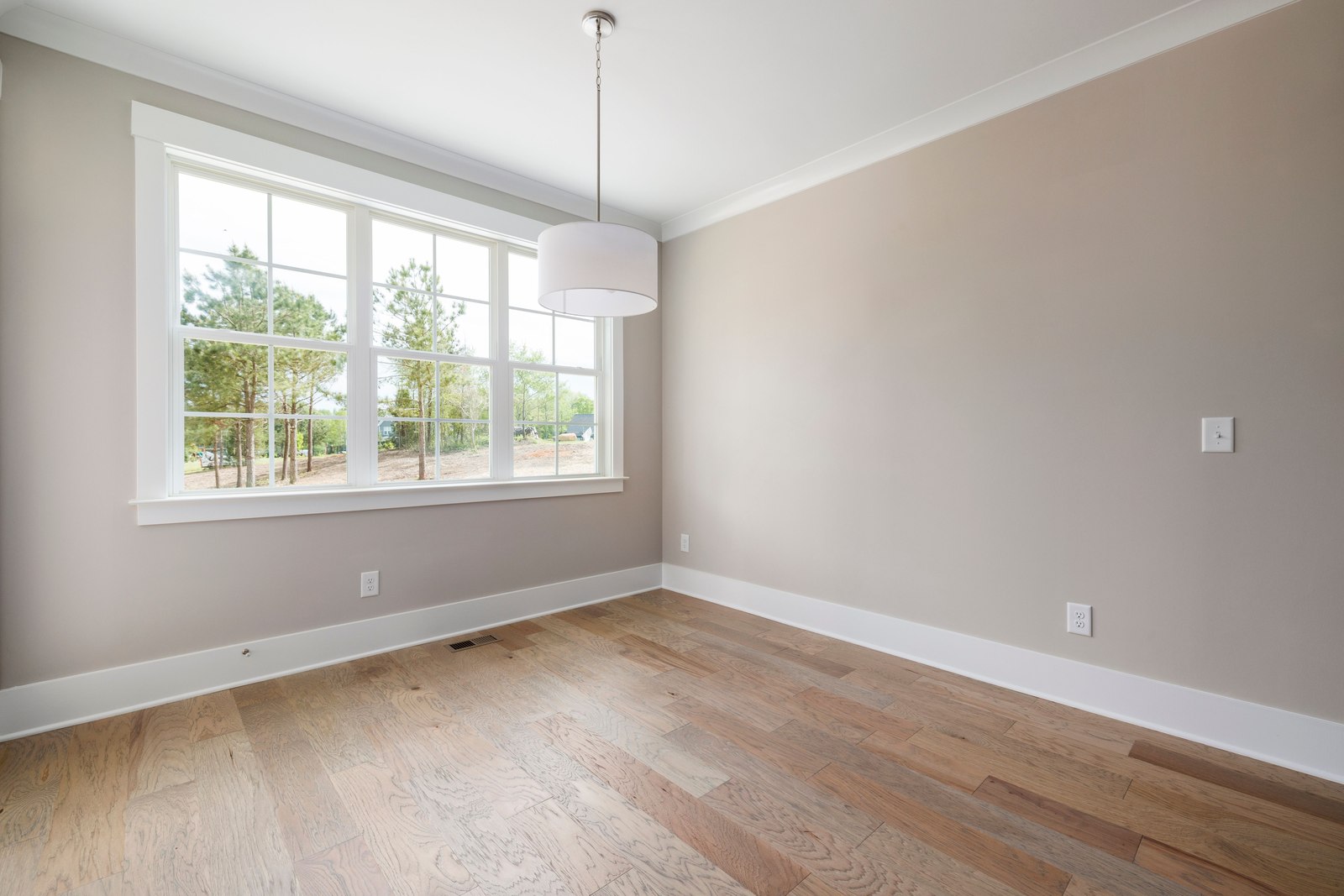
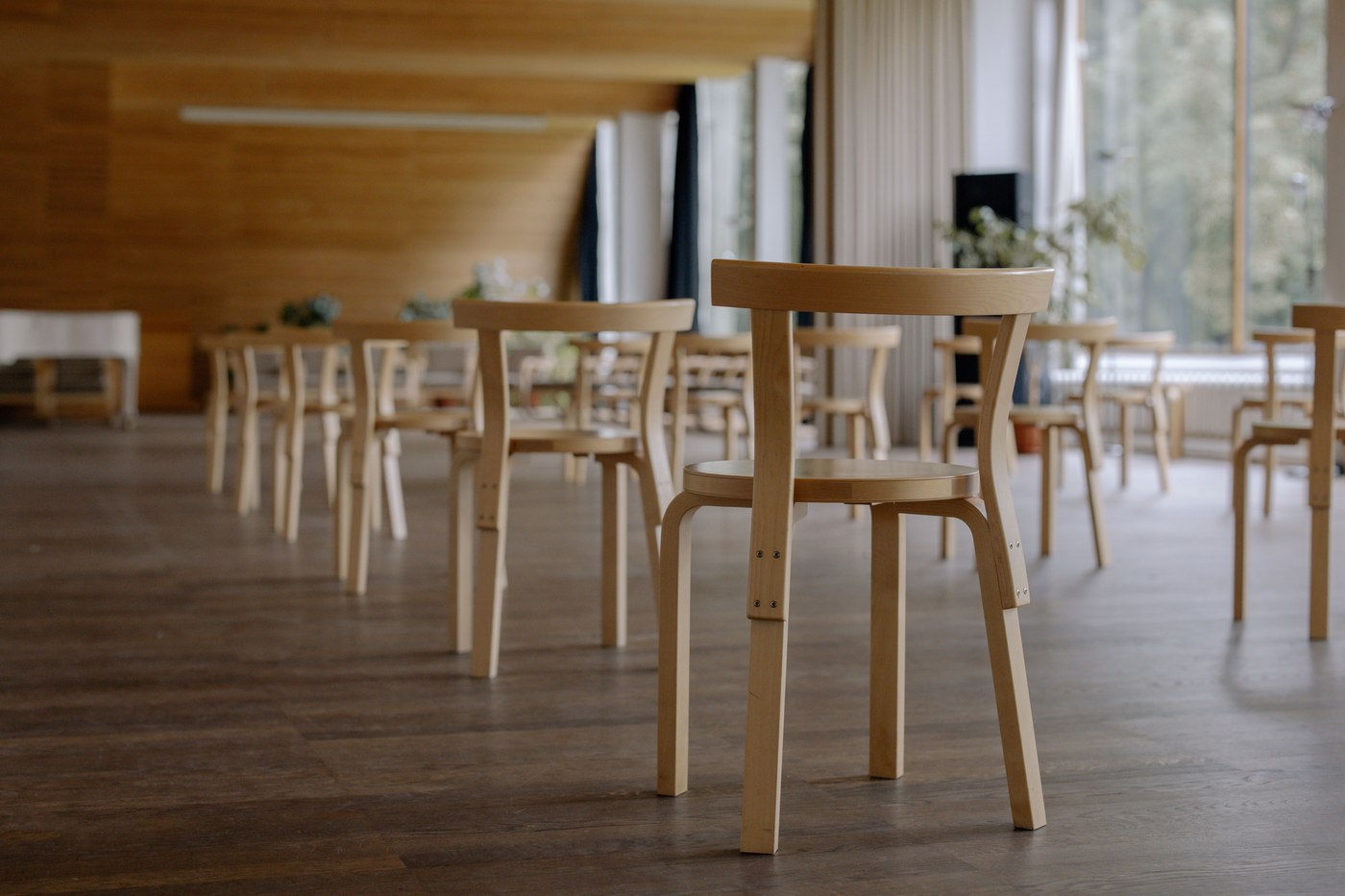
AI assisted with organizing text, not generating the photographs. Photos by Curtis Adams and cottonbro studio / Pexels are used under the Pexels License. These are illustrative stock interiors, not identified SPC/LVT/engineered-wood products, ZWC projects, performance evidence or endorsements. The decision map is an original explanatory vector.