
Quick answer
Match each document to an identified product revision, its stated assessment scope and the relevant order records. Keep document authentication, technical applicability and commercial release as separate decisions. This guide provides a buyer-side record system, not a certification opinion, electrical selection, test procedure or permission to energize equipment.
Start with the item, not the certificate folder
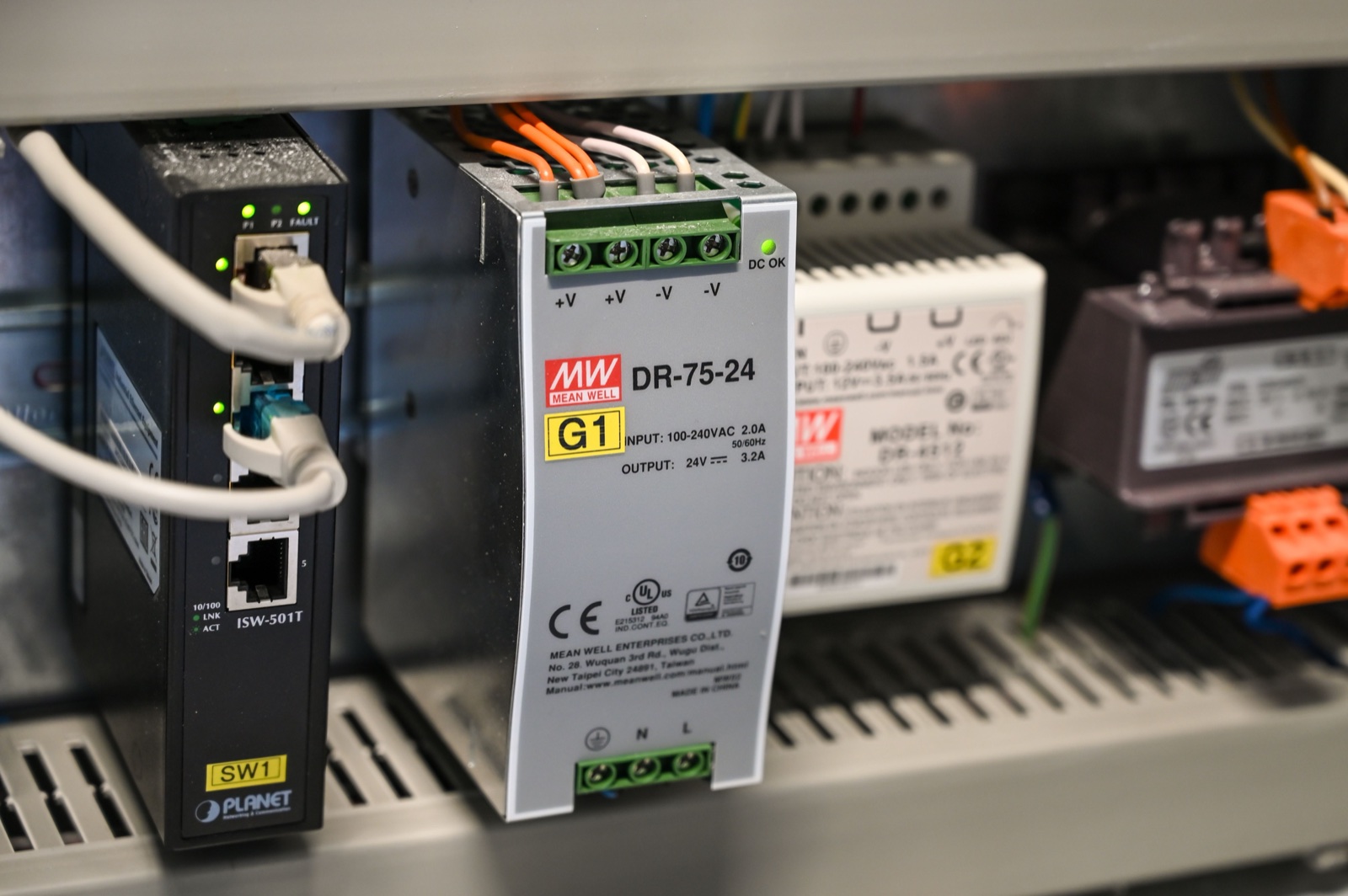
The opening photograph shows labels on components in an existing installation. It illustrates why identifiers matter, not a verified order or approved configuration. Photo: Vladimir Srajber / Pexels, Pexels License, resized/compressed. Pictured brands and certification symbols imply no endorsement, current certification or ZWC relationship.
Before asking for more documents, agree what the order line actually identifies. Record the manufacturer’s legal name, producing site, exact model and suffixes, configuration revision, accessories and the buyer-approved specification reference. Different electrical product families need different evidence; do not carry a distribution-transformer document list into an unrelated control-component order.
Preserve the supplier’s original naming as well as your own stock code. If a quotation, drawing and packing record use three descriptions, ask the supplier to map them explicitly. A translated description can help communication, but it should not silently replace the original identifier. Leave an unresolved suffix visible rather than deciding that it is unimportant.
The practical question is narrow: can the reviewer tell which offered or produced item this document is supposed to support? If not, another certificate for the same brand does not resolve the gap.
Separate what each document is being asked to establish
ISO’s conformity-assessment overview distinguishes testing, inspection and certification. Those are different activities; a purchasing team should not file their outputs as interchangeable evidence. The following table is an original intake aid, not a statement that every document is required for every order.
| Document received | First question to record | What still needs a separate answer |
|---|---|---|
| Product certificate or certification record | Which named product, version, scheme and scope does it identify? | Whether it covers the offered configuration and destination requirements |
| Test report | Which identified sample, method, conditions and results are reported? | How that sample relates to the order and what conclusions the authorized reviewer accepts |
| Supplier’s order-specific inspection or test record | Which order, units or batch does the record identify? | Whether the activity, criteria and responsibility match the agreed inspection plan |
| Organization or management-system certificate | Which legal entity, site, activities and current status are covered? | Product-specific evidence and the separate shipment decision |
| Declaration or other supplier statement | Who issued it, for which item and against which stated requirements? | Its applicable route, supporting evidence and acceptance by the responsible party |
Avoid turning the last column into a universal certification checklist. The destination, application and actual product determine the required route. Obtain that determination from the buyer’s qualified technical and conformity-assessment advisers, not from an article or the most persuasive sales email.

Build a document-to-order register
One register should expose missing links rather than merely count files. Use one row per document and product configuration. If one report is offered for several variants, list the variants and the supplier’s stated basis for coverage; do not expand its scope yourself.
| Register field | Entry to request or capture | Pause condition |
|---|---|---|
| Order identity | Purchase-order line, supplier model/suffix and current configuration reference | Order and document refer to different or unmapped identifiers |
| Issuer and record identity | Issuer, document number, issue date, revision and complete page count | Only a cropped cover or an unexplained replacement file is supplied |
| Stated coverage | Product/sample identity, named site where relevant, methods or requirements and stated limitations | Supplier says “equivalent” without an identified coverage explanation |
| Verification record | Official verification route, date, result and unresolved questions | Authenticity or current status remains unresolved |
| Connection to goods | Relevant production/order record and unit, serial or batch identifiers where applicable | No traceable explanation connects the documents to the goods |
| Review and decision | Named reviewer, question, accepted scope, exclusions and next action | A file receipt has been treated as approval |
Not every product uses individual serial numbers. Do not invent them. Ask what traceability system actually exists and whether the agreed evidence can connect it to the shipment. Equally, an order number typed onto a cover letter does not by itself extend the underlying report to newly manufactured units.
Verify through the issuer’s actual route
Where UL certification is claimed, UL Solutions describes Product iQ as a source of certification information, with searches using identifiers including file and category references. Its enhanced-mark FAQ explains how a unique identifier or file number can link to certification records and guide information. This is an example for a claimed UL route, not a requirement that all electrical purchases use UL certification.
Record the actual result and its scope. Do not replace it with “verified online.” If access requires an account, payment or a different authorization, leave the check unresolved until that access is legitimately available. Do not upload confidential reports to an unfamiliar verification website.
An unsuccessful search is also not enough to accuse a supplier of fraud. IAF CertSearch’s own guide lists several possible reasons why a company certificate may not appear. Keep the status as unresolved, capture the search basis and obtain clarification through the appropriate issuer or responsible reviewer. Do not confuse this organization-certificate service with an electrical product approval.
Carry changes back through the evidence
A report collected during supplier selection can become disconnected from the final order. Add a change-review trigger when the manufacturer, model suffix, configuration, component, accessory, producing route or approved specification changes. These are questions to assess, not a claim that every change automatically requires retesting.
The supplier should identify the affected documents and explain the proposed coverage basis. The qualified reviewer decides whether existing evidence remains applicable or whether further assessment is necessary. Procurement records that decision, its limits and any revised commercial consequences. Do not ask a salesperson to backdate a report or silently rename an older file to match the new order.
Keep superseded records in an archive with their status visible. Circulate a controlled current set so the inspector, supplier and buyer are not making decisions against different revisions.
Close with an explicit decision
Use three administrative states: ready for the named review, clarification required, or affected release on hold. None means that equipment is safe to install or operate. A technical acceptance can also be narrower than permission to ship; record both owners if the project separates them.
Before the relevant payment or shipment gate, reconcile the current order identity, document register, open exceptions, reviewer decisions and shipment references. If one variant is unresolved, identify the affected quantity rather than issuing an ambiguous approval for the whole order. Record who may decide whether an unaffected portion can proceed.
For the earlier supplier-search question, see how to map the factory behind an electrical catalogue. This guide addresses the later evidence-to-order handoff, not a repeat factory-ranking exercise.
AI assisted research organisation and drafting, not these photographs. Hero: Vladimir Srajber / Pexels. Document review: Vanessa Garcia / Pexels. Both under the Pexels License, resized/compressed. Illustrative contexts only, not ZWC personnel/suppliers/projects, certification validation or endorsement by depicted people, brands or certification bodies. No actual electrical testing, physical inspection or qualified engineering review is claimed.