
Quick answer
Compare color routes by what is already committed when a color decision becomes binding. Yarn-dyeing concerns yarn before fabric formation; piece-dyeing concerns fabric; garment-dyeing concerns assembled garments. None automatically means a lower minimum, faster delivery or better fastness. Hold the intended product constant, identify each supplier's actual sequence, then compare variant allocation, representative submissions and the commercial consequences of a change.
A later color decision can still follow an earlier product commitment
A supplier may offer to select a garment color later. That does not establish that fabric, sewing, sizes or trims can also change later. Before treating this as flexibility, ask which decisions remain open and which goods would already exist when the color is released.
This guide is for apparel buyers comparing development proposals, not technicians selecting dyes or machine settings. The route names describe a coloration stage, not a complete manufacturing specification. A proposal may combine stages, printing or other finishing. Ask for the actual sequence rather than forcing every design into three exclusive boxes.
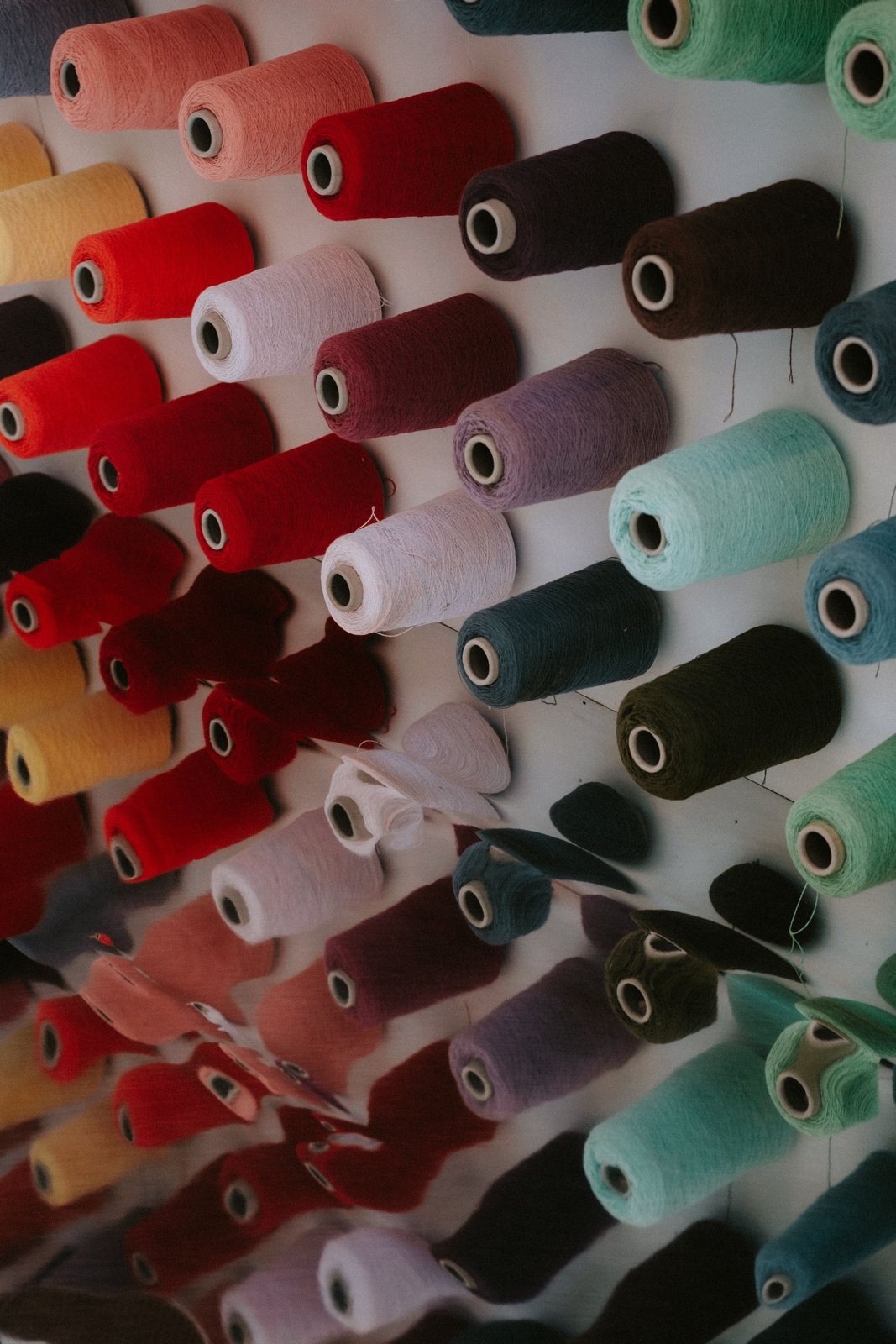
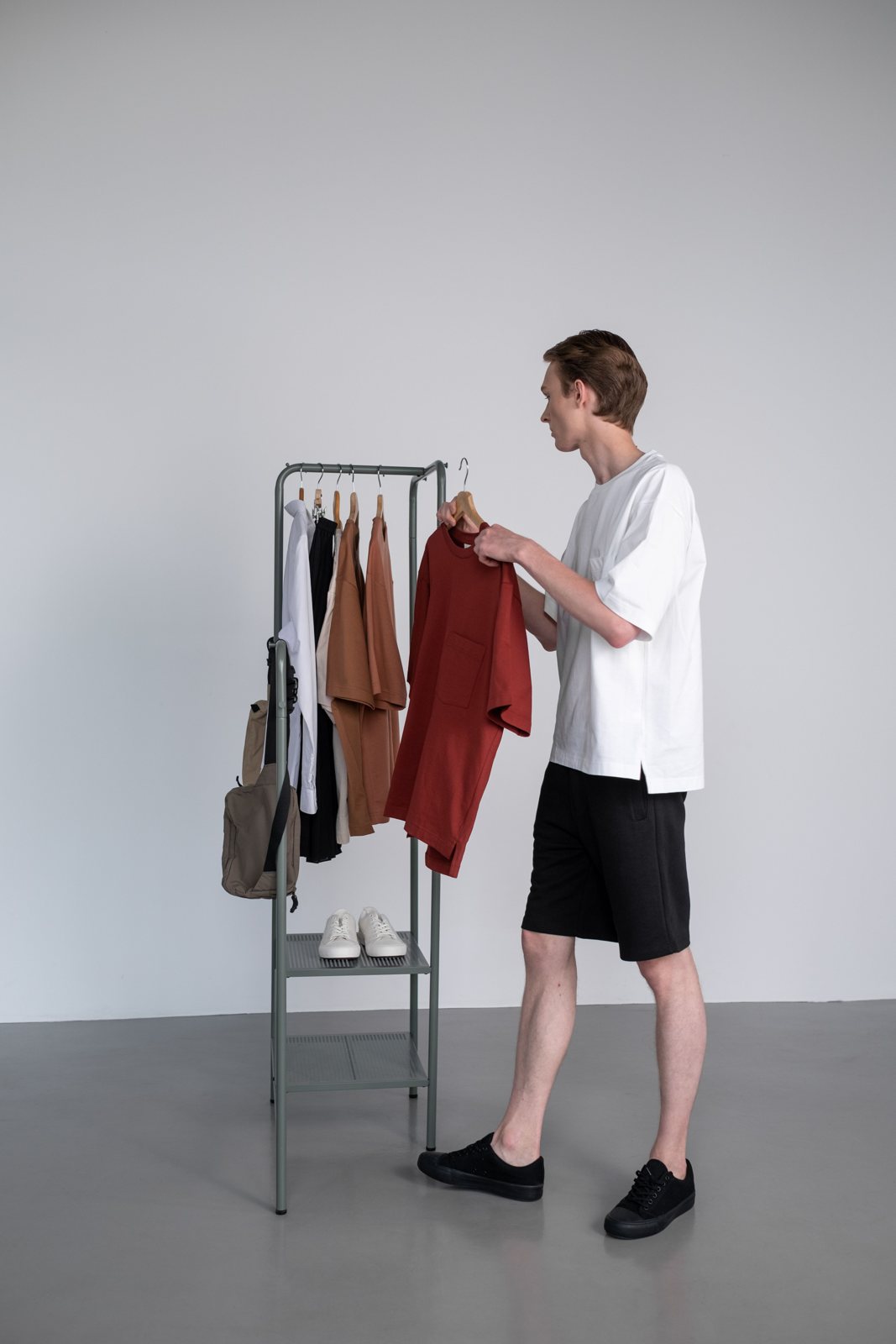
CottonWorks' educational dyeing booklet distinguishes coloration of fibers, yarns, fabrics and garments. Its general route descriptions provide background, not evidence of a particular supplier's price, minimum, capacity or finished-product performance. The photographs here illustrate colored inputs and assembled clothing; neither proves how those items were colored.
Start with the appearance and product that must remain fixed
Write down the fiber composition, construction, intended weight and finished hand, garment style, sizes, trims, destination and intended use. Separate requirements that must remain from alternatives the buyer is prepared to evaluate. Without this distinction, a cheaper route may be a different product rather than a cheaper way to make the same one.
For a patterned fabric, specify the required appearance and construction rather than assuming that a visible stripe proves yarn-dyeing. The CottonWorks booklet discusses stripes and plaids as yarn-dye applications but also notes printing as an alternative for some designs. Those alternatives require their own samples and comparison; they are not interchangeable merely because a small image looks similar.
For a solid garment, define the final appearance and the evidence needed for its intended use. Do not transfer an accepted shade on one substrate to a different fiber blend, fabric or assembled garment without confirming the relevant submission. CottonWorks' Dyeing Basics also identifies the object, illumination and observer as factors in color perception. A screen photograph alone cannot settle a final color decision.
Map the physical commitment before discussing minimums
Use this original worksheet to question each proposed route. It is a buyer-side comparison tool, not a mandatory industry procedure or a record of a ZWC project.
| Route under consideration | Color stage to identify | What may already be committed? | Evidence to request |
|---|---|---|---|
| Yarn-dyed | Identified yarn before the intended fabric is formed | Yarn identity, color quantities and the planned pattern/construction | Yarn and fabric references, allocation by color, proposed submission sequence and lot links |
| Piece-dyed | Identified fabric before the intended garment is cut and sewn | Base fabric, planned color lots and agreed finished state | Base-fabric identity, finished-fabric submission, usable quantity basis and lot traceability |
| Garment-dyed | Identified assembled garment at its proposed coloration step | Fabric, sewing, sizes, thread, trims and other attached components | Representative garment/BOM, proposed processing sequence, component evidence and size/lot traceability |
The third column contains questions, not universal factory rules. Have the supplier mark which commitments actually apply, who holds the goods and the last point at which a change can be accepted. Where an outside processor is involved, name that operation and its handoff instead of assuming the sewing factory performs it.
Compare finished-state evidence, not three attractive swatches
A yarn submission, a fabric submission and a finished garment answer different questions. Record what each submission represents and what remains untested or unaccepted. Avoid a comparison in which one quote includes finished-garment validation while another stops at a color swatch.
For a proposed garment-dye route, ask what evidence covers the actual thread, trims, labels and other components present at that processing step. Request the supplier's applicable compatibility and finished-garment assessment plan; do not prescribe a dye formula or assume every component responds alike. If a component is attached later, identify that separate operation and its acceptance basis.
Likewise, do not infer dimensional stability or colorfastness from the route label. The agreed product requirements, applicable assessment methods and representative evidence need competent technical review for the actual fiber, construction, intended use and destination. No numerical tolerance or test threshold is supplied here.
Put all three proposals on the same commercial basis
Ask suppliers to fill the following fields separately. Unknowns should remain visible rather than being replaced by an assumed industry average.
| Comparison field | Record for each proposal | Clarify or hold when |
|---|---|---|
| Product basis | Composition, construction, garment/BOM revision, sizes and intended finished appearance | A route change silently changes the product brief |
| Quantity basis | Unit, total, per-color allocation, size rules and any input or processing minimum | “MOQ” has no unit or grouping rule |
| Included work | Color development, processing, finishing, submissions, agreed assessment and transport scope | One price ends at fabric and another at accepted garments |
| Timing | Start event, approvals assumed, queue dependencies and subcontracted handoffs | A lead time is stated without its starting conditions |
| Change exposure | Inputs allocated, goods already processed, disposition options and quoted consequences | A late color switch is described as free flexibility |
| Acceptance | Sample identity, finished state, applicable evidence and release authority | A photo or intermediate swatch is treated as final acceptance |
Keep one-time development charges separate from repeat production charges. Record residual inputs, rework, extra transport and verification exclusions without assuming they will occur. A route-level saving cannot be calculated until actual quantities, scope and comparable quotes exist. No benchmark price or saving percentage is implied.
Use a conditional choice, with a clear exit
Consider a yarn-dyed proposal when the intended pattern or fabric brief calls for that route and its earlier yarn/color allocation is acceptable. Consider a piece-dyed proposal when the identified fabric and proposed finished state fit the brief. Consider garment-dyeing when the assembled product, components and planned sequence can be supported by representative evidence and the remaining color choice has real value for that order.
These are screening conditions, not blanket recommendations. Keep alternatives open if a supplier cannot connect the proposed route to the actual product. Pause a route switch when its sample basis, affected quantity, component changes, price or delivery consequences remain unresolved. Do not release it simply because a supplier calls it more flexible.
For authority and handoff questions, use the separate Keqiao fabric decision guide. After selecting a route, batch color consistency addresses a different downstream control problem. This article chooses a comparison basis; it does not replace either approval authority or production-lot control.
Bring a bounded route question into the sourcing brief
Share the garment or fabric reference, composition, destination, quantities by variant, development stage, fixed requirements and the route alternatives actually offered. ZWC can discuss project-specific apparel sourcing coordination. Supplier capability, technical assessment, processing access and acceptance responsibilities require separate agreement; no mill partnership, laboratory service, guaranteed minimum or delivery result is promised.
Primary sources
- CottonWorks Dyeing booklet, section4.2: fiber-form and coloration-stage background. Upload path is not a verified publication date; broad cost/performance comparisons are not adopted as universal claims.
- CottonWorks Dyeing Basics: actual public body read1November2026; object, illumination and observer scope. No recipes, source images or performance promises reproduced.
AI assisted research organization and drafting, not the photographs. Hero: Mathias Reding / Pexels; second scene: Ron Lach / Pexels. Both under the Pexels License, full-frame resized/compressed only. The yarn display and assembled-clothing scene do not establish fiber composition, coloration route, fastness, processing site or ZWC supplier relationships. No depicted person or brand endorses ZWC; no physical tests or supplier audit claimed.