
Quick answer
Keep the approved appearance, editable artwork, production output and representative decorated garment linked, but do not treat them as the same approval. Identify the garment, material, colourway, decoration dimensions, placement reference and revision covered by each decision. Before changing a graphic, thread, substrate or application route, ask the supplier which files, samples, quantities and approvals are affected. A familiar logo does not make a revised decoration ready for production.
A logo approval can leave the garment undecided
A buyer approves a logo on screen. Later, a decorated sample arrives with the expected lettering, but nobody can connect its size, position or colour reference to the order. The problem is not necessarily a badly made logo. The approval may have answered a different question from the one production needed resolved.
This guide helps ordinary apparel buyers organise that handoff. It is an original purchasing framework, not a digitising tutorial, print recipe, garment test or completed supplier assessment. Protective clothing, regulated claims and technical acceptance need their own appropriate evidence and responsible review.
Define the decoration as an application to an identified garment, not an image floating above it. Include the style and revision, material reference, garment colour, sizes, intended use and destination. State whether the proposal concerns a cut panel, an assembled garment, a separate patch or another supplied state.
Separate the artwork from the production output
Ask what each file is for: communicating the appearance, editing the design, reviewing a proposed application or operating the selected production system. A filename ending in “final” does not explain its role or establish that every recipient is using the same revision.
Wilcom's public guidance distinguishes editable embroidery design files from machine files. Its native EMB format retains design information, while machine files serve the embroidery machine and generally retain less original editing information. Reconstruction from stitch data may not recover the original design exactly. This supports asking which source and output are connected; it does not require every supplier to use Wilcom or establish a buyer's ownership of any file.
For printing, obtain the selected decorator's requirements for the actual process. Stahls' UK publishes different artwork guidance for named transfer types and asks customers to identify garment colour. Its product-specific instructions illustrate why one submission specification cannot simply be carried across every printing route. No numerical file setting, colour mode or process instruction from that page is adopted here as a universal requirement.
Build an approval chain with a visible boundary
Use this original register to identify what a submission actually supports. Enter the real references and responsible people; it is not a completed approval record.
| Record | Connect to the order | Decision it can support | What it does not establish |
|---|---|---|---|
| Appearance reference | Authorised design, wording, colour reference and revision | Whether the intended visual direction is understood | Production suitability or garment performance |
| Editable artwork | Source format, revision, custodian and agreed access | Which design can be revised and by whom | Automatic ownership, exclusivity or unrestricted use |
| Production output | Output reference, source revision and intended decoration route | Which output the decorator proposes to use | That a renamed file contains the approved content |
| Placement record | Garment view, named reference points, dimensions and size scope | Where the decoration belongs on this garment | That one location suits every garment size |
| Representative submission | Sample identity, substrate, garment colour and completed state | Review of the stated physical application | Approval of unrepresented materials or routes |
| Release record | Accepted scope, exclusions, open questions and authorised owner | What may proceed for the identified order | Permission to change the application later |
If the supplier provides only a visual simulation, mark it as such. Ask what physical submission is needed before the relevant release. A rendering can communicate layout without demonstrating the actual decorated surface, application result or finished garment.
Define placement in a way another person can follow
Replace “small chest logo” with an identified garment view, decoration dimensions and a placement reference agreed with the supplier. Name the start points and units. Keep the illustration and written record together so that a measurement is not interpreted from a different edge or garment state.
Confirm how the ordered size range is covered. Is the same graphic size proposed throughout, are different outputs required, or is the placement rule different for part of the range? Let the responsible product team and decorator assess the actual application. Do not invent a standard distance, grading rule or tolerance.
Keep placement review separate from fit approval. A correctly located graphic does not prove that the garment fits, and an accepted base-size fit sample does not release every decoration variant. The existing size-set guide addresses that different decision.
Put colour and substrate references beside the design
Record the actual garment or panel reference and its colourway alongside the proposed ink, transfer or thread reference, as applicable. Distinguish a screen representation from the agreed physical colour reference. Do not let a customer's familiar colour name silently replace the decorator's identified input.
Ask what the reviewed submission represents: material, surface, garment state, decoration route and any later finishing. If those differ from the intended order, identify the difference before relying on the result. The appropriate technical owner should determine any compatibility, durability, care or finished-product assessment needed; this article supplies no test method, acceptance threshold or performance claim.
The colour-route comparison concerns when the base product's colour commitment occurs. Here the decision is whether a particular decoration revision is linked to the intended application. One record should not stand in for the other.

Review the dependency, not just the changed picture
| Proposed change | References to check together | Question before further work |
|---|---|---|
| Graphic size or lettering | Artwork, production output, placement and size coverage | Does the revised output need a new physical submission? |
| Decoration colour | Approved reference, actual input and garment colourway | Which combinations does the review cover? |
| Garment material or finish | Substrate identity, sample state and application proposal | What existing evidence remains applicable? |
| Placement or garment construction | Reference points, seams, panels and ordered sizes | Can the proposed location be assessed on the intended garment? |
| Decoration route or provider | Output requirements, submissions and quoted scope | Which earlier decisions require renewed confirmation? |
| Quantity or variant mix | Output allocation, existing work and unprocessed goods | Which quantities carry the old or new revision? |
These are clarification questions, not diagnoses. Ask for an explicit response where an old approval is proposed for a changed application. Record who accepted that scope and on what evidence. Preserve the earlier reference rather than overwriting the only record of work already completed.
Separate a change request from permission to proceed
A revision request should identify the previous and proposed references, affected quantities and current work status. Request a revised commercial scope where relevant: artwork preparation, digitising, setup, submissions, decoration, transport, replacement or other stated work. Use actual quotations; no universal minimum, lead time or saving follows from making a graphic smaller or reducing its colours.
Have the supplier acknowledge which instruction is active and how superseded work will be kept identifiable. The buyer should decide what to do with existing goods through the project's actual technical and commercial approval process. Do not assume that approval of a new image settles rework feasibility or liability for the previous version.
Send a decoration brief, not an unlabelled attachment
Share the garment reference, intended use and destination, material and colour direction, sizes and quantities, authorised artwork status, proposed decoration and placement, current submission stage and unresolved decision. ZWC can discuss an apparel sourcing and follow-up scope. File preparation, specialist review, supplier capability, rights and release responsibilities require project-specific agreement; no in-house digitising, printing, laboratory or legal service is implied.
The packaging artwork guide concerns common retail-pack layouts and variable information. This register concerns decoration applied to garments. Neither establishes rights to reproduce third-party designs. Share only material you are authorised to disclose and use.
Primary sources and limits
- Wilcom: Understanding embroidery files, undated public guidance, read 11 November 2026. Design/output distinction only; no resizing percentage, machine setting or software endorsement adopted.
- Stahls' UK: Artwork Guide, undated supplier guidance, read 11 November 2026. Process-specific submissions and garment-colour context only; no numerical print settings, timing or product-performance promises adopted.
The two worksheets are original blank planning assets, not client files or a qualified technical or rights review. AI assisted research organisation and drafting, not photography.
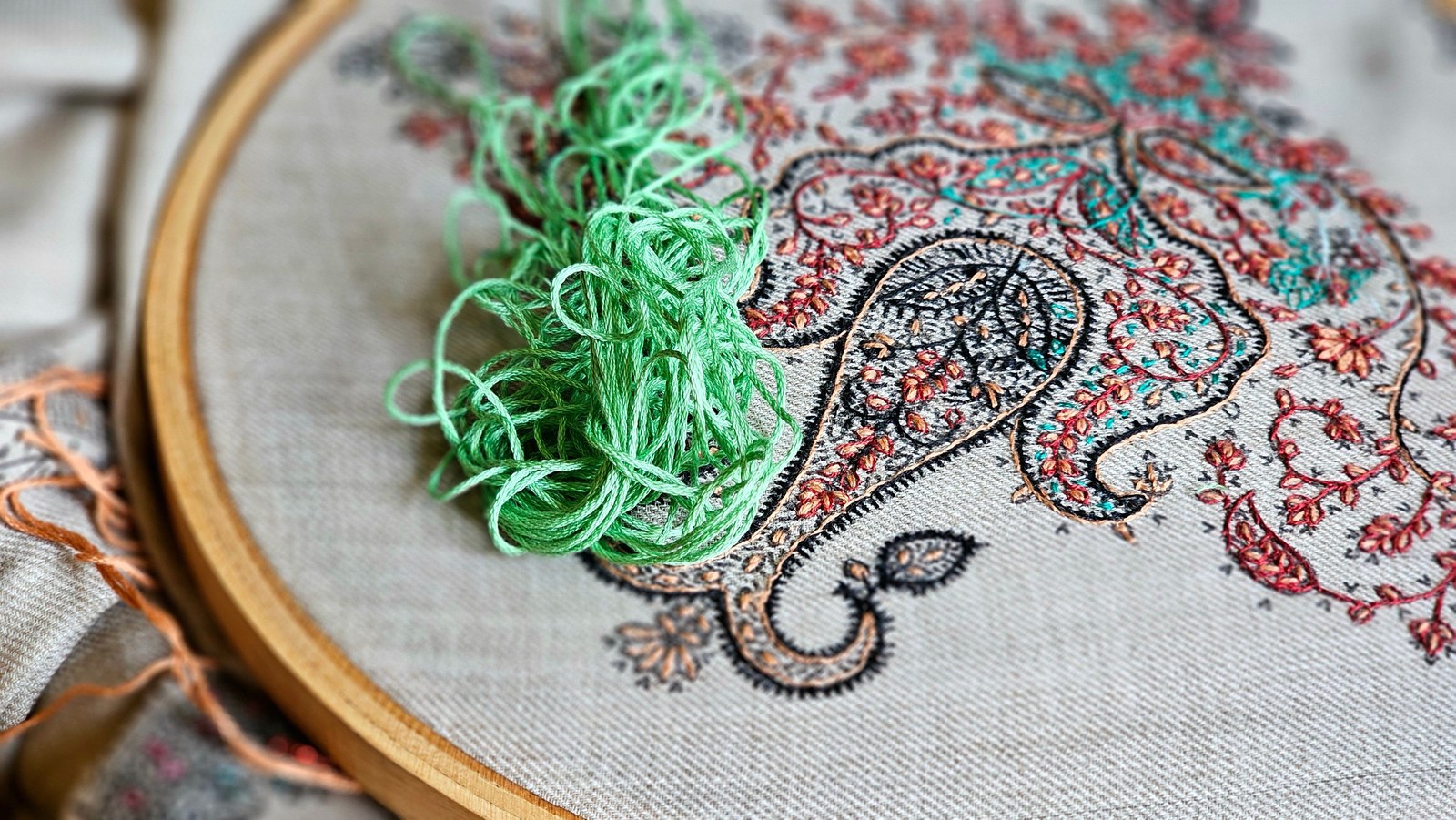
Hero: Muhammad Khawar Nazir / Pexels; supporting photo: Rodolfo Gaion / Pexels, credited above. Both Pexels License, full-frame resized/compressed only. Historical embroidery and mixed-workshop illustrations, not ZWC products, suppliers, approved artwork or garment assessments. Motif not supplied for copying. No endorsement implied. AI assisted text organisation, not photography.