
Quick answer
A seasonal update can leave a shoe recognisable while creating several new approval decisions. PUMA's October Speedcat Croc illustrates this through texture, colour contrast and styling rather than a claimed new performance platform. Compare its three identified colour versions with the established Speedcat and Suede families, then translate the differences into questions for an original collection—not instructions to reproduce PUMA's design.
Place the brand before the product
PUMA is a German-founded sports brand: its timeline dates its founding to 1948, while the corporate profile locates headquarters in Herzogenaurach, Germany. Sport-derived lifestyle footwear sits alongside performance categories; this study selects the former. It is not a running, racing or workplace-footwear recommendation.
Ownership is separate. PUMA's 7 October statement identifies ANTA Sports as its largest shareholder with a 29.06% stake and says PUMA remains independently managed. That does not establish manufacturing origin. The reviewed Croc sources do not identify a producing factory; no factory, manufacturing country or territory-specific licence is inferred here.
Two classics, with different reference roles
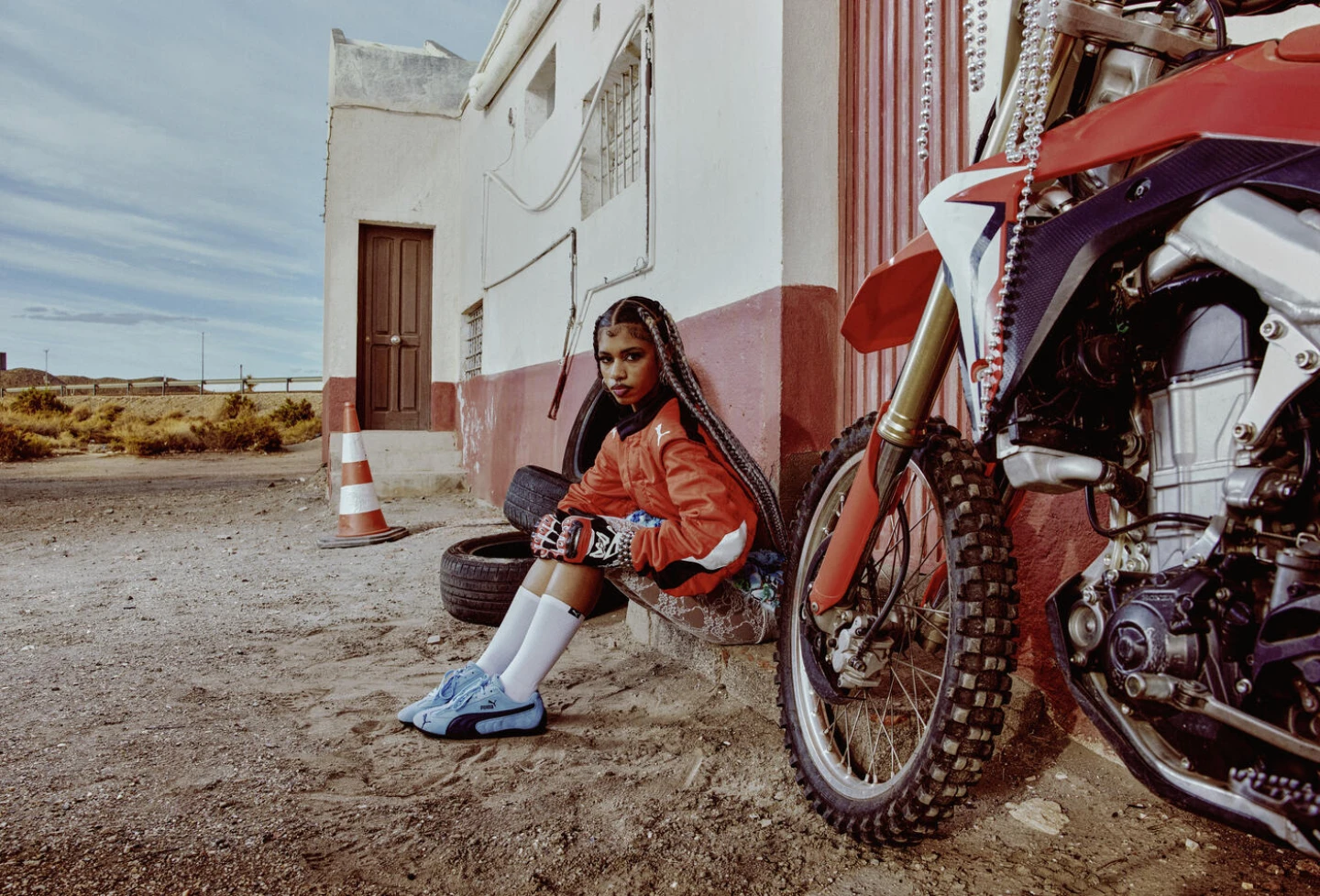
PUMA's 2024 Speedcat release dates the lifestyle iteration to 1999 and explains its motorsport ancestry. The archive photograph shows a low side profile and visibly wrapped heel area: exterior observations, not measured sole thickness or racing-protection evidence.
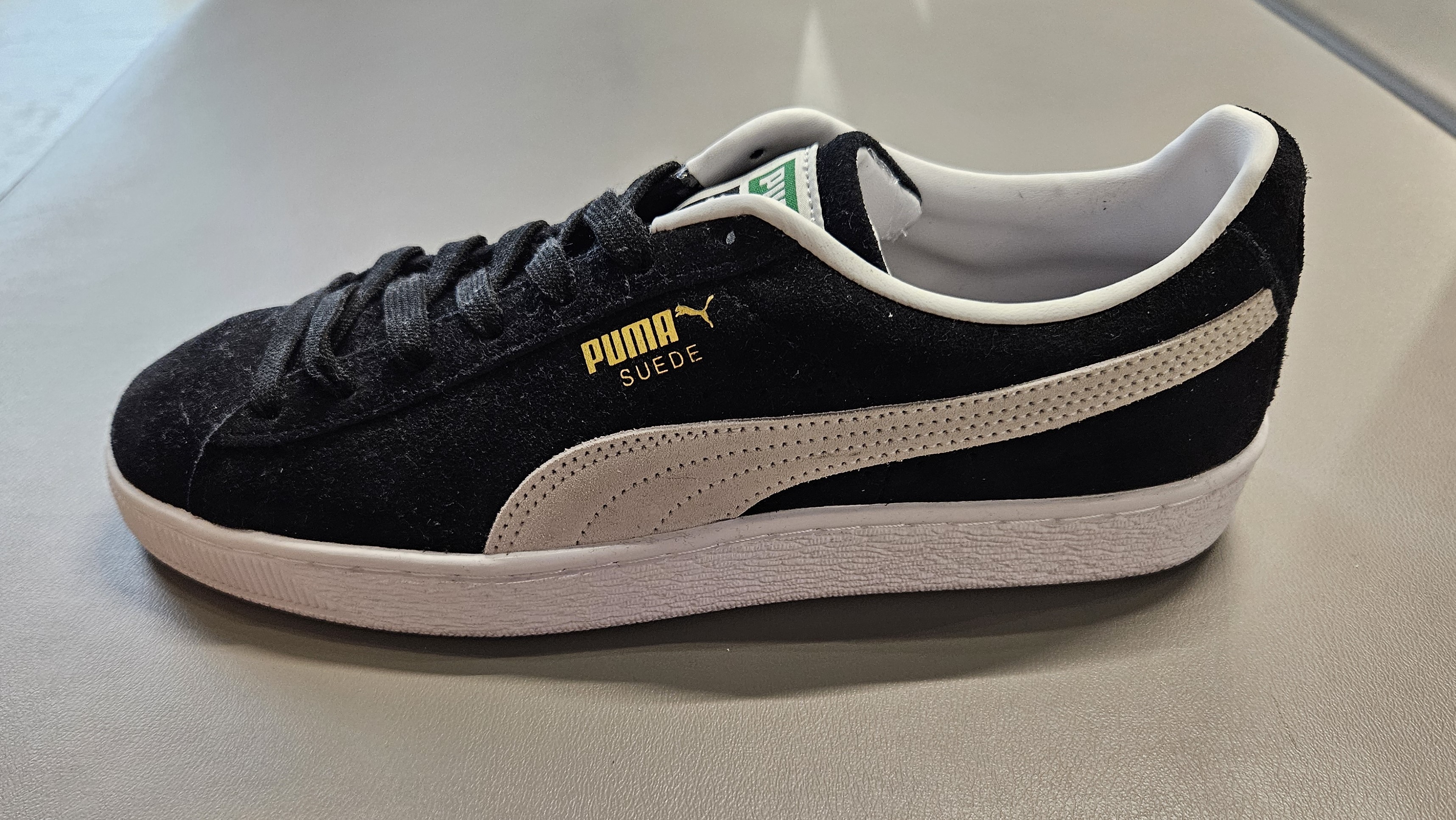
Suede supplies a second reference: PUMA's timeline connects the family to 1968. The independently photographed example below has a contrasting side stripe and a more substantial-looking sole edge than the Speedcat campaign reference. Different angles and versions prevent a dimensional comparison. Neither image is an original 1968 or 1999 specimen.
The useful distinction is collection architecture: two enduring names can carry different visual roles. Heritage does not guarantee unchanged materials across decades or establish a regional bestseller.
Define this quarter and this release
The calendar-quarter frame is Q4, 1 October–31 December 2026, reviewed through 29 October. The separate recent-90-calendar-date window is 1 August–29 October. AW26 is seasonal context, not a financial quarter.
The global Croc announcement is dated 12 October and gives a 15 October launch. PUMA Japan's issuer announcement, published 13 October, identifies style 407674 in colours 01, 02 and 03. Both come from the same brand, not independent testing or sales corroboration.
Later October releases appear in the checked Media Hub index. Croc is a selected current-quarter lifestyle case, not PUMA's newest shoe across every category. An announced launch does not prove today's stock in every size or country.
The version map: three colours, one platform
The selection is the women's lifestyle Speedcat Croc. These are three colour executions of style 407674—not three new platforms. Regional merchandising titles differ; retain the style and colour suffix. Retail prices are omitted because they cannot reveal manufacturing cost or margin.
| Reference / identified version | Classification and audience | Disclosed or visible distinction | Unknown or excluded |
|---|---|---|---|
| Speedcat family | Established lifestyle reference; 1999 history | Motorsport-derived identity; archival blue campaign exterior shown | Not the original racing shoe or a safety claim |
| Suede family | Established sports-culture reference; 1968 context | Historical black/cream exterior shown | Exact photographed SKU and original construction unknown |
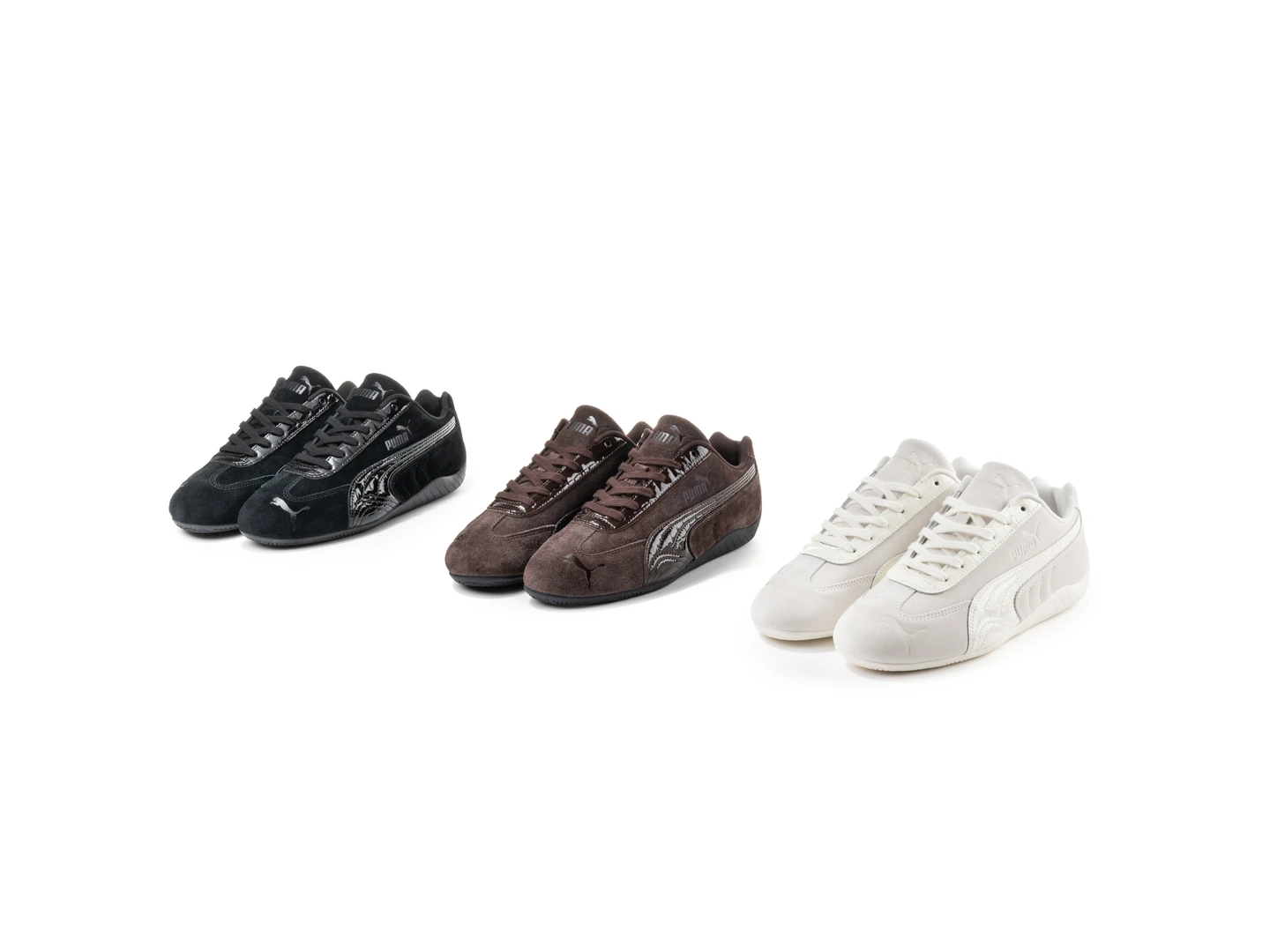
| 407674_01 | October Croc; women's lifestyle | Chocolate Fondue–PUMA Black; dark upper and glossy detail in group image | No comfort or durability test |
| 407674_02 | Same release and platform | Warm White; lower tonal contrast across the photographed upper | Not a new cushioning system |
| 407674_03 | Same release and platform | PUMA Black; reflected highlights on textured panels | No finish chemistry or manufacturing origin inferred |
The Japan Speedcat catalogue and official Ireland product page identify the colour range. The latter's product-group data explicitly lists all three versions; its selected version is 407674_02. These corroborate identity, not a universal retail assortment.
What the photographs actually support
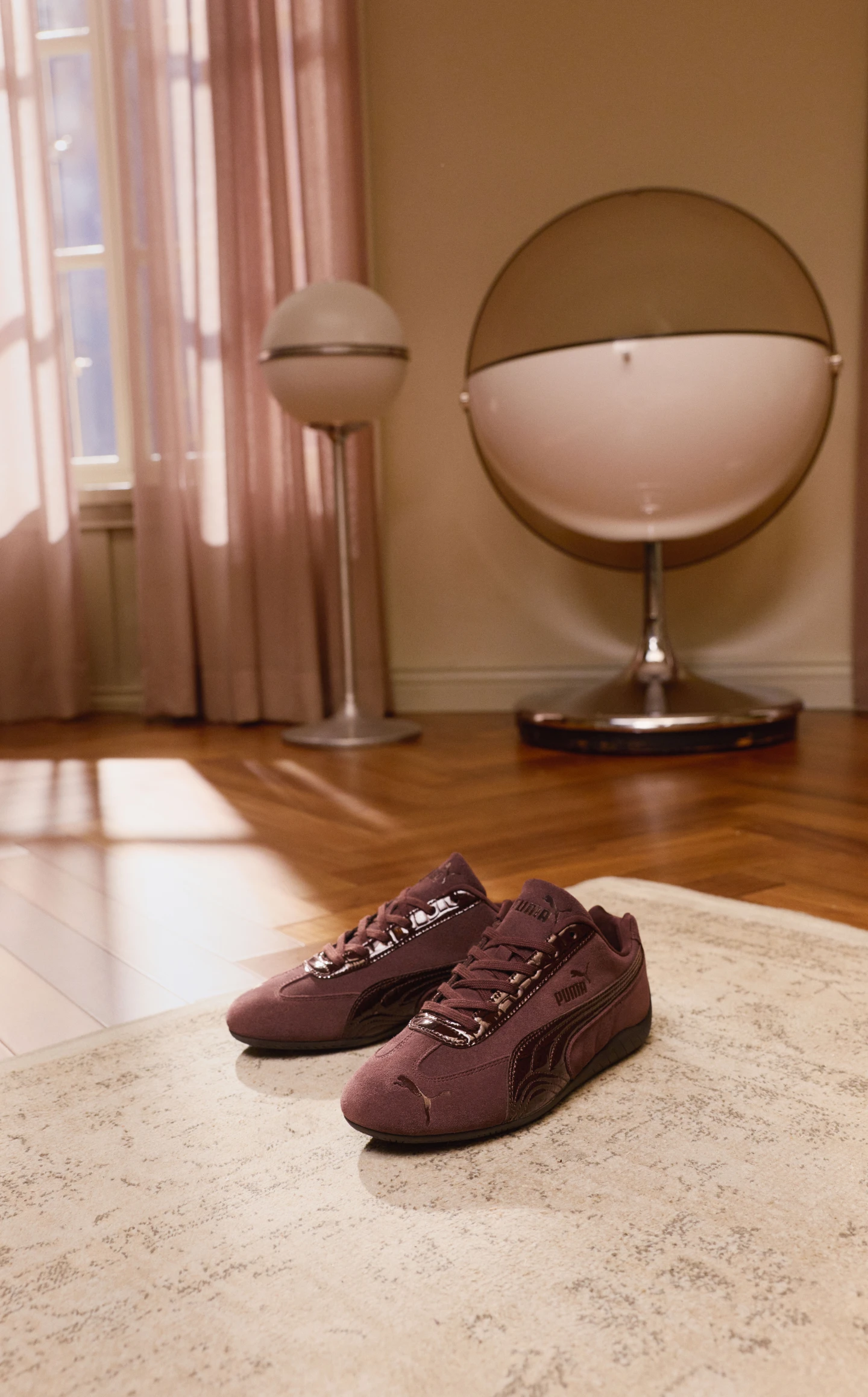
The brand describes a suede upper with glossy crocodile-textured details at the Formstrip and eyestay. “Croc” describes the texture treatment; it is not evidence of crocodile leather. The photographs support matte-versus-reflective surface contrast and tonal laces, not an internal construction diagram.
The brown product photograph makes the shiny zones easier to distinguish from the surrounding upper. In the group image, the pale version reads more tonally unified, while reflections pick out the darker versions' details. Lighting and screens affect that comparison. This is observation, not an instrument reading of gloss or colour.
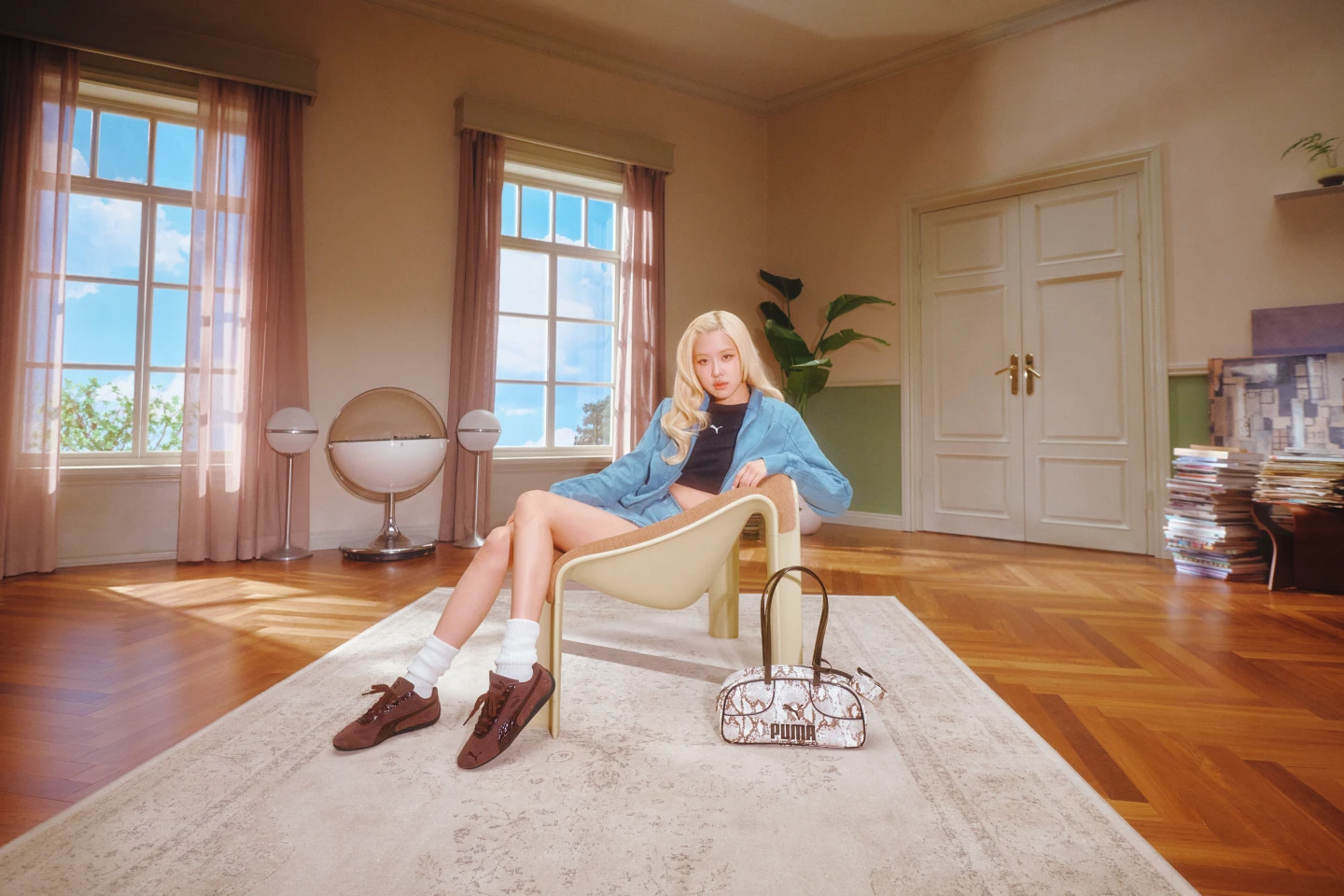
The ROSÉ campaign places the shoe in an everyday fashion setting. It explains a styling proposition; it cannot establish all-day comfort, consumer demand, driving suitability or a causal sales effect. The celebrity's presence implies no relationship with ZWC.
Turn the changes into an original development brief
The brand-specific lesson is that a familiar low-profile family can gain a different reading through a few conspicuous surface zones. For an independent collection, decide whether that contrast serves your own audience. Copying PUMA's Formstrip, marks or overall execution is not the exercise.
| Comparison signal | Evidence level | Conditional development consequence | Approval question / stop condition |
|---|---|---|---|
| Recognisable family across seasons | Official history plus exterior observation | Separate enduring references from seasonal component revisions | Which parts of your original design stay fixed? Stop if the revision is undefined. |
| Matte upper beside glossy textured zones | Official description plus photographs | Define finish boundaries, viewing conditions and approved references | Can the supplier identify the proposed material and repeat the approved appearance? A photo alone is insufficient. |
| Dark and pale versions read differently | Observation, not colour measurement | Review each complete colour execution, not just one swatch | Are adjacent components and lot differences addressed? One approval cannot cover every colour automatically. |
| Subtle silhouette presented through styling | Campaign observation; audience response unverified | Assess your original sample against the intended outfit and use | Does the idea remain clear without the celebrity or setting? |
| No wear-test result adopted here | Explicit evidence boundary | Define appropriate assessments for your own proposed claims | Do not release comfort, grip or durability wording without applicable evidence. |
These are buyer-side questions, not knowledge of PUMA's tooling, suppliers, formulas or production costs. No shoe was worn, measured, cut open or tested for this study. Official disclosure, visible observation and conditional reasoning remain separate.
Keep the range plan connected to the next decision
An archive family, a seasonal treatment and a colour assortment belong in different range-plan fields. Calling them all “new models” obscures what needs development. Conversely, calling an execution “only a colourway” can overlook finish boundaries and complete-shoe appearance.
For your own collection, connect each difference to one controlled reference, an owner and a decision before the next payment. The development-route guide addresses how much development to commission; the opening-assortment guide connects styles, colours and sizes to purchasing commitments. Neither offers copies, PUMA factory access or protected designs.
Primary sources
- PUMA corporate profile, timeline and 7 October shareholder statement; research 28 October, history rechecked 29 October 2026.
- PUMA Media Hub: 9 October 2024 Speedcat archive release; 12 October 2026 Croc announcement; release index and editorial grant rechecked 29 October.
- PUMA Japan issuer release, 13 October; current Japan catalogue and official Ireland style 407674 page. Announced launch: 15 October; stock not guaranteed.
Hero: PUMA Media Hub, October 2026 Croc group photo, under its editorial/news grant and legal terms. Four Media Hub photographs are shown full-frame for independent editorial analysis; individual photographers were not stated on the reviewed pages. The separate Suede photo is CC0. No paid promotion, endorsement or PUMA partnership is implied. AI assisted research organisation and drafting, not these photographs or physical product evidence.