
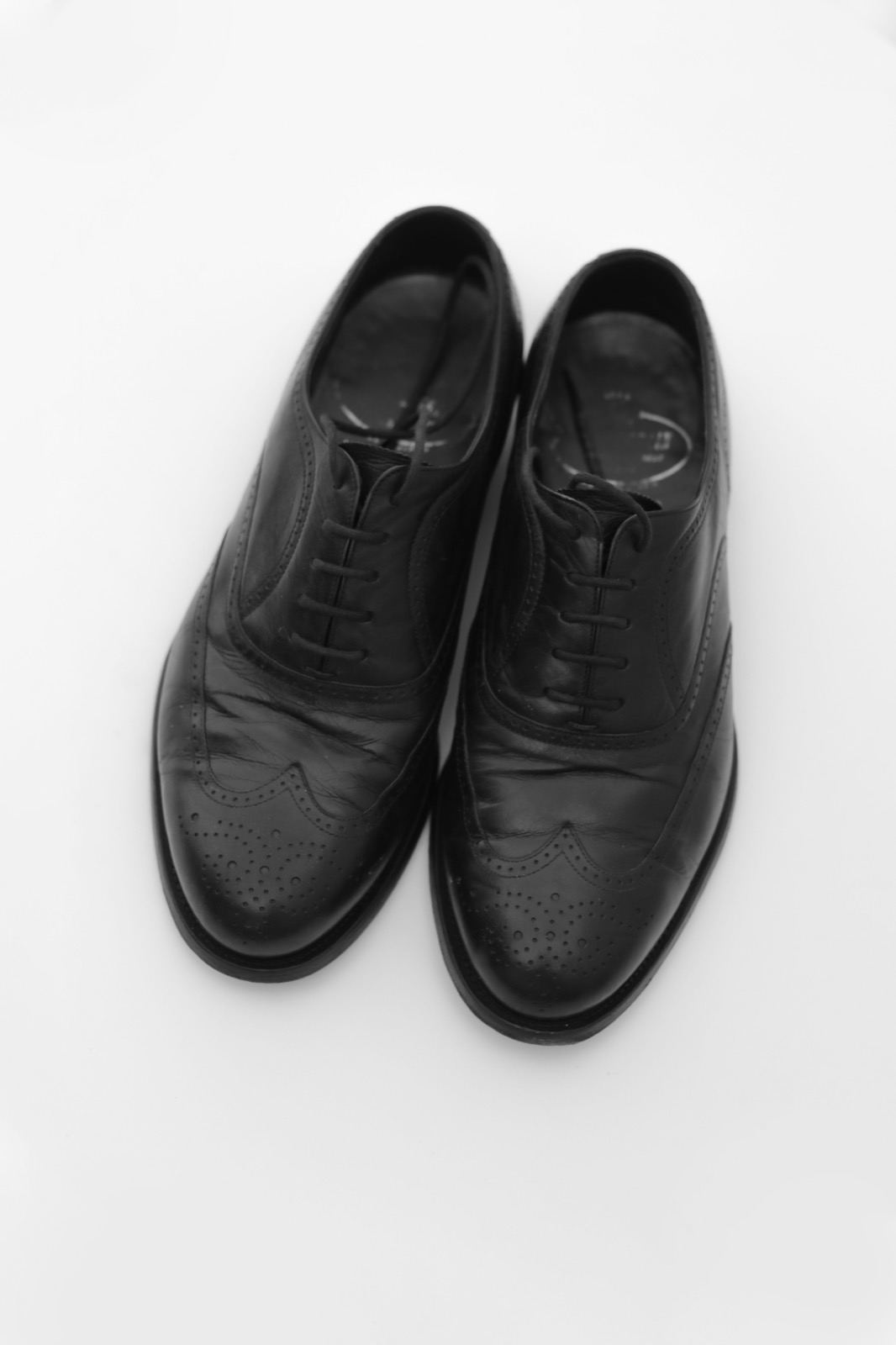
Quick answer
Compare footwear quotations only after identifying how the upper and bottom will be assembled. Cemented, vulcanised and directly moulded proposals can require different components, tooling and validation work even when their silhouettes look similar. Ask for a controlled route proposal, separate unchanged requirements from redesigns, and price the work needed to establish an acceptable product. No construction name alone proves a lower cost, longer life or suitable performance.
The cheaper quotation may be a different development project
A buyer sends one shoe photograph and receives three prices. One supplier proposes an existing unit sole; another proposes a vulcanised assembly; a third offers a directly moulded bottom. Ranking those prices immediately leaves the central question unanswered: are they offering the same product requirements, or different ways of interpreting the picture?
This is a purchasing scenario, not a ZWC customer case. The useful first decision is whether a proposed route preserves the brief or changes it. This guide helps ordinary footwear developers organise that comparison. It does not select occupational protective footwear, prescribe manufacturing settings or approve any material combination.
Keep three descriptions separate: what the shoe should do, what it should look like, and how it is proposed to be made. A change in one may require reconsidering the others. Suppliers should make those dependencies visible before the next development payment.
Name the assembly route, not just the sole material
For a cemented proposal, ask which bottom components are manufactured separately and how they will be attached with adhesive. HANWAG's construction explanation describes its own cemented and direct-injection approaches. Its ability to resole particular cemented boots also shows why “cemented means unrepairable” is an unreliable blanket assumption. Repairability belongs to an identified design and service arrangement, not a universal label.
“Vulcanised” identifies a rubber-curing process, but needs an additional question: which assembly route is meant? Vans' manufacturing explanation describes an assembled-sneaker route with a final heating stage. SATRA's public TM402C description concerns preparing bonded test assemblies representing a direct-vulcanising route. These are not interchangeable descriptions of one factory sequence. Request the actual route rather than treating a rubber sidewall as proof.
For a direct-injection or direct-moulding offer, identify how the bottom is formed onto the upper. DESMA describes direct-soling equipment for several material systems. Its catalogue does not mean every proposed factory, upper or compound works with every system. Require the supplier to name its specific route and separate any bought-in outsole or other component.
Do not use the material word PU, rubber or EVA as a substitute for this explanation. Nor should the supplier's machine photograph become evidence that your product has already been developed on it.
Compare dependencies before ranking prices
Use the following as a question matrix, not a construction recommendation. Record the supplier's answers against the same brief revision. A route remains a proposal until the relevant product and technical evidence has been assessed.
| Proposed route | Define before sampling | Ask the supplier to separate in the quote | Evidence question before advancing |
|---|---|---|---|
| Cemented assembly | Identified upper, last, bottom components and attachment interfaces | Existing versus new sole/tooling; preparation and attachment development; excluded components | Does representative output use the proposed materials, preparation and component revisions? |
| Assembled vulcanised footwear | The actual assembly and curing route, including the complete material package | Rubber components, forming tools, development trials and the work needed to confirm material suitability | Has the whole proposed package been evaluated for that route, rather than only a familiar-looking reference? |
| Direct-injected or directly moulded bottom | Named material system, moulding route, upper interface and any separate bottom inserts | Size-specific tooling, components supplied separately, trials and finishing scope | Does the evidence connect the intended upper, tooling and bottom arrangement to the offered route? |
The cost comparison starts after these answers. Do not allocate a universal “cheap”, “premium” or “durable” ranking to the rows. Production quantities, product requirements, available tooling, development responsibilities and accepted output determine the comparison for a particular project.
Ask who owns each unresolved interface. If the upper maker assumes that attachment suitability is the sole supplier's responsibility, while the finished-shoe supplier excludes development, the gap remains yours until it is assigned.
Keep route changes out of the like-for-like price column
A useful comparison sheet has two lanes. The first contains offers against the fixed brief. The second contains alternatives that deliberately change it. Both may deserve investigation, but an alternative should not be presented as a saving on an unchanged specification.
For each alternative, ask what carries over: the last, upper pattern, visible proportions, sole geometry, materials, size coverage and appearance reference. “Same style” is not an answer. Identify the affected drawing or component code and the person who will approve the change.
Then separate one-time development commitments from recurring pair costs. Request actual amounts for tooling, samples, trials and required verification; record what is included in the pair price and what is charged separately. Include commitments for unused components where they apply. Do not count the same tool both in an up-front charge and again in a supposed saving without reconciling the quotation.
No budget or saving percentage is supplied here. Existing tooling is useful only when its availability, rights, fit and limits are established. A lower initial development payment can still buy a narrower set of permitted changes.
Match the evidence to the decision it supports
An attractive sample can support an appearance discussion. It does not, by itself, establish repeatable output from the intended production route. Ask whether the sample used production-intent materials, tooling and assembly, and record substitutions rather than hiding them in a general approval.
Use a route-change register to decide what needs reassessment. The responsible footwear technologist and, where appropriate, laboratory should define the relevant assessment, specimen scope and acceptance criteria. This table supplies questions, not test methods or numerical limits.
| Proposed change | Connection that needs review | Evidence to request | Hold the next commitment when |
|---|---|---|---|
| Attachment route changes | Upper, bottom, tooling and intended product requirements | Revised construction proposal, changed-component list and representative trial plan | The supplier calls it equivalent without identifying the redesign |
| Upper material or finish changes | Material identity and the proposed attachment/processing interface | Actual revised material reference and a documented suitability assessment | Only colour and outward appearance have been matched |
| Tooling or size coverage changes | Last/bottom relationships across the offered assortment | Identified tool revisions, covered sizes and a size-validation plan | One presentation size is treated as approval of every size |
| A sample is made by a different route | What the sample can legitimately demonstrate | A written limitation and a plan to verify the intended route | Appearance approval is being used to release bulk production |
SATRA TM402C is a particularly useful scope reminder: a public description of preparing laboratory assemblies is not a whole-shoe approval, nor permission to invent factory settings. This guide has not purchased the full method, performed tests or established a universal passing result.
Decide which question to buy next
Continue route development when the proposal answers the brief and the next trial has a specific unresolved question. Ask for a revised proposal when the supplier can offer a plausible alternative but has not mapped its consequences. Hold when an essential requirement is changed silently, a critical interface has no owner, or supporting evidence concerns a different construction.
Keep supplier geography and factory equipment decisions separate. Our footwear-cluster guide helps organise the search after the construction task is defined. The shoe-factory process-route guide addresses equipment boundaries; the technical-requirements guide covers comparable specification evidence. None replaces product-specific technical acceptance.
For a footwear sourcing discussion, share the intended wearer and use, destination, product reference, fixed requirements, proposed quantities, development stage and unresolved construction question. ZWC can discuss supplier matching and coordination. Actual technical capability, material access, trials and commercial responsibilities require project-specific confirmation.
Primary sources
- HANWAG: Construction. Undated manufacturer explanation, checked 26 October 2026. Named-brand construction and repair-service context, not a universal performance comparison.
- DESMA: Direct soling. Undated equipment-owner description, checked 26 October 2026. Route/material-system context only; promotional cost, quality and performance claims not adopted.
- Vans Türkiye: How Vans shoes are made. Published 17 May 2019, checked 26 October 2026. Historical named-brand assembly explanation only; no images, output statistics, recipes, operating settings or universal material exclusions reproduced.
- SATRA TM402C public catalogue. Displayed method date December 2016, checked 26 October 2026. Public scope and principle only; not the purchased full method or a regulatory requirement.
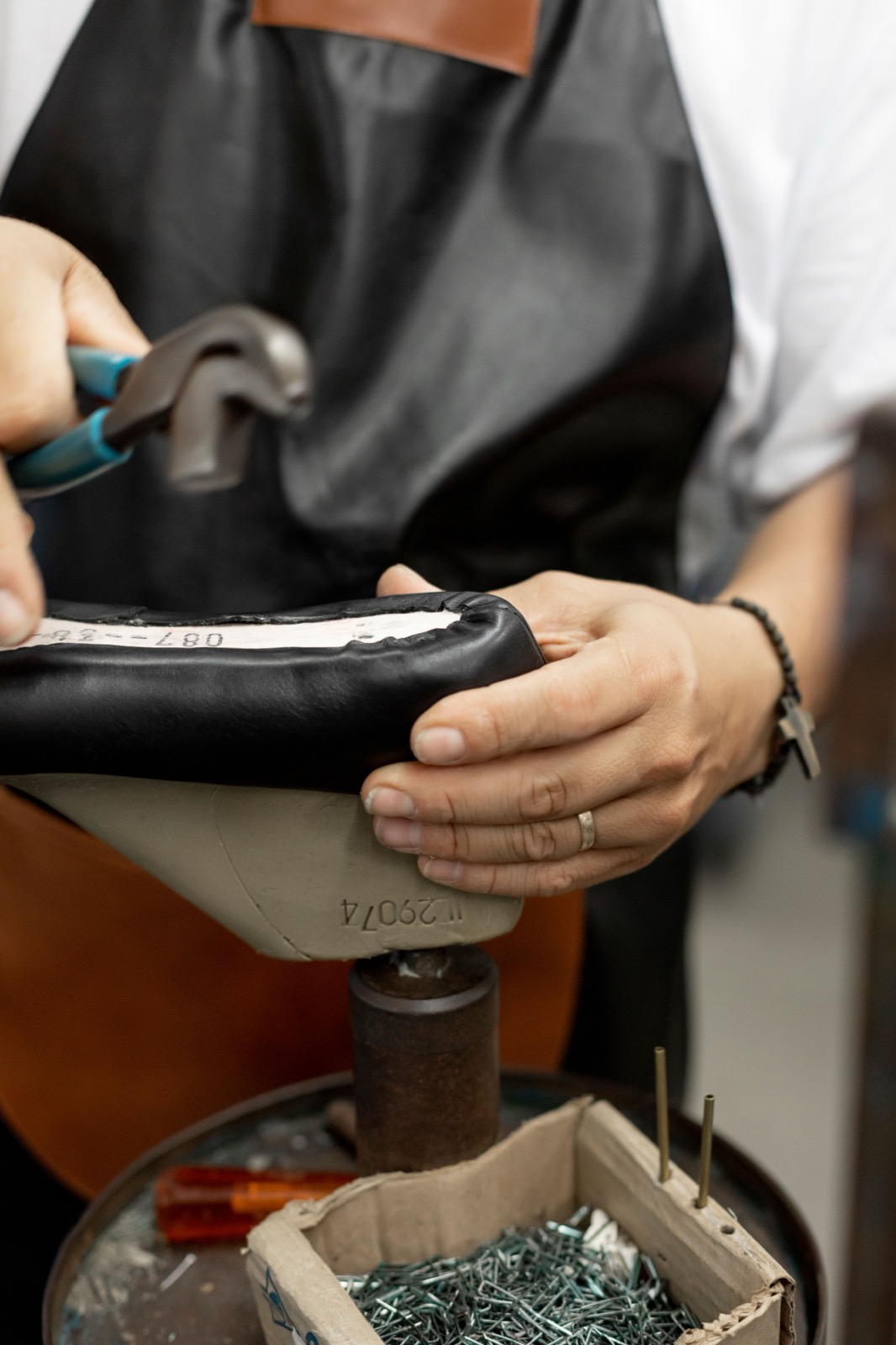
AI assisted research organisation and drafting, not photography. Hero: Ali Pli / Pexels. Supporting photo: Fernanda Simões / Pexels. Both Pexels License, resized/compressed. Illustrative exterior and upper/last contexts only; no hidden construction, material, performance, brand endorsement or ZWC relationship inferred. Tables are original purchasing worksheets, not factory recipes, actual trial results or technical approval.