
Quick answer
A golden sample should be a controlled approval package, not merely the best-looking sample in the room. Before bulk production, link the physical sample to a dated specification revision, material and color references, approved deviations, packaging artwork, test status and named approvers. Keep synchronized buyer and supplier references where risk justifies it, protect them from casual alteration, and define exactly what the sample can—and cannot—approve.
Who should use this checklist
This guide is for overseas buyers preparing to release private-label footwear, handbags, apparel or another custom product into bulk production. The decision is simple but consequential: is the development work sufficiently controlled for the supplier to reproduce it, and for the buyer or inspector to judge later units against the same basis?
The phrase “golden sample” can create false confidence. It is not a universal certification or proof that every production unit will match. It is a buyer–supplier reference used within the project. Its value depends on the records, scope and custody attached to it.
The sample is one layer of approval—not the whole approval
A physical sample communicates shape, construction, hand feel and appearance better than a spreadsheet. But it can hide decisions that are difficult to see: which material grade was used, which color tolerance applies, whether a component is temporary, which performance checks remain open, or whether the packaging shown is final.
Treat approval as four connected layers:
- Physical reference: the approved product and, where useful, loose components or material swatches.
- Controlled documents: the current specification, drawing, bill of materials, artwork and packaging instructions.
- Decision record: approved deviations, open items, approver, date and release status.
- Verification plan: how samples from production will be compared, measured or tested.
If one layer changes, the approval package must show whether the other layers remain valid.
Golden sample approval record
| Control item | Record before approval | Evidence to retain |
|---|---|---|
| Product identity | Style or SKU, variant, size, colorway, sample number and purchase-order reference if available. | Photographs showing the full sample and distinguishing details. |
| Revision | Current specification, drawing, bill of materials and artwork revision. | Dated file set plus a short change history. |
| Materials | Approved material references, finish, color and any allowed substitution conditions. | Swatches, component board, supplier documents or agreed test evidence. |
| Construction | Assembly, stitch, reinforcement, joining and workmanship details demonstrated by the sample. | Close-up photographs and construction notes tied to the specification. |
| Measurements | Measurement points, targets, tolerances and method. | Recorded readings and diagram showing each measurement location. |
| Appearance | Color, texture, gloss, shape, symmetry and agreed visual boundaries. | Controlled swatch, approved sample and comparison conditions. |
| Performance | Checks completed, method, result status and any work still pending. | On-site check record or qualified laboratory report, as appropriate. |
| Branding and packaging | Current artwork, label, barcode, insert and pack-out status. | Approved digital files, scans or packing-sample photographs. |
| Deviations | Every difference accepted from the specification or earlier sample. | Written deviation record with impact and named approval. |
| Custody | Location of buyer and supplier reference samples, identifier and access owner. | Sample register and dated handover or receipt record. |
| Release decision | Approved for bulk, approved with conditions, or not approved. | Attributable release record with date. |
A practical approval sequence
1. Identify the exact sample
Assign a unique sample number before the approval meeting. Photograph the front, back, sides, interior, underside and relevant construction details. Avoid names such as “final sample latest” because another “latest” file will eventually appear.
2. Compare it with the current documents
Review the sample against the same specification package intended for production. If the physical result differs, decide whether the sample must be corrected or the document revised. Never allow an undocumented difference to become the new standard by silence.
3. Close or expose every open item
Use three statuses: closed, approved deviation, or still open. Approval should not imply that a pending laboratory test, alternate component, final barcode or packaging trial has been completed. State which decision is released and which is not.
4. Record measurable evidence
Complete key measurements using the agreed method. For appearance, compare against the controlled color or finish reference under a consistent viewing condition. Attach applicable check or test evidence rather than assuming the approved appearance proves function.
5. Create synchronized references
Where disagreement would have a material consequence, consider maintaining one buyer-controlled and one supplier-controlled reference from the same approved stage. Record where each is stored and how it is identified. If a second identical unit is impractical, define which sample controls and preserve detailed photographs, component references and readings for the other party.
6. Protect the sample from casual change
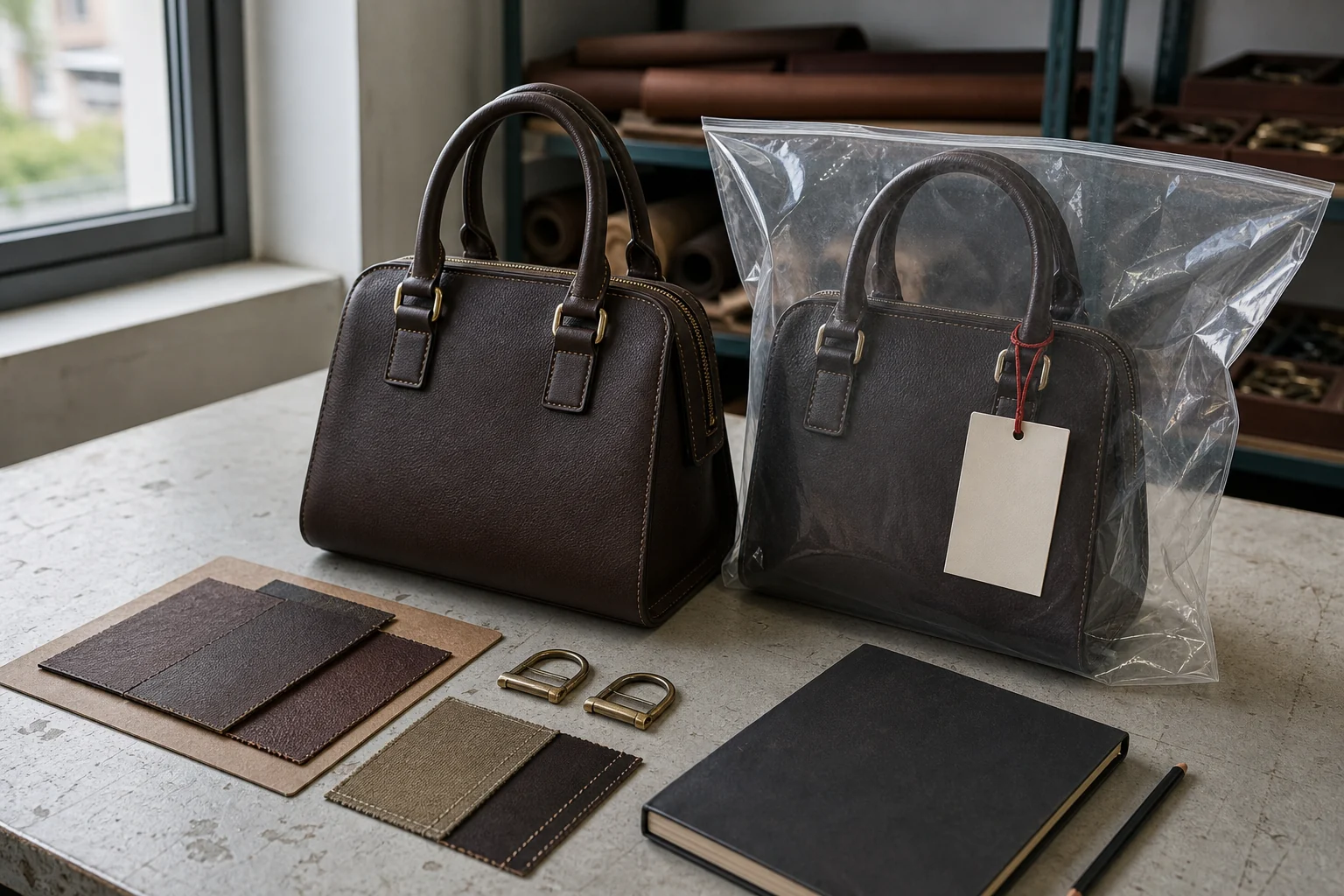
Use a clean protective bag or box, a dated identifier and an approval record connected to the sample register. The purpose is not tamper-proof security. It is to prevent an approved sample from returning to the sample room, being altered, handled heavily or confused with another development version.
7. Issue a production release
The release should identify the sample, document revision, approved deviations, conditions still open, responsible approver and date. Send the same record to the supplier, buying team and quality team. Bulk production should not rely on a photograph of a signature with no link to the controlled files.
Questions buyers should ask before signing
- Does the sample represent the intended production materials and processes, or was any part handmade or substituted?
- Which characteristics are controlled by the physical sample, and which by written tolerances, artwork or test methods?
- Are color and finish references available to both parties?
- Are measurements recorded using the same method that production inspection will use?
- Is any component, packaging item, label, barcode or performance check still provisional?
- Has every accepted difference been written into the specification or a deviation record?
- Can the factory identify the correct reference sample without relying on one employee’s memory?
- Who may approve a post-release change, and how will an older sample be withdrawn?
- What evidence will be reviewed at pilot production, in-process inspection and pre-shipment inspection?
Common approval failures
Approving appearance while materials remain undefined. Two materials can look similar in a sample but behave differently in production or use. The material reference belongs in the document package.
Treating the best sample as the allowed range. One ideal unit does not show how much variation the buyer accepts. Define measurable tolerances and visual defect boundaries separately.
Signing a sample with open substitutions. If the supplier plans to change a component for bulk production, the signed sample cannot approve a replacement that has not been reviewed.
Keeping only one untracked sample. A sample passed between offices may become worn, altered or lost. Control its location and preserve independent evidence.
Allowing chat messages to revise approval. Move every consequential change into the controlled record so it cannot conflict with the specification, artwork or purchase order.
What a golden sample cannot prove
A golden sample does not prove supplier legitimacy, production capacity, regulatory compliance, durability, laboratory performance or consistency across the bulk lot. It does not replace a product specification, engineering validation, applicable testing, a pilot run, production follow-up or inspection.
It also cannot remove normal variation. Its role is to make comparison and decision-making more objective. The buyer still needs to define what differences are acceptable, which are defects and who has authority to release or reject production.
Editorial note: AI assisted with research organization, drafting and creation of the illustrative hero image. ZWC published the guide as general operational guidance, not legal, regulatory, engineering, testing or product-compliance advice. The image does not depict a named client, supplier or ZWC project.