
Quick answer
For a footwear stitching-equipment purchase, agree how the delivered configuration will be identified, how replacement parts will be ordered and who will provide training and service. Attach those answers to the equipment quotation before paying a deposit. A parts catalogue, a training video and a warranty statement answer different questions; none alone establishes support for your particular machine at your destination.
The unresolved item can be smaller than the machine
A quotation can name a sewing-machine family while leaving its subclass, attachments and controls unresolved. Later, the factory needs a replacement, but the purchasing record identifies only the family. The buyer then has to reconstruct what was delivered before anyone can confirm what to order.
This is a planning scenario, not a ZWC customer incident. The decision is whether the proposed equipment comes with a usable support handover, not whether one brand is better than another. This guide addresses buyer-side questions for stitching stations. It does not select machines for a particular upper construction or extend sewing-machine evidence to cutting, lasting, pressing or sole-production equipment.
Start with the agreed shoe-factory process route. Once an operation and its equipment boundary are defined, examine the support behind that configuration. Do not reopen the whole factory design merely to fill a spare-parts spreadsheet.
Record what is being delivered, not just its sales name
JUKI's Essential Parts List guidance distinguishes model, subclass and manufacturing number. It specifically notes that parts can differ by subclass even within the same model. That is a useful identification example, not a claim that every manufacturer uses the same labels or that any listed machine suits your footwear.
Ask the proposed supplier to identify the machine head, fitted options, attachments and control equipment in its own documentation. Where identifiers are not assigned until manufacture, distinguish the agreed configuration from the later delivery record. Assign responsibility for supplying the final identifiers rather than inventing serial numbers at quotation stage.
Keep a controlled link between the quotation revision, delivered equipment list and applicable documentation. An overview photograph can help locate a machine; it cannot establish a hidden component's identity, software entitlement or interchangeability. Do not instruct an unqualified person to expose internal components just to complete the record.
Make the first parts request possible
Use this original register to test the supplier's proposed handover. It is not a recommended stocking list. The manufacturer and competent maintenance team must determine actual parts, quantities, suitability and handling requirements.
| Handover item | Identification to request | Evidence needed before relying on it | Buyer decision |
|---|---|---|---|
| Delivered station | Agreed configuration; final machine and control identifiers when available | Supplier's equipment record linked to the order revision | Can the support contact identify this station? |
| Proposed initial spares | Part reference, description, intended machine and included quantity | Itemised offer with exclusions and configuration match confirmed | What is included, optional or unresolved? |
| Replacement route | Ordering party, applicable catalogue reference and supply location | Supplier's written route for this destination | Who will actually accept a parts request? |
| Superseded reference | Old and proposed replacement identifiers | Written compatibility confirmation from the responsible technical party | Is substitution approved or still a proposal? |
| Documentation | Manual or parts-list title, revision and language | Files or legitimate access usable by the intended recipient | Can the team retrieve the relevant information? |
| Service escalation | Contact role, coverage and information required | Agreed service scope and escalation path | Who owns the next action if identification fails? |
An online listing shows a reference exists in that source. It does not establish stock reserved for your order, delivery time to your site or inclusion in the equipment price. Ask for those commercial details separately and retain their date and conditions.
Separate a proposed initial kit from ongoing replenishment. A box accompanying the machine does not answer how replacements will be obtained after it is used. Conversely, buying more unverified parts does not solve an identification gap. Have the responsible maintenance team justify the proposed kit against the actual equipment and operating plan.
Split training by recipient and responsibility
JUKI's industrial-machine FAQ separately describes maintenance-staff training and novice-operator learning resources. It also directs repair enquiries first to the selling distributor. These are JUKI's stated routes, not training included in a third-party quotation or evidence of local availability for your project.
In the buyer's scope, distinguish operator familiarisation, maintenance training and any specialist support. Name the intended participants, language, equipment configuration, delivery format and completion evidence. Ask what prerequisites the trainer expects and who decides whether the attendees are ready for their assigned work.
Attendance, receipt of a video and demonstrated competence are not interchangeable records. The appropriate assessment belongs to the responsible employer, manufacturer and qualified specialists. Do not treat this article as authority to operate, adjust or repair a machine. Safe work, electrical matters and machine-specific procedures require the applicable instructions and competent personnel.
Compare service promises as events
Dürkopp Adler's public support page identifies technical service, local service partners and documentation resources. Its spare-parts page provides parts-ordering and documentation routes. Those distinct routes are examples of what to clarify; the pages do not establish response times, site attendance or parts availability under your purchase.
Convert broad promises such as “support included” into the following original event matrix. Ask the proposed service provider to fill the actual commitments and exclusions. Do not populate empty fields with a website's general marketing language.
| Event | Information the agreement should identify | Separate commitments to clarify | Unresolved condition |
|---|---|---|---|
| Equipment handover | Final configuration and document recipient | Delivery of records versus technical acceptance | Machine delivered but records missing |
| Training session | Participants, scope, language and prerequisites | Attendance record versus competence decision | Relevant role or configuration not covered |
| Support request | Permitted reporting route and machine identity | Acknowledgement, assessment and resolution | “Response” has no defined meaning |
| Parts request | Confirmed reference, destination and ordering party | Availability confirmation, dispatch and arrival | A catalogue link substitutes for a supply answer |
| Proposed intervention | Authorised provider and agreed work boundary | Remote advice, travel, labour and parts | No competent party owns the intervention |
| Return to production | Required records and responsible release authority | Service completion versus production approval | A replaced part is treated as automatic release |
Keep these stages separate when comparing offers. A contact answering a message is not the same event as a technician reaching the site. A dispatched component is not an installed component. Who pays for travel, freight, local work or excluded parts must be answered in the actual agreement, not assumed from the word warranty.
Know when the support package is not yet comparable
Pause the purchasing decision when a critical support dependency remains unassigned: the delivered configuration cannot be identified; a proposed spare has no confirmed application; training has no defined audience; or nobody can explain the destination's service route. Ask for a clarification or an explicitly excluded scope rather than recording an unsupported yes.
A buyer may arrange local support separately, but both sides must recognise that boundary. Confirm who receives documentation, who supplies technical decisions and how issues pass between the equipment seller and local provider. This does not make either party responsible for work it has not accepted.
There is no universal spare-kit size, service response target or recovery-cost figure in this guide. Without actual equipment, support terms and operating information, a numerical comparison would give precision to assumptions. Technical compatibility, safety, warranty interpretation and contractual remedies remain matters for the appropriate responsible professionals.
Send the configuration and the open support question
For a China-side sourcing discussion, share the intended footwear operation, product and material direction, destination, proposed machine configuration, current quotation and unresolved training, parts or service item. Mark proposals and unknowns. Do not send account credentials or remote-access codes through a sourcing enquiry.
ZWC can discuss the sourcing and coordination scope described in its factory setup and production-line consulting service. Particular technicians, OEM relationships, spare stocks, local attendance and service obligations require project-specific agreement. No JUKI or Dürkopp Adler affiliation, repair qualification or guaranteed recovery time is implied.
The useful next step is a configuration-linked support scope. It gives the buyer something concrete to compare before deposit without pretending that a generic equipment list is an accepted support system.
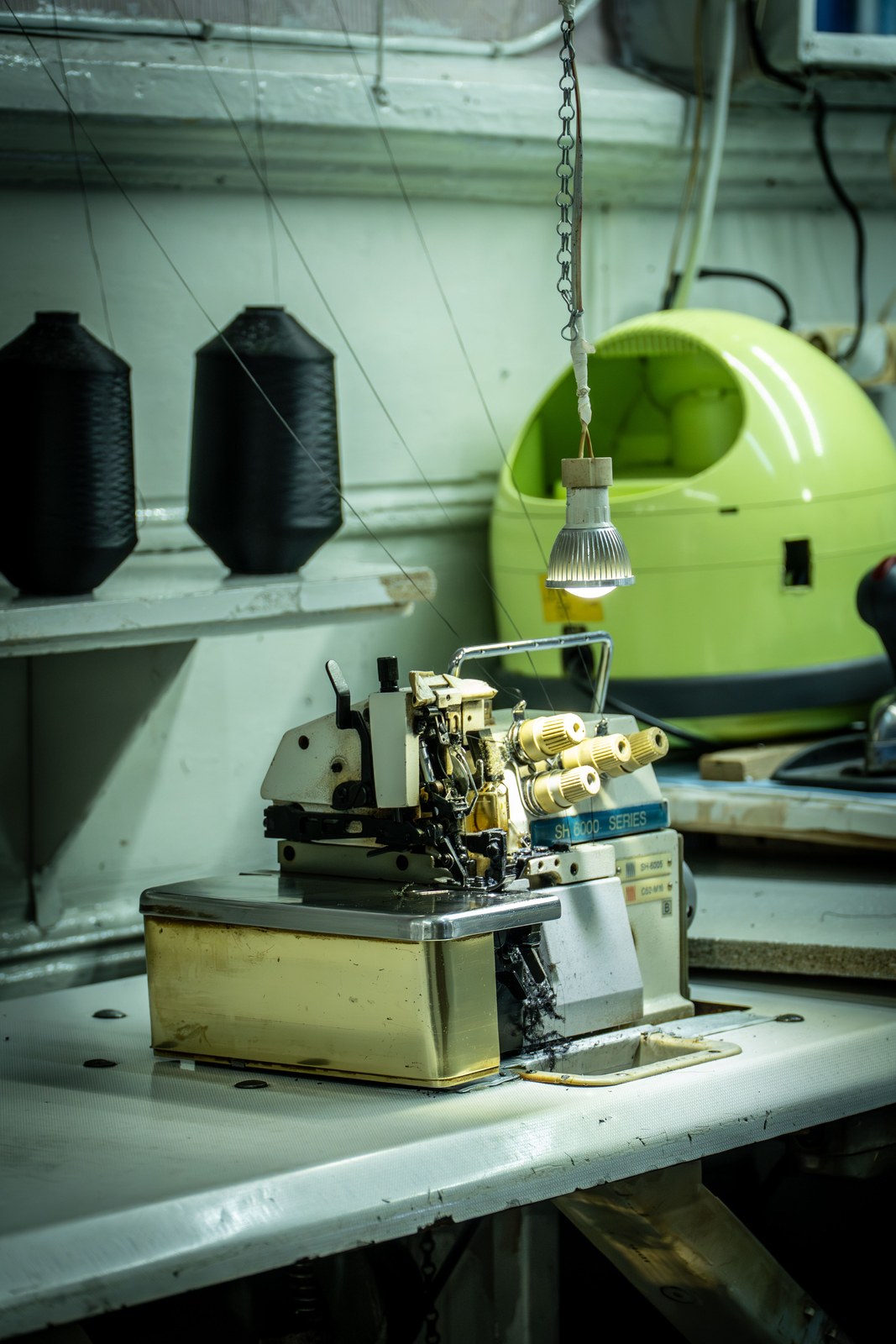
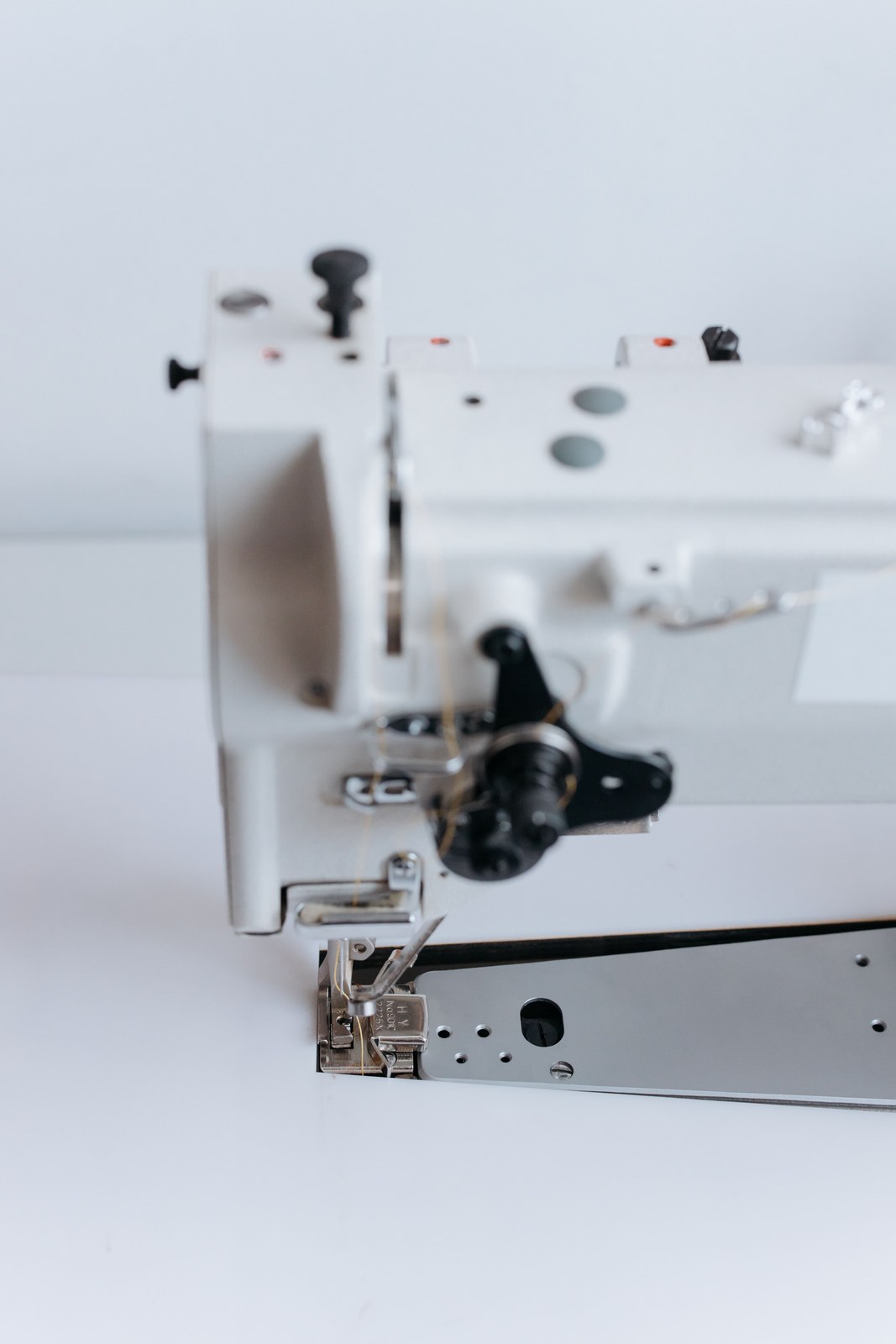
Hero: Nurullah Çakmak / Pexels. Supporting photo: cottonbro studio / Pexels, credited above. Both Pexels License, full-frame resized/compressed only. Historical equipment and separate component-context illustrations, not assessed footwear equipment, either cited OEM example, ZWC sites or supported stock. No endorsement implied. AI assisted text organisation, not photography.