
Quick answer
An approved sample can differ from bulk production because the sample and the order may not use the same material lot, tooling, operators, process route, machines, subcontractors or inspection conditions. Approval should therefore release more than one physical sample. Before bulk starts, transfer every approved decision into controlled production inputs, verify the first output from the real line, and stop production when an unapproved difference appears.
Who should use this guide
This guide is for brands, importers and sourcing teams that have approved a product sample and are preparing a supplier for bulk production. It applies especially to private-label footwear, handbags and apparel, where many materials and manual operations must come together consistently.
The framework does not replace a product-specific specification, laboratory test plan or inspection standard. It helps the buyer control the handover from development to production—the point where a good sample can become a different product at scale.
The real issue is process continuity
Buyers often describe the problem as “the factory did not follow the sample.” That may be true, but the phrase does not identify what changed. A sample is an output. To reproduce it, the supplier needs the same approved inputs and a production process capable of repeating them.
The practical question is not only whether the factory still has the approved sample. It is whether the approved decisions are connected to:
- the current specification and bill of materials;
- the material and component sources used for the order;
- the correct patterns, lasts, moulds, jigs or templates;
- the intended production line and subcontracted operations;
- measurable settings and workmanship criteria;
- in-line checks and decision authority; and
- a documented response when production cannot match the approval.
If that chain is incomplete, the sample room and the production floor can both believe they are following the same product while working from different information.
Where sample-to-bulk differences begin
| Transfer risk | What may change in bulk | Evidence to require before release |
|---|---|---|
| Material lot | Shade, texture, thickness, hand feel, surface finish or behaviour during processing | Approved bulk material from the actual lot, lot identity and retained reference |
| Component source | Construction, dimensions, plating, colour or performance | Controlled BOM with supplier/source status and approved bulk component |
| Pattern or file revision | Shape, measurements, seam position, placement or grading | Revision-controlled files and a production packet matching the approved sample |
| Tooling and fixtures | Shape, alignment, hole position, trim line or assembly repeatability | Tool identity, condition check and first output from the production tool |
| Process route | Order of operations, preparation, curing, finishing or handling | Written route, named subcontract steps and first-line verification |
| Operator method | Stitch margin, adhesive application, tension, folding, trimming or finishing | Work instruction, approved visual reference and supervised first output |
| Machine or line | Pressure, feeding, cutting, sewing or forming result | Line assignment, setup record and start-up sample |
| Inspection method | A difference is missed because the light, measurement point or defect rule changed | Inspection instruction using the same reference and decision criteria |
| Packing method | Shape distortion, abrasion, mixed parts or presentation damage | Approved packing trial using production-intent materials |
Approve bulk materials separately from the development sample
Development samples may use available material chosen to confirm design and construction. Even when the sample material is described as “correct,” the bulk order may come from a new production lot or a different component supplier. Ask which inputs are already production-intent and which still require approval; record the answer against the BOM rather than assuming that sample approval closes every material decision.
Before the material is consumed, confirm that the actual bulk lot has been reviewed against the approved requirement. The evidence should identify the material, colour, supplier, lot and decision. For visible materials, the viewing conditions and reference should be agreed. For functional requirements, use the buyer-approved test or verification plan.
Do not rely on a cropped photograph and the message “same as sample.” A photograph may help show a surface or colour concern, but it cannot prove every material property or represent every unit in a lot.
Freeze the production packet
The production packet is the controlled set of information the factory uses to make the order. Its contents vary by product, but it should connect the approved sample to the current specification, BOM, drawings or patterns, measurement chart, artwork, component references, packing instruction and approved deviations.
Before bulk release, check for contradictions. If the physical sample shows one construction while the drawing or BOM shows another, the supplier needs a written decision. Asking the line to “follow the sample” forces operators to interpret which details matter and which may have been sample-room improvisations.
Every document should show a revision or date, and the factory should identify which version is active. Obsolete copies should not remain at workstations where they can re-enter the process.
Verify the real line with a start-up sample
A sample-room unit proves that someone can make the product under sample conditions. A start-up or first-line sample tests whether the actual production setup can reproduce the approved decisions.
Use production-intent materials, components, tooling, machines and process steps. Draw the sample from the line before normal output builds up. Then compare it with the approved references and written requirements.
The review should answer:
- Are the correct materials, components and revisions present?
- Did the intended tools, fixtures and line produce the item?
- Do measurements and construction details meet the agreed decision rules?
- Does appearance match the approved reference under the agreed viewing conditions?
- Is any adjustment, repair or manual workaround hiding a process problem?
- What evidence releases, holds or rejects production?
A start-up sample should not become a second uncontrolled “golden sample.” If it is approved, record how it relates to the original approval and which differences, if any, were accepted.
Map subcontracted steps before production
Printing, embroidery, washing, plating, moulding, special stitching, finishing and packing may happen outside the main factory. The buyer should know which steps leave the site, what information and reference follow the work, and who checks the result when it returns.
An approved final sample does not prove that every subcontractor has the correct file or material. Include subcontracted operations in the production packet and first-output review. If a source or process changes, treat it as a controlled change rather than a routine purchasing decision.
Make deviations visible before they multiply
When bulk production cannot match the approval, the supplier needs a simple escalation path. The deviation request should identify:
- what differs and why;
- which material, component, operation, size, colour and quantity are affected;
- whether production has stopped or continued;
- available correction options and their consequences;
- evidence for the proposed decision; and
- the buyer-authorised disposition.
Verbal acceptance or a chat reaction is not enough for a decision that changes the product. Move the approval into the controlled order record and link it to the affected lots.
Production-transfer release checklist
- The approved sample is identified, protected and available to the production and quality teams.
- The specification, BOM, patterns, artwork and packing instruction use the active revisions.
- Every approved deviation is written and linked to the affected component or operation.
- Actual bulk material lots and production components have been reviewed as required.
- Production tooling and fixtures are identified and in suitable condition.
- The real production route, line and subcontracted steps are known.
- Work instructions translate critical sample details into repeatable actions.
- A start-up sample from the intended line has been checked before output accumulates.
- In-line controls name the check, frequency, evidence and decision owner.
- Unapproved substitutions and deviations trigger a hold rather than silent continuation.
- Packing has been trialled with production-intent materials.
- Retained samples and lot records can connect a later problem to its production source.
Red flags that justify a hold
Match the hold to the affected scope. A changed lining source may require a component review; a changed mould or adhesive process may affect every unit made on that route. Reconcile work already completed, separate affected lots and identify the earliest operation where the approved condition can still be restored. If the cause is unclear, hold the uncertain quantity while the supplier establishes traceability. Do not release unrelated stock merely because it looks similar, or stop an entire order without first checking whether the issue is contained.
Pause bulk release when the supplier cannot identify the active files, bulk material has not been compared with the approved reference, production uses different tooling or subcontractors from the sample without review, or the first-line unit needs extensive manual correction.
Another warning sign is a perfect sample with no reproducible method behind it. If the key quality depends on one sample-room technician’s undocumented judgement, the buyer should require a transferable instruction or a stronger early-production control.
What this process cannot guarantee
A controlled transfer reduces the risk that development decisions disappear during scale-up. It cannot guarantee zero defects, product compliance, durability, delivery performance or consumer acceptance. Those outcomes depend on product-specific testing, capable production, in-line control, final inspection and the destination market’s requirements.
Next step
If you have an approved product sample but are concerned about the move to bulk production, send ZWC Sourcing the specification, BOM, sample approval record, planned material sources and production timeline. We can review the information needed for a practical production-follow-up and quality-control scope. Final acceptance criteria and service responsibilities should be agreed in writing before production begins.
Related ZWC resources:
- Golden Sample Approval Checklist
- How to Write a China Purchase Specification
- How to Control Color Consistency Across Production Batches
- Contact ZWC Sourcing
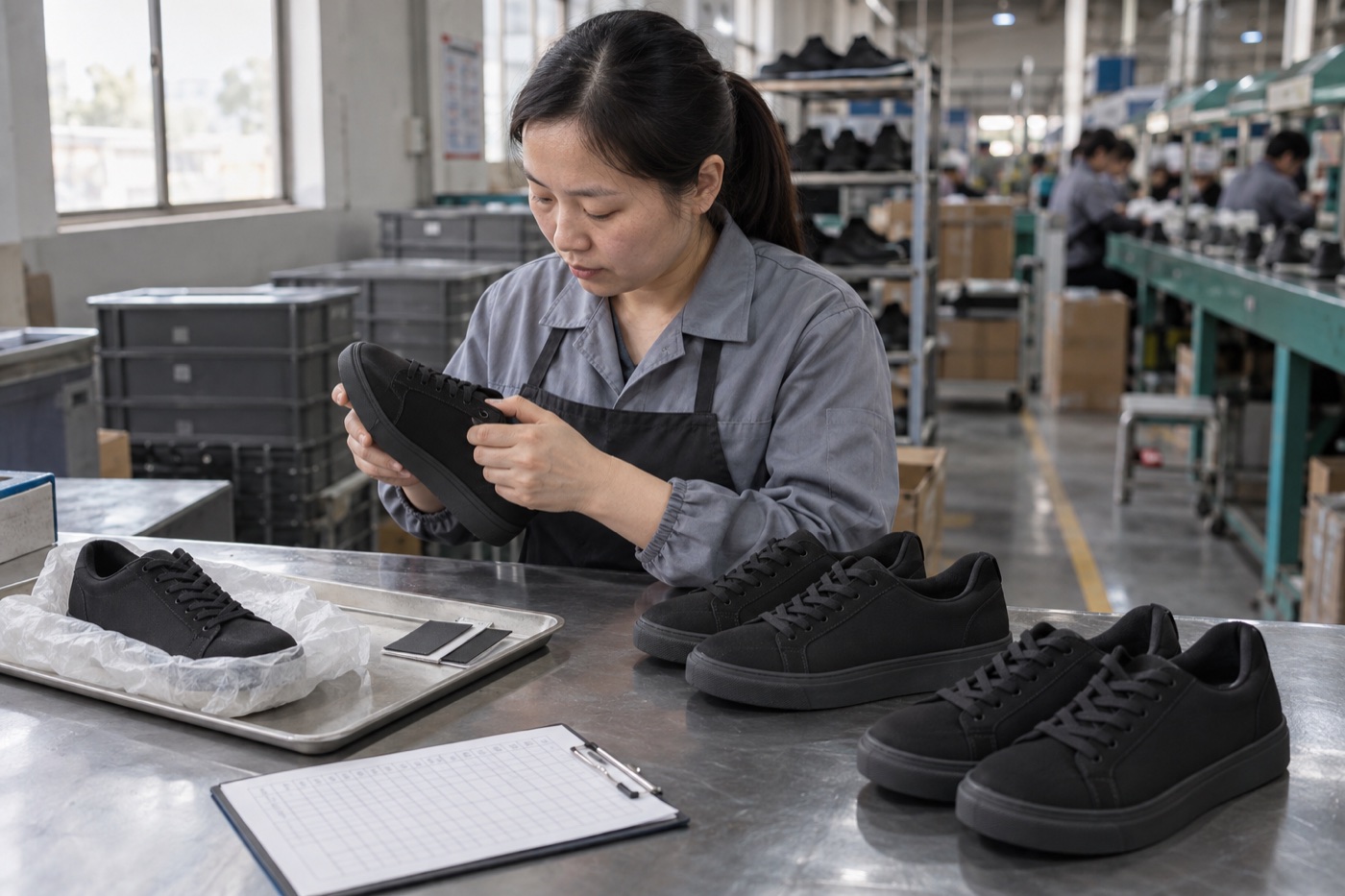
AI assisted with research organization, drafting and creation of the illustrative hero image. Buyer-specific technical, legal and commercial decisions still require verification for the actual product and order. The image is illustrative and does not depict a named ZWC client, supplier or verified project.