
Quick answer
Approve an antique-finish sole against a physical reference set that defines where darker shading, lighter highlights and visible variation are intentional. Agree the unacceptable limits, pair-matching rule and production stage before bulk finishing. Then verify surface durability and color transfer separately with a suitable, agreed test plan. A good-looking sample does not prove rub performance, and an intentionally uneven finish is not permission for uncontrolled variation.
A uniform color target can reject the effect you ordered
An antique effect asks for controlled differences. If the buying brief says both “match this rubbed finish” and “make every area the same brown,” the supplier has two conflicting instructions. A flat color chip cannot resolve where the darker effect should remain or how much of a raised feature should look lighter.
The buying decision is not simply whether a sole is brown enough. It is whether the distribution of color, contrast and gloss still belongs to the approved design. Treat that as an appearance specification for the actual sole, not as a new name for ordinary batch color control.
This guide concerns decorative finishing and its approval. It does not specify a chemical recipe, prescribe a manufacturing operation or replace dimensional and functional requirements. A caliper measurement cannot establish whether the antique effect matches the approved appearance.
Identify the base material before discussing the finish
Ask the supplier to identify the sole substrate, the areas receiving decorative treatment and the party responsible for that step. Distinguish color within the base material from a surface-applied effect. Record any separate edge, heel or welt treatment instead of calling everything “sole color.”
Do not transfer a finishing proposal between leather, rubber, polyurethane, EVA or thermoplastic soles merely because the photographs look similar. For example, Fenice lists different product families for leather soles, heels and welts. That establishes a material-specific distinction; it does not validate those products for a molded polymer sole or for your order.
Request the proposed material and finish combination from the actual supplier. Where technical compatibility remains unresolved, obtain confirmation from the responsible material or finishing specialist before accepting the development route. Do not choose chemistry from an appearance photograph.
Make the master a reference set, not one attractive sample
Keep an approved finished sole as the visual anchor, with its style, size, side, material identity, finish revision and approval date. Where the design permits variation, agree physical limit samples that show the acceptable lighter and darker outcomes. An extreme sample only becomes an acceptance limit when the buyer has explicitly approved that use.
Retain an unfinished base reference where it helps distinguish a base-color change from a finishing change. Store reference pieces so the production team and inspector can identify the same revision. If destructive performance testing is required, use separately identified specimens; do not consume the only appearance master.
Photos help explain the marked zones, but should not silently replace the physical references. Record the agreed viewing conditions and comparison orientation. Use the broader production color-control checklist for reference handling; the additional job here is defining the pattern of intentional variation.
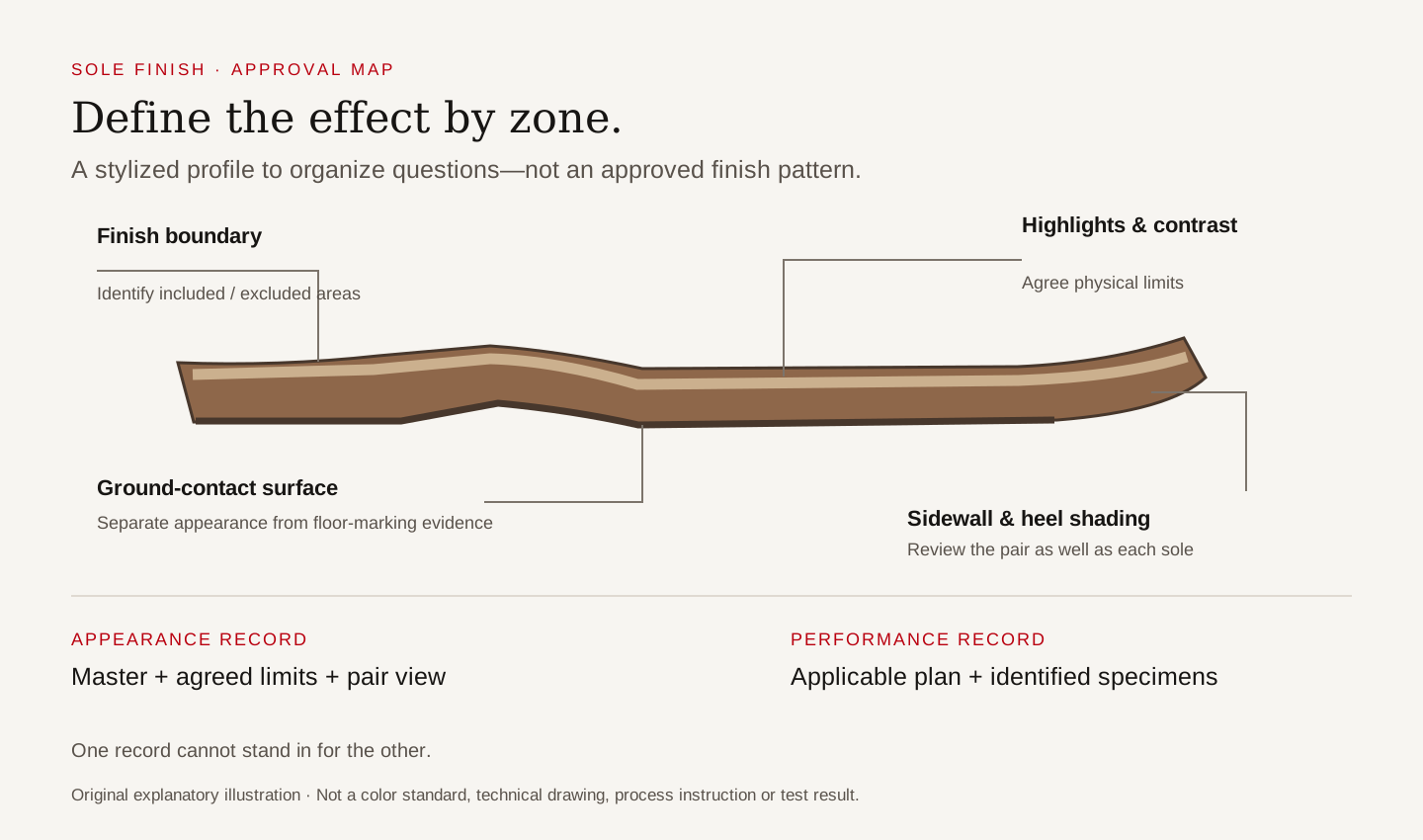
| Area to mark on the actual sole | Decision to agree before finishing | Evidence to retain |
|---|---|---|
| Visible sidewall and heel profile | Where darker shading may remain, where lighter highlights belong, and the acceptable contrast | Marked views linked to approved physical master and limits |
| Raised details, grooves and transitions | Whether the effect follows these features; which abrupt patches or exposed areas are outside the design | Close-ups of agreed boundaries, not only a distant overall view |
| Upper-to-sole junction and any excluded areas | The finish boundary and what must remain free of decorative treatment | Boundary reference plus an assembled-shoe review where relevant |
| Ground-contact surface, if decorated | The intended appearance and the separate performance questions for this use | Identified sole specimens and an agreed verification scope |
These are prompts for a style-specific agreement, not universal defect limits. A dark groove acceptable on one design might be wrong on another.
Match the pair, not only each loose component
Agree whether the effect must balance across the left and right shoe when viewed together. Two soles can each resemble an approved reference yet form a distracting pair if their contrast or shading placement differs. Decide this during development, before anyone sorts bulk output by an unwritten preference.
Review an assembled sample when the upper color, sole edge and heel create a combined visual effect. Approval of a loose sole should not automatically authorize the whole shoe's appearance. Also confirm which sizes or versions need their own references if the visible design changes. Do not assume a single photographed size establishes every variant.
Separate rubbed appearance from rub performance
“Rubbed” can describe the decorative effect. It can also describe a durability assessment. Keep the two meanings separate in the specification and approval record.
SATRA TM8's published scope covers surface marring and color transfer under mild dry or wet abrasion. It is mainly associated with upper materials, although the scope includes other colored materials. That is a discussion starting point for a qualified laboratory, not an automatic requirement or a pass limit for every finished sole. Specimen geometry and the actual surface must suit the selected method.
Floor marking is another question. SATRA TM223 addresses the potential for shoe-bottom materials to mark flooring during wear. A sidewall appearance approval or an informal cloth wipe does not establish a non-marking claim. Ask the laboratory to confirm whether the relevant wearing surface and intended claim are covered.
Before commissioning tests, agree the material and finish revision, sampled area, specimen preparation, conditions, assessment method and acceptance criteria with the responsible technical parties. Specify who resolves an inconclusive result. This article supplies no universal cycle count, force, grade or “safe” chemical substitution; none has been verified for your product.
Use a hold decision when the reference cannot answer the question
Inspect first production output before allowing the full finishing quantity to accumulate. Keep sample identity connected to the relevant base-material lot, finishing batch and revision. Agree the inspection coverage and release authority for the actual order; this is not a prescribed sampling standard.
| Finding | Buyer-side decision | What closes the issue |
|---|---|---|
| Overall base shade differs before decorative treatment | Hold the affected material for comparison; do not instruct extra shading merely to hide the difference | Identified base-reference review and an authorized disposition |
| Highlight or dark zone falls outside the approved physical limits | Segregate affected output and review the appearance revision | Buyer-approved correction or documented acceptance, followed by a representative recheck |
| Loose soles look acceptable but the assembled pair is visually unbalanced | Hold pair release rather than treating separate component checks as sufficient | An agreed pair-matching rule and checked assembled examples |
| Appearance is acceptable but rub or floor-marking evidence is missing or unsuitable | Keep the unresolved performance claim and release decision open | Applicable evidence and a named technical decision; no invented pass result |
| A finishing change is proposed after approval | Review the changed material, process responsibility and affected evidence | Revised approval package and any technically required re-verification |
Avoid an undocumented “touch-up and ship” instruction. State whether rework is permitted, who approves the method and what must be rechecked. A cosmetic correction should not be assumed to preserve previously assessed performance.
Send a finish-approval brief, not only a reference image
For a China sole-sourcing enquiry, send the sole reference, intended shoe construction, base material if known, marked appearance zones, variant quantities, destination and approval stage. Identify whether you need supplier search, sample comparison or follow-up on a defined order. Include the current master revision and the decision that remains unresolved.
See ZWC's shoe-sole sourcing scope and sample approval checklist. Contact ZWC Sourcing to discuss a project-specific brief. Supplier capability, finishing availability, test scope and acceptance responsibilities require confirmation for the actual product; an enquiry is not a certification or a guaranteed production result.
Primary sources
- Fenice: Shoe finishing and leather goods — undated manufacturer product-family description; checked 16 October 2026. Cited only for the separation of leather sole, heel and welt finishing families, not polymer compatibility or product endorsement.
- SATRA TM8: Colour fastness to circular rubbing — public scope headed November 2022; checked 16 October 2026. A scope summary, not the purchased full method or an agreed acceptance specification.
- SATRA TM223: Floor marking by solings or top pieces — public scope headed April 2020; checked 16 October 2026. Method applicability and current project requirements must be confirmed with the responsible laboratory.
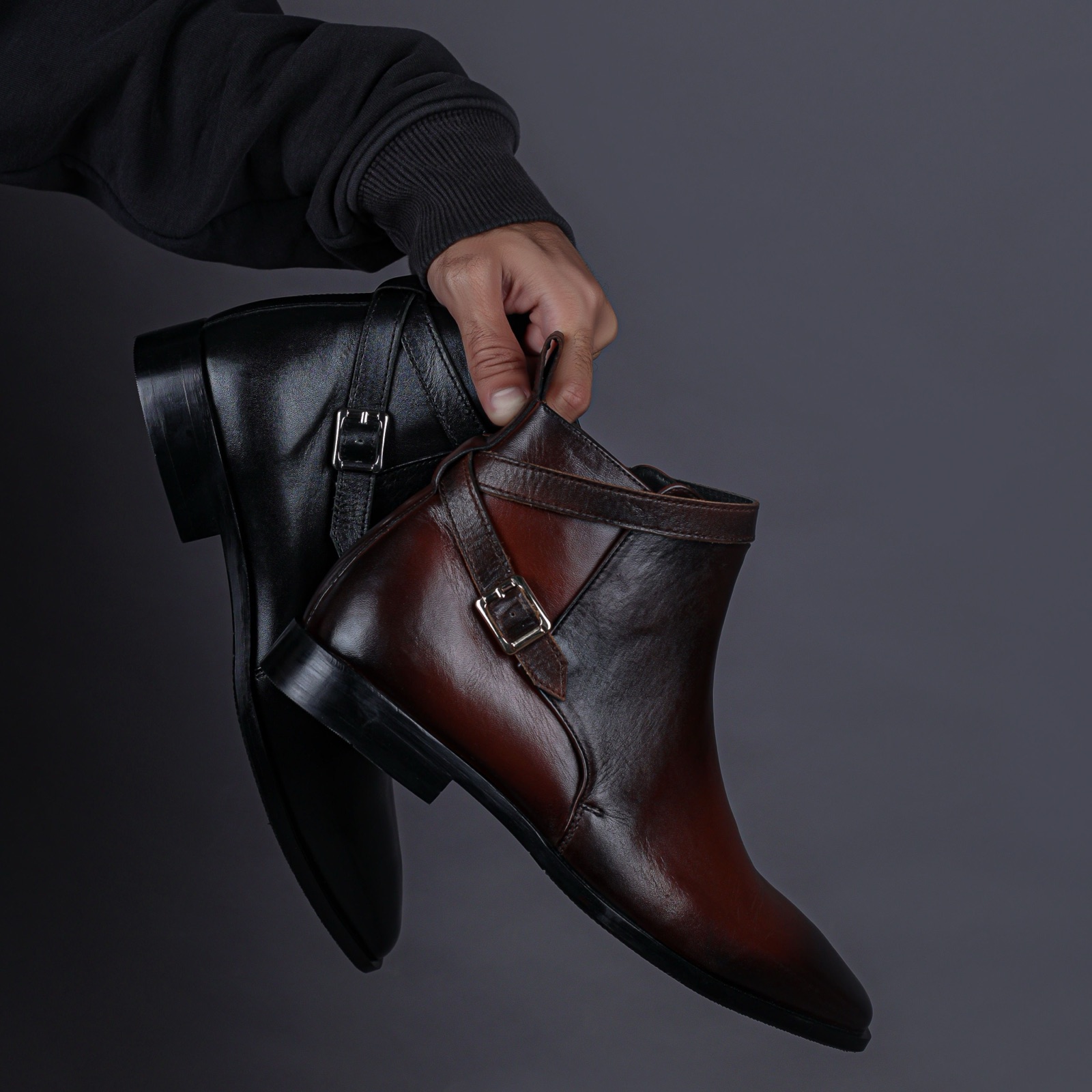
AI assisted with organizing text. The licensed photograph by Danyal Malik / Pexels is used under the Pexels License for general footwear edge and heel context. It does not establish the depicted products' materials, antique-finishing process, quality or supplier identity, and is not a ZWC product or approved sample. The second visual is an original explanatory vector diagram, not generated photography or factory evidence. No endorsement is implied.